Markets, Masterpieces & Michelangelo’s Florence
Walk through the heart of Florence where art, history, and daily life converge. From the bustling Central Market to the quiet courtyards of Basilica di Santa Croce, explore the city that shaped—and was shaped by—Michelangelo. Along the way, encounter his iconic David, and discover how Florence’s museums, piazzas, and civic spaces reflect the spirit of the Renaissance.
We begin our walk at the spiritual and architectural center of Florence, then wind through bustling markets, quiet museums, and leafy courtyards that reveal the city’s layered past. This route offers a thoughtful mix of the familiar and the unexpected—from Michelangelo’s David to Giotto’s frescoes, from leather artisans to Renaissance libraries. Along the way, we’ll pause at places that shaped Florence’s artistic, intellectual, and civic identity, while also enjoying the rhythm of daily life in its piazzas and markets. Whether you’re drawn to masterpieces or moments of quiet reflection, this walk invites you to experience Florence beyond the postcard.

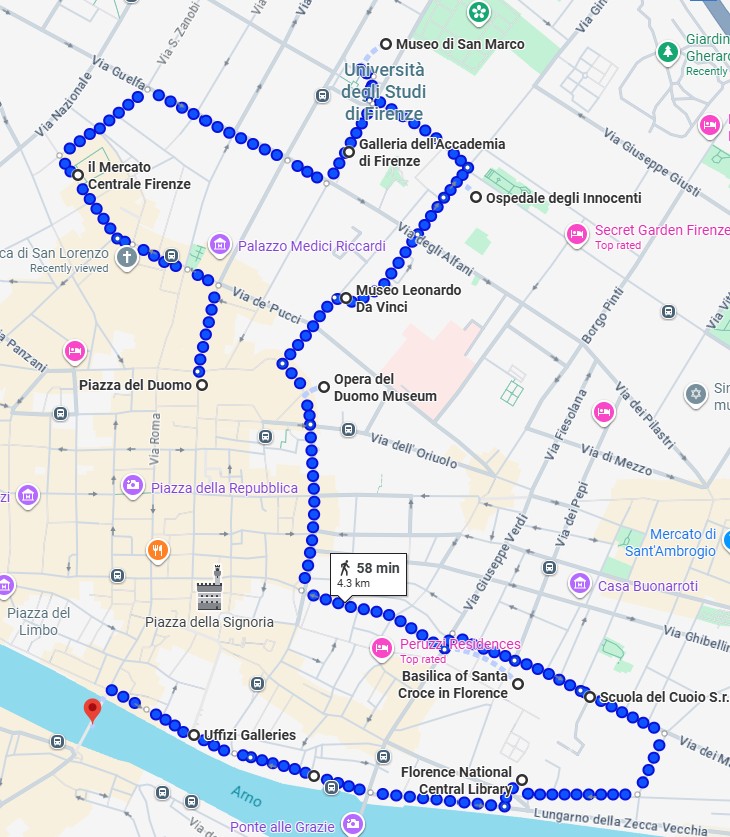
How to navigate with your mobile device
JCVWalks are designed to be easy to follow on your mobile device. As you walk, you can tap the header or photo for each point of interest to open the location directly in Google Maps. This will help you navigate from your current location to the next point of interest. If you’d like to learn more about any stop along the way, just click the links in the description for additional details and context.

Piazza del Duomo
We begin at Piazza del Duomo, the spiritual and architectural heart of Florence. It is home to the city’s most celebrated landmarks: including the Cathedral of Santa Maria del Fiore. Construction of the cathedral began in 1296 under Arnolfo di Cambio and was consecrated in 1436. Its crowning glory is the magnificent dome engineered by Filippo Brunelleschi—a revolutionary feat of Renaissance engineering. Rising 114.5 meters (376 feet), it remains the largest masonry dome ever built and was constructed without traditional wooden scaffolding, a method that still fascinates architects today.
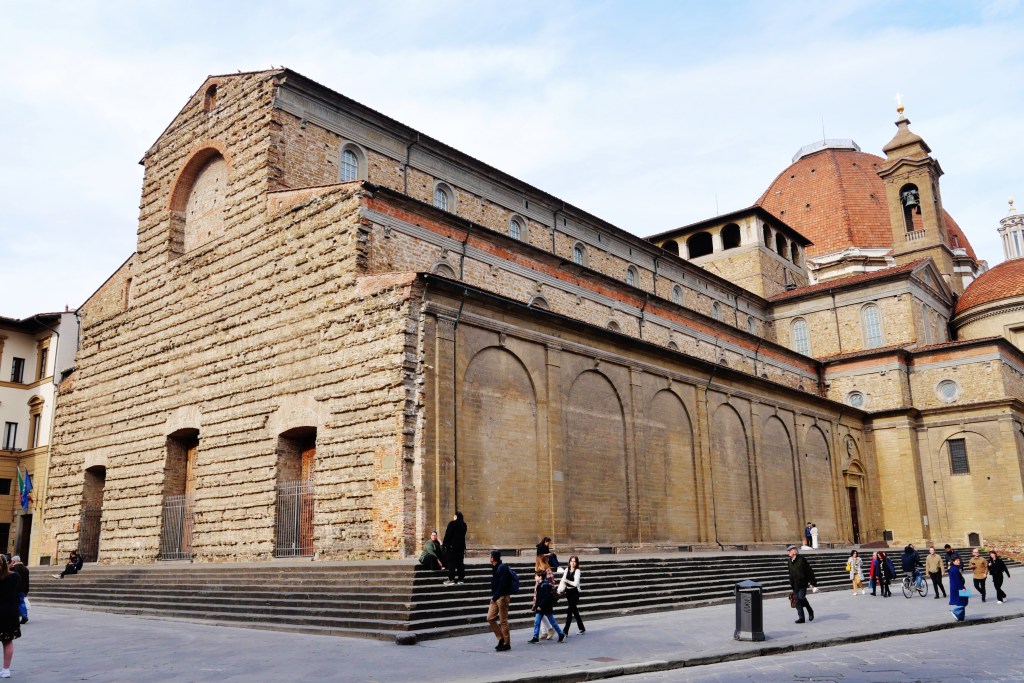
Basilica di San Lorenzo
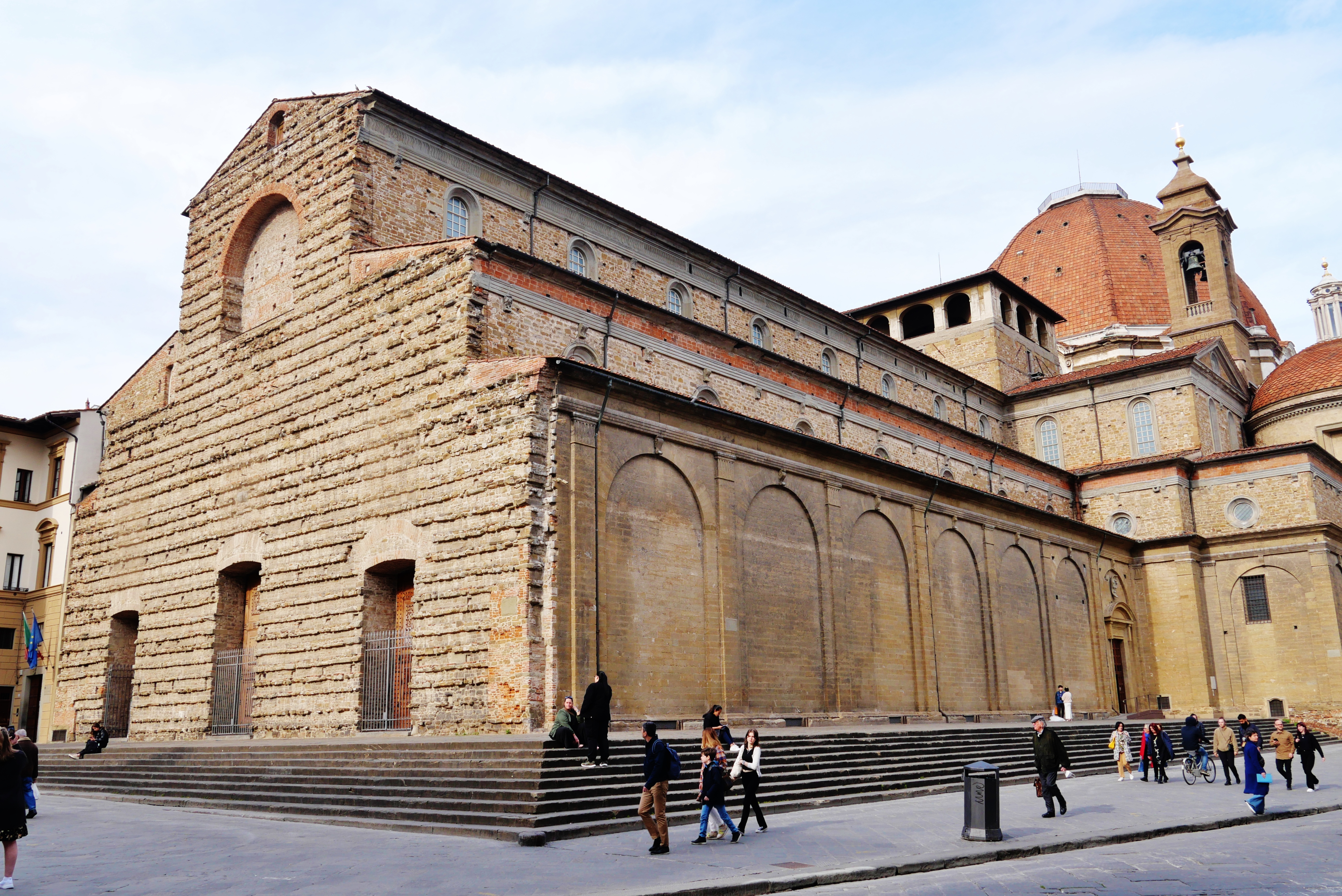
From the Duomo, we head to the Basilica di San Lorenzo, one of Florence’s oldest churches, dating back to the 4th century. Rebuilt in the 15th century, it became the parish church of the Medici family, who left their mark through the Medici Chapels and the Laurentian Library. The church’s design was entrusted to Filippo Brunelleschi, a pioneer of Renaissance architecture, while Donatello contributed bronze pulpits and other works. Its plain exterior hides a richly decorated interior that reflects Florence’s transition from Gothic to Renaissance style. San Lorenzo was more than a place of worship—it was a statement of Medici power and influence. Today, it offers a quieter experience compared to the Duomo, making it a great stop to appreciate Florence’s political and artistic history. Basilica di San Lorenzo is open Monday to Saturday from 9:30 AM to 5:30 PM with adult admission at €9; it is not included in major city passes like Firenzecard or Turbopass.

il Mercato Centrale Firenze
Just a short walk away is il Mercato Centrale Firenze, a vibrant market that has been part of Florentine life since 1874. Designed by architect Giuseppe Mengoni, who also created Milan’s Galleria Vittorio Emanuele II, the building combines iron and glass in a style typical of 19th-century Europe. The ground floor remains true to tradition, with stalls selling fresh produce, meats, cheeses, and spices. Upstairs, a modern food hall offers everything from handmade pasta to Tuscan wines, making it a favorite for both locals and visitors. The market reflects Florence’s ability to blend old and new—historic architecture housing contemporary culinary culture. It’s the perfect spot to pause, grab a bite, and experience the flavors that define Tuscany. il Mercato Centrale Firenze is open daily from 9:00 AM to 11:00 PM (midnight on weekends) and has free entry.
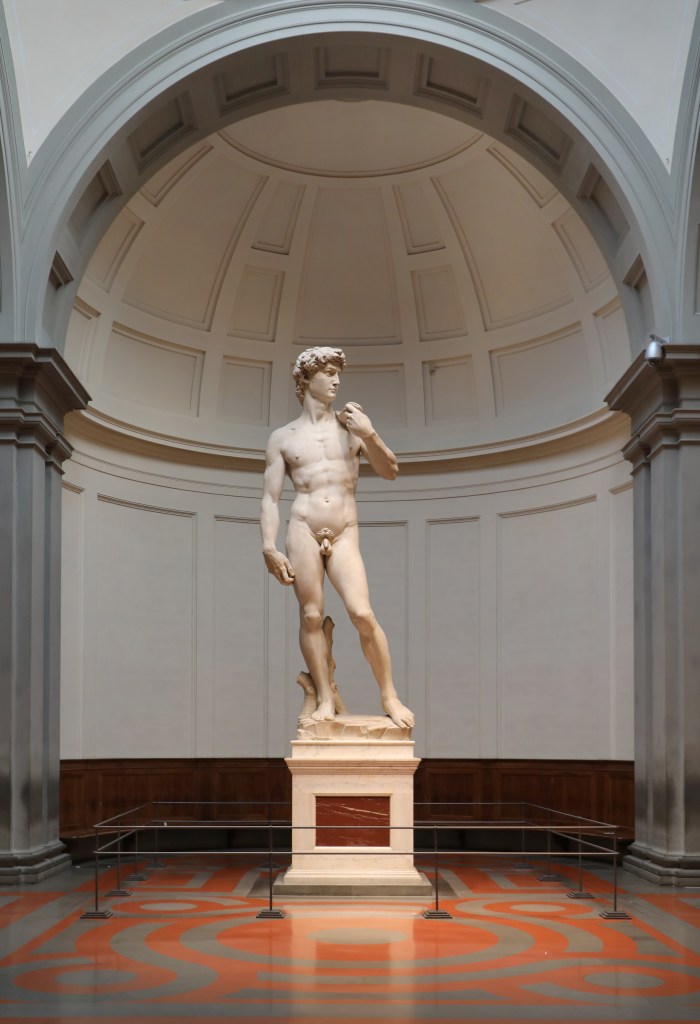
Galleria dell’Accademia di Firenze
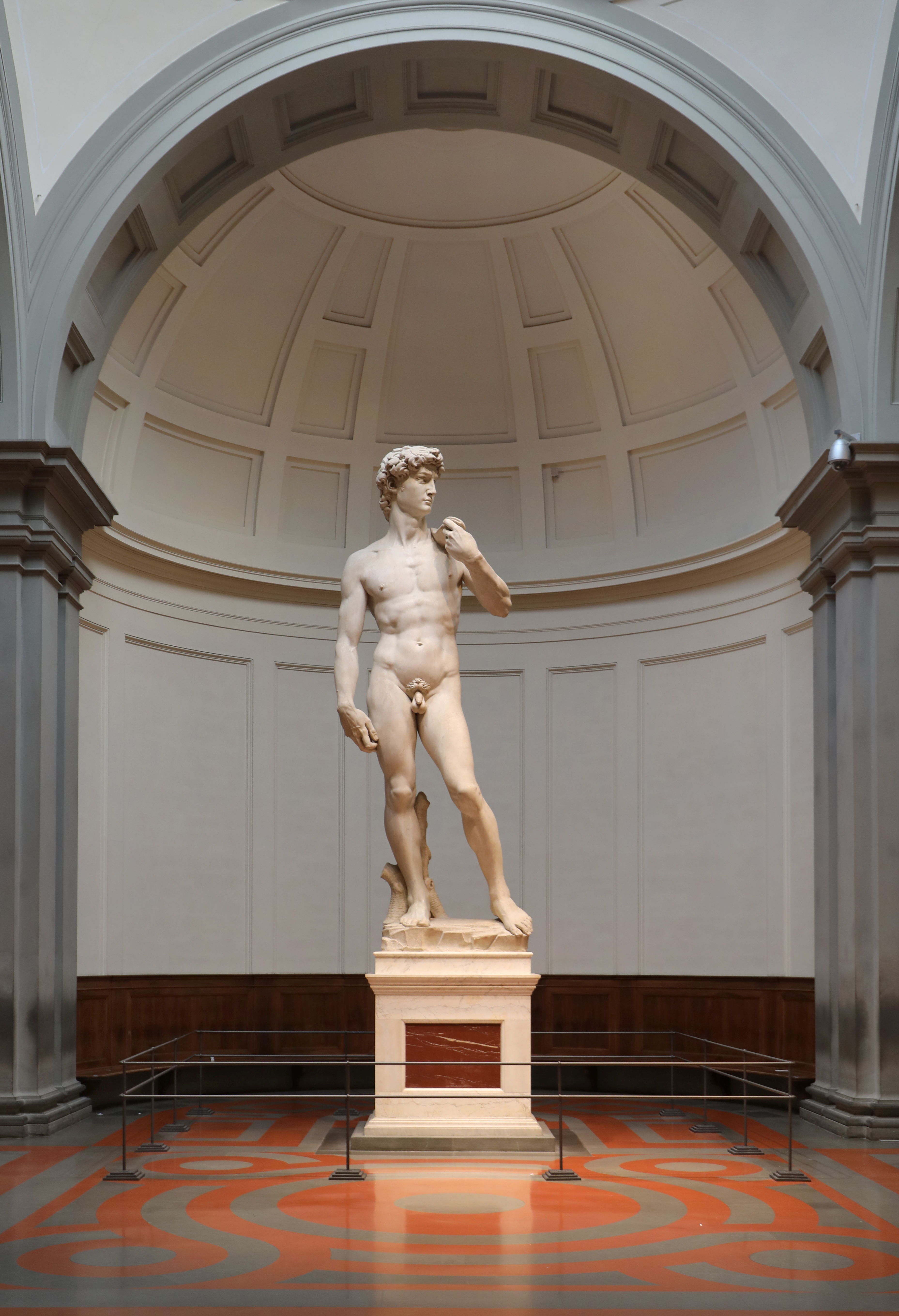
Continuing on, we arrive at the Galleria dell’Accademia di Firenze, best known as the home of Michelangelo’s David. Created between 1501 and 1504, David became a symbol of Florentine independence and civic pride. The museum also houses Michelangelo’s unfinished “Prisoners,” which offer insight into his sculpting process, as well as a collection of Renaissance paintings and historic musical instruments. Originally founded in 1784 as an art school, the Accademia evolved into a museum dedicated to preserving Florence’s artistic heritage. While David is the star attraction, the gallery provides a broader understanding of the city’s role in shaping Western art. It’s a must-see for anyone interested in the genius of Michelangelo and the cultural energy of Renaissance Florence. Galleria dell’Accademia di Firenze is open Tuesday to Sunday from 8:15 AM to 6:50 PM with adult tickets priced at €16; it is included in the Firenzecard, Turbopass, and Florence Pass.

Museo di San Marco
Next, we visit the Museo di San Marco, a former Dominican convent that became a center of religious life and artistic innovation in the 15th century. Its most famous resident was Fra Angelico, whose serene frescoes decorate the monks’ cells, cloisters, and chapter house. These works were intended as aids for meditation, and their simplicity and grace still inspire visitors today. The convent also played a role in Florence’s turbulent history—Girolamo Savonarola, the fiery preacher who briefly ruled the city, lived here before his execution in Piazza della Signoria. Today, the museum offers a quiet, contemplative experience, far removed from the crowds, and provides a glimpse into the spiritual and artistic world of Renaissance Florence. Museo di San Marco is open Tuesday to Sunday from 8:15 AM to 1:50 PM and charges €11 plus a €3 booking fee for adults; it is included in the Firenzecard.
Ospedale degli Innocenti
Our next stop is the Ospedale degli Innocenti, designed by Filippo Brunelleschi in 1419. This was Europe’s first orphanage and a groundbreaking example of Renaissance architecture. Its elegant loggia, with rounded arches and Corinthian columns, reflects Brunelleschi’s emphasis on proportion and harmony. The building served as a charitable institution for abandoned children for centuries, and its name—“Hospital of the Innocents”—speaks to its mission. Today, it houses a museum that tells the story of the children who lived here and the people who cared for them, alongside artworks by Luca della Robbia and other Renaissance masters. The Ospedale is both a humanitarian landmark and an architectural icon, symbolizing Florence’s commitment to social welfare and innovation. Ospedale degli Innocenti is open daily from 10:00 AM to 7:00 PM and costs €9 for adults; it is included in the Firenzecard.

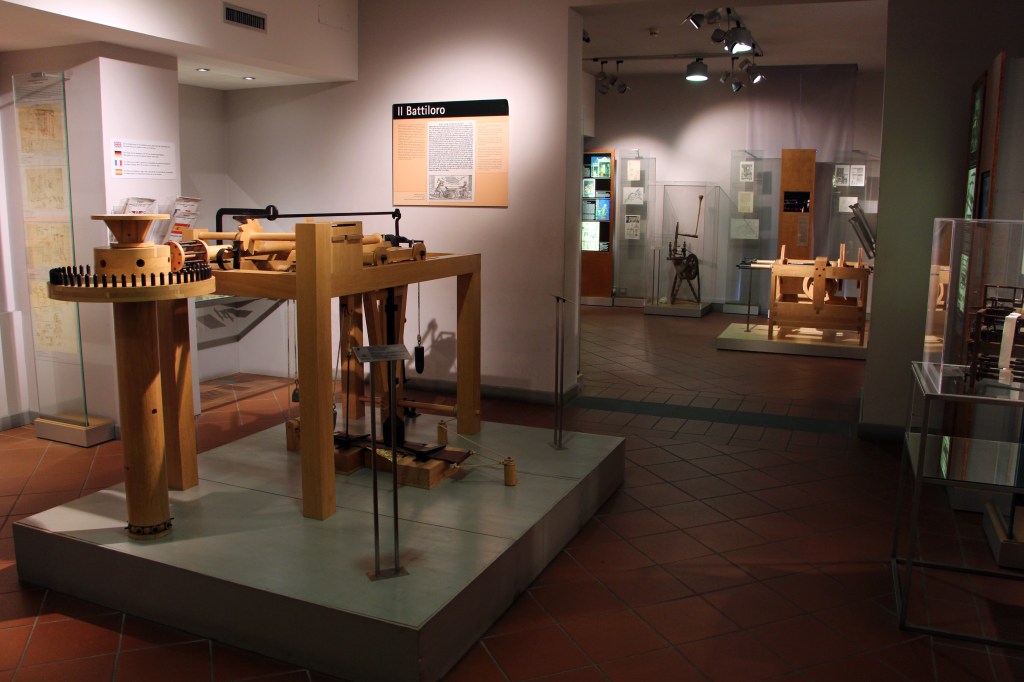
Museo Leonardo Da Vinci
We end our walk at the Museo Leonardo Da Vinci, a space dedicated to the life and work of one of Florence’s greatest minds, Leonardo Da Vinci. The museum features interactive models of Leonardo’s inventions, from flying machines to hydraulic systems, based on his original drawings. Exhibits also explore his studies in anatomy, engineering, and art, showing the breadth of his genius. While smaller than Florence’s major museums, it offers a hands-on experience that brings Leonardo’s ideas to life. It’s an engaging way to finish the walk, connecting the artistic brilliance of the Renaissance with the scientific curiosity that helped shape the modern world. Museo Leonardo Da Vinci is open daily from 9:30 AM to 7:30 PM with adult tickets priced at €9; it is included in the Turbopass, but not in the Firenzecard
Opera del Duomo Museum
Next, we head to the Opera del Duomo Museum, which houses original sculptures and artworks from the cathedral complex. The museum offers a close look at masterpieces by Michelangelo, Donatello, and Luca della Robbia. One highlight is Michelangelo’s unfinished “Pietà,” which he intended for his own tomb. The museum provides insight into the craftsmanship and vision behind Florence’s most iconic religious structures. Opera del Duomo Museum is open daily (except Tuesday) with hours varying by day, and is included in all Duomo passes: Brunelleschi, Giotto, and Ghiberti.

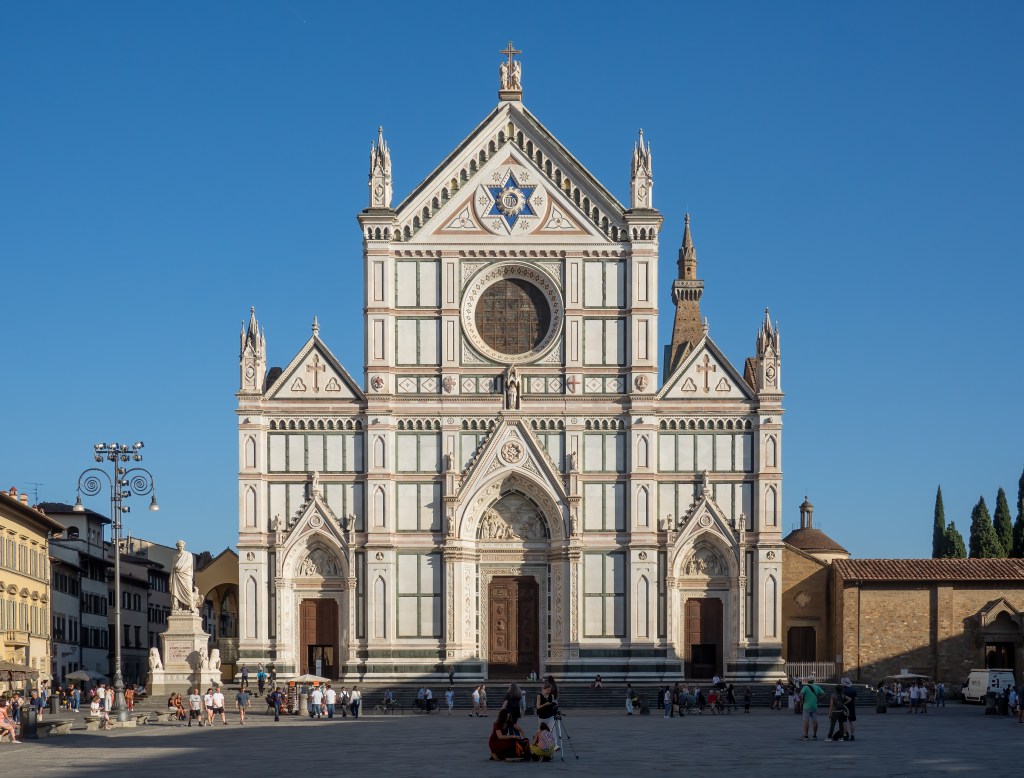
Basilica of Santa Croce
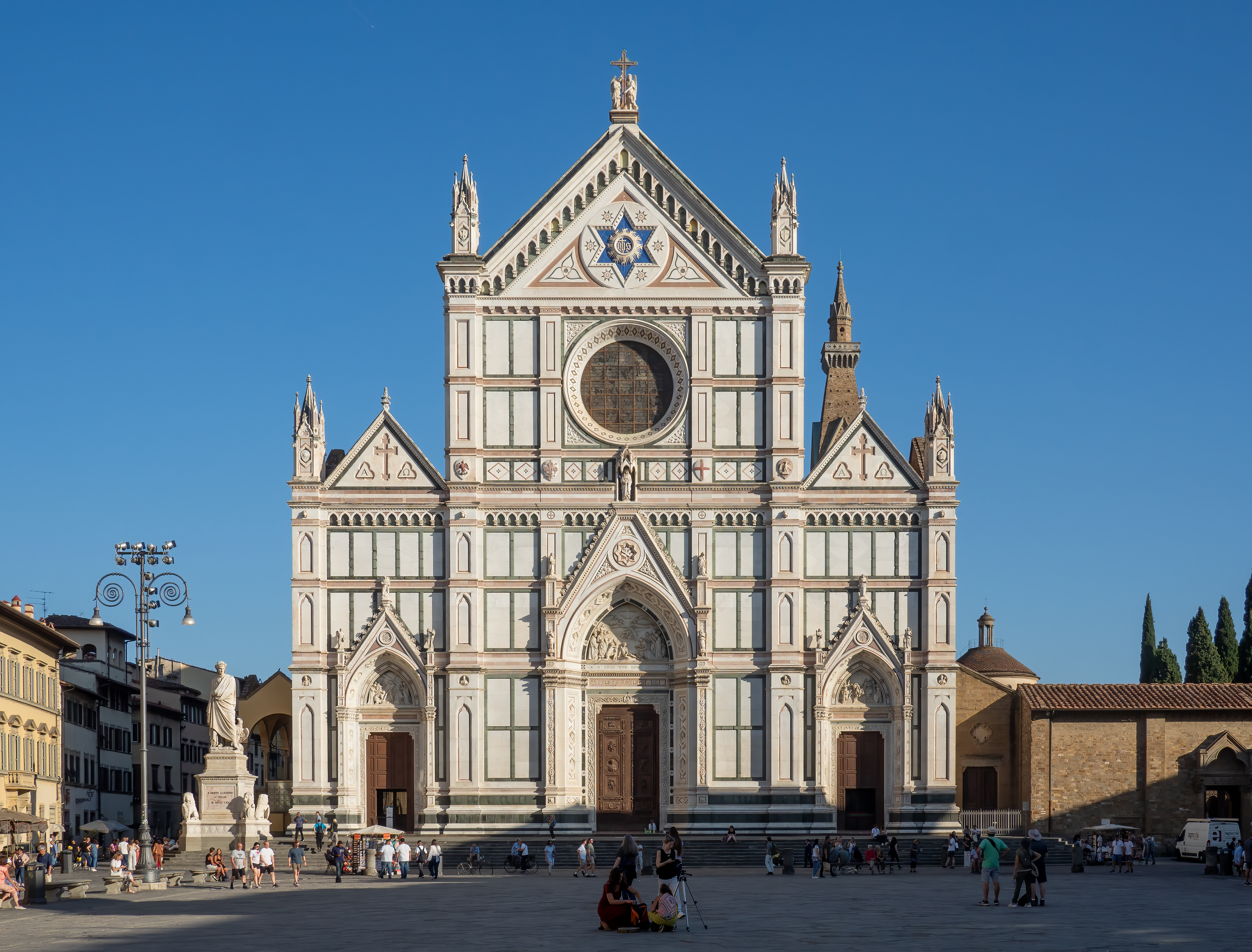
We will arrive at the Basilica of Santa Croce, one of Florence’s most revered landmarks and the final resting place of Italian icons such as Michelangelo, Galileo, Machiavelli, and Rossini. This vast Gothic church is filled with frescoes by Giotto and chapels commissioned by Florence’s most powerful families. As part of your visit, be sure to explore the elegant Brunelleschi Cloister and the more rustic Ancient Cloister, once used by Franciscan friars. Just beyond the cloisters, step into the Pazzi Chapel, a serene Renaissance gem designed by Brunelleschi for the Pazzi family. Inside the basilica, pause at the Bardi and Peruzzi Chapels, which feature Giotto’sfrescoes depicting the lives of St. Francis and St. John. Along the right nave, Donatello’s expressive Annunciazione Cavalcanti sculpture offers a striking moment of artistic reflection. In the sacristy, Cimabue’sflood-damaged but restored crucifix stands as a haunting symbol of Florence’s resilience. Admission is €10 for adults and includes all affiliated sites; entry is free with the Firenze Card. Open Monday to Saturday from 9:30 am to 5:30 pm, and Sundays from 12:30 pm to 5:45 pm
Scuola del Cuoio (Leather School)
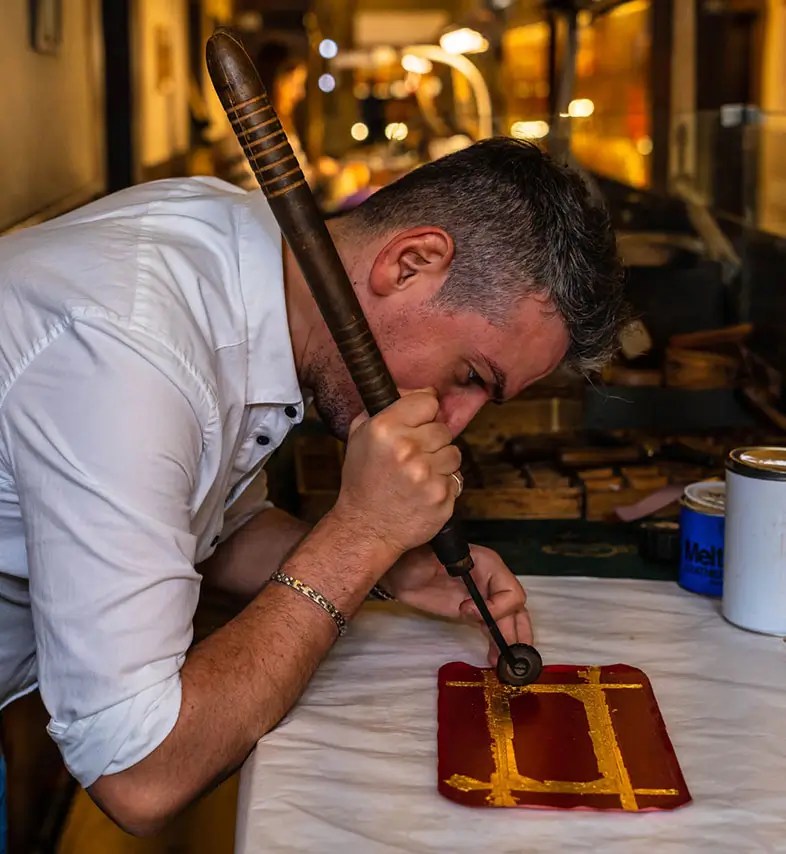
Next, we’ll walk behind the Basilica to the Scuola del Cuoio, a hidden gem where artisans have been crafting leather goods since the post–World War II era. Housed in a former Franciscan monastery, the school offers a glimpse into traditional Florentine leatherworking techniques. You can watch artisans at work and browse handmade wallets, bags, belts, and accessories in the showroom. This is one of the best places in Florence to purchase high-quality, genuine leather items—each piece is crafted on-site using time-honored methods and premium materials. he school is open daily from 10:00 AM to 6:30 PM, including weekends. Entry is free, and purchases directly support the continuation of this historic craft.
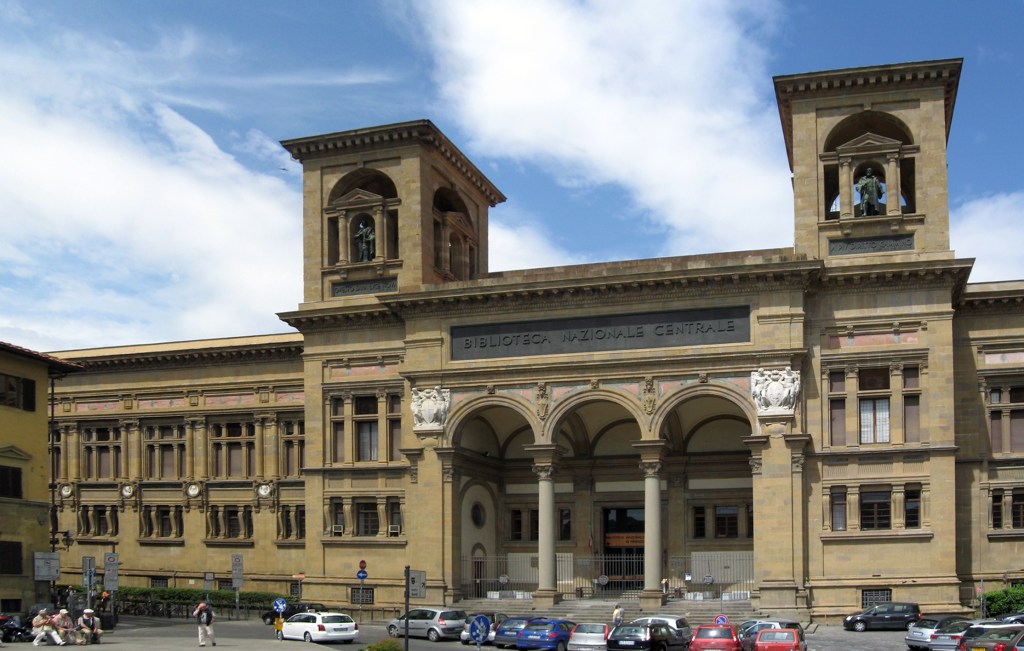
National Central Library (Biblioteca Nazionale Centrale di Firenze)
We will continue toward the Arno River to visit the Florence National Central Library, Italy’s largest library and one of Europe’s most important research institutions. Founded in the 18th century and rebuilt after the devastating 1966 flood, the library holds over six million volumes, including rare manuscripts by Dante, Petrarch, Galileo, and Machiavelli. While most reading rooms and special collections are reserved for registered scholars, visitors can admire the building’s neoclassical architecture and occasionally access temporary exhibitions or join a guided tour. If available, the Grande Salone—the main reading room—is worth seeking out for its scale and elegance. The library is open Monday through Friday from 8:15 AM to 7:00 PM and Saturday from 8:15 AM to 1:30 PM; it is closed on Sundays and public holidays.
Uffizi Galleries
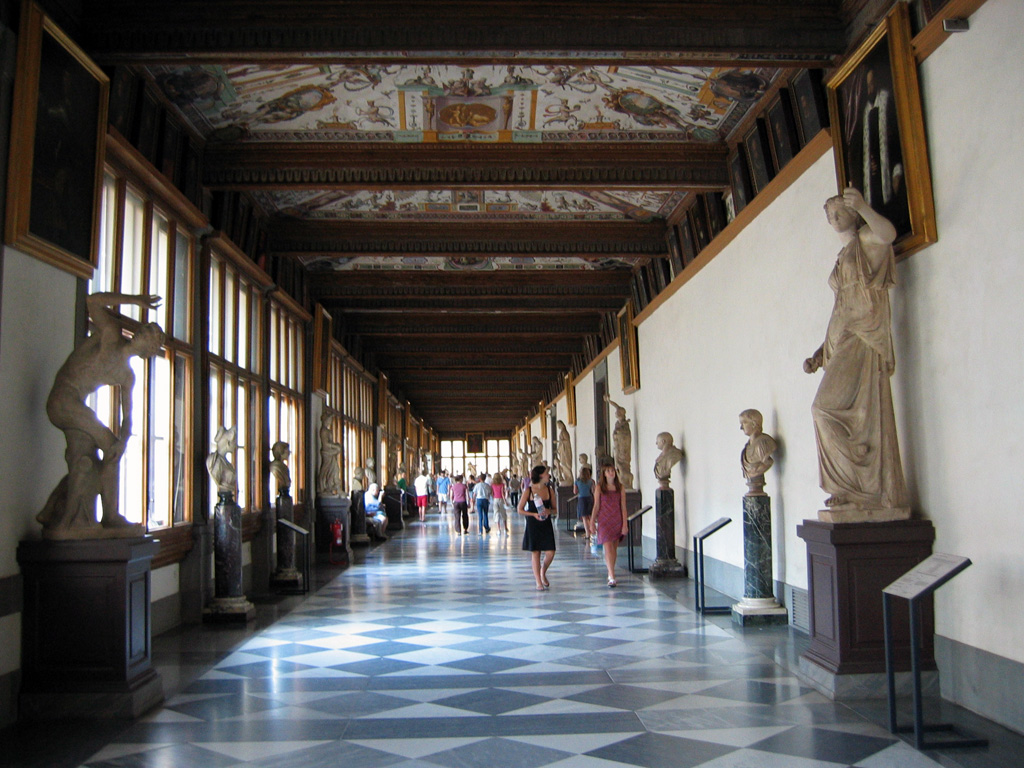
Commissioned in 1560 by Cosimo I de’ Medici, the Uffizi Gallerieswere originally designed by Giorgio Vasari as government offices (uffizi). Its elegant U-shaped structure, completed by Bernardo Buontalenti, became an art gallery in 1581 when Francesco I de’ Medici installed the family’s private collection on the top floor. The iconic Tribuna, an octagonal chamber adorned with marble and shells, showcased the Medici treasures. Over centuries, the collection expanded to include masterpieces by Botticelli, Leonardo da Vinci, Raphael, and Caravaggio. Highlights include Botticelli’s “Birth of Venus” and da Vinci’s “Annunciation.”—cornerstones of Renaissance art. Opened to the public in 1769, the Uffizi remains one of the world’s most visited museums, preserving Florence’s artistic legacy for future generations. Uffizi Galleries are open Tuesday to Sunday from 8:15 AM to 6:30 PM; adult admission is €25 and it is included in the Firenzecard and Turbopass.
Ponte Vecchio

The Ponte Vecchio, or “Old Bridge,” is Florence’s oldest surviving bridge, spanning the Arno River at its narrowest point. Rebuilt in 1345 after a devastating flood, it introduced the segmental arch design to Western Europe, reducing the number of piers and improving flood resistance. Initially lined with butcher shops, the bridge became a hub for jewelers and goldsmiths after Cosimo I de’ Medici banned meat vendors in 1565 to elevate its prestige. That same year, Giorgio Vasari constructed the Vasari Corridor above the shops, creating a private passage between the Palazzo Vecchio and Pitti Palace. Remarkably, the Ponte Vecchio was the only Florentine bridge spared during World War II, allegedly by Hitler’s direct order. Today, its picturesque arcades, artisan boutiques, and central viewing terrace make it one of Florence’s most iconic landmarks—a living link between medieval commerce and Renaissance grandeur.
Thanks for walking with me!
I hope this journey through Florence’s cultural heart gave you a deeper appreciation for the city’s many layers—its spiritual roots, artistic triumphs, and enduring traditions.
If you enjoyed the route, found a hidden gem, or have ideas for improving the experience, I’d love to hear from you! Your insights help me improve future walks and inspire fellow travelers. Please rate this walk using the stars below — and feel free to leave a comment. Grazie! — and happy exploring!


Click here for more JCV Walks in Florence
Your journey doesn’t have to end here. Choose another walk and let’s keep exploring together—one step at a time.
JCV Walks in Florence – Duomo
Walk in central Florence Brunelleschi’s dome to the Uffizi, exploring Florence’s most iconic landmarks and learning how the city became the cradle of the Renaissance.
JCV Walks in Oltrarno
Escape the crowds and explore Florence’s artisan-rich south side, where gardens, viewpoints, and elegant streets reveal a quieter, handcrafted Renaissance legacy.
JCV Walks in Pisa
A one hour train ride from Florence, Pisa is more thanits famous leaning tower. Explore Pisa’s lively squares, arcaded shopping streets, and hidden gems
Photo Credits
- Piazza del Duomo Restaurant – Photo by Peter K Burian, licensed under CC BY-SA 4.0, source
- Basilica di San Lorenzo – Photo by Zairon – Licensed under CC BY 4.0, Source
- il Mercato Centrale Firenze – Photo by Sailko – Licensed under CC BY 3.0, Source
- Galleria dell’Accademia di Firenze David – Di Francesco Bini – Licensed under CC BY-SA 4.0, Source
- Museo di San Marco – Photo by Freepenguin – Licensed under CC BY-SA 3.0, Source
- Orto Botanico Giardino dei Semplici – Photo by Daderot. – Licensed under CC BY-SA 3.0, Source
- Ospedale degli Innocenti – Photo by Armin Kleiner – Licensed under CC BY-SA 4.0, Source
- Museo Leonardo Da Vinci – Photo by Sailko – Licensed under, CC BY 3.0, Source
- Opera del Duomo Museum – Photo by Sailko – Licensed under CC BY-SA 3.0, Source
- Basilica of Santa Croce in Florence – Photo by Rhododendrites – Licensed under, CC BY-SA 4.0, Source
- Scuola del Cuoio – Photo courtesy of Scuola del Cuoio, Florence
- Florence National Central Library – By Gryffindor – Commons, CC BY-SA 3.0, Source
- Uffizi Hallway – Photo by Unknown, licensed under CC BY-SA 3.0, source
- Panorama of the Ponte Vecchio – Photo by Jan Drewes, licensed under CC BY-SA 4.0, source
