Gothic Grace, Civic Pride, Tuscan Views

Perched on three hills in the heart of Tuscany, Siena is a city where time seems to stand still. Once a powerful medieval republic and fierce rival of Florence, Siena flourished in the 13th and 14th centuries as a center of banking, trade, and art. Its historic core, a UNESCO World Heritage Site, remains remarkably intact, with winding alleys, Gothic palaces, and sun-warmed brick façades that echo its golden age. At the heart of it all lies Piazza del Campo, the city’s iconic shell-shaped square, famous for the Palio, a centuries-old horse race that still ignites neighborhood pride twice each summer. Siena’s artistic legacy shines in its cathedral, frescoed halls, and quiet basilicas, while its streets hum with the rhythm of daily life. This walk invites you to explore Siena’s layered history—where civic ambition, spiritual devotion, and timeless beauty converge in every stone.
This walk invites you to explore Siena’s layered history. We will wander through Siena’s medieval streets, pause in its famous piazza, and visit landmarks that reflect the city’s artistic and cultural heritage. Along the way, enjoy the rhythm of local life and discover why Siena remains one of Tuscany’s most captivating hill towns.


How to navigate with your mobile device
JCVWalks are designed to be easy to follow on your mobile device. As you walk, you can tap the header or photo for each point of interest to open the location directly in Google Maps. This will help you navigate from your current location to the next point of interest. If you’d like to learn more about any stop along the way, just click the links in the description for additional details and context.
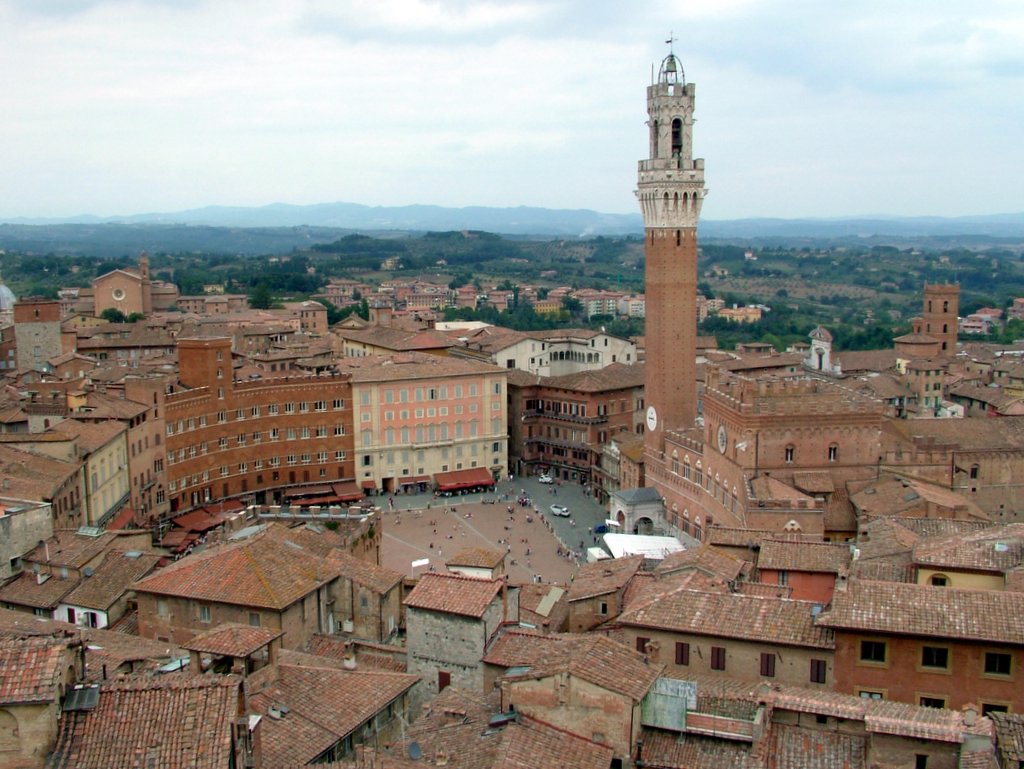
Piazza del Campo
We’ll begin our walk in Piazza del Campo, Siena’s beating heart and one of Europe’s most celebrated medieval squares. Its distinctive shell shape fans out in nine sections, symbolizing the Council of Nine, the city’s historic governing body. This piazza has hosted the Palio di Siena, a thrilling bareback horse race, since the Middle Ages—a tradition that continues twice each summer. Surrounded by Gothic palaces and lively cafés, the Campo is perfect for people-watching and soaking in Siena’s civic pride. At its center stands the Fonte Gaia, a 19th-century replica of Jacopo della Quercia’s original fountain. The square is open at all times and free to visit, making it an ideal starting point for exploring the city’s historic core.
Palazzo Pubblico & Torre del Mangia
Next, we’ll explore the Palazzo Pubblico, Siena’s Gothic town hall, which has anchored Piazza del Campo since the late 13th century. Inside, the Museo Civico preserves masterpieces like Ambrogio Lorenzetti’s “Allegory of Good and Bad Government,” a fresco cycle that shaped political thought in Renaissance Italy. Rising beside it, the Torre del Mangia—built between 1338 and 1348—was designed to match the cathedral’s height, symbolizing the balance between church and state. Climb its 400 steps for sweeping Tuscan views. Open daily: March–October 10:00–19:00; November–February 10:00–16:00. Closed Christmas Day. Admission: €10 for the tower; €10 for the museum; combined tickets available (€20 for tower, museum, and Santa Maria della Scala). Tickets sold on-site only.

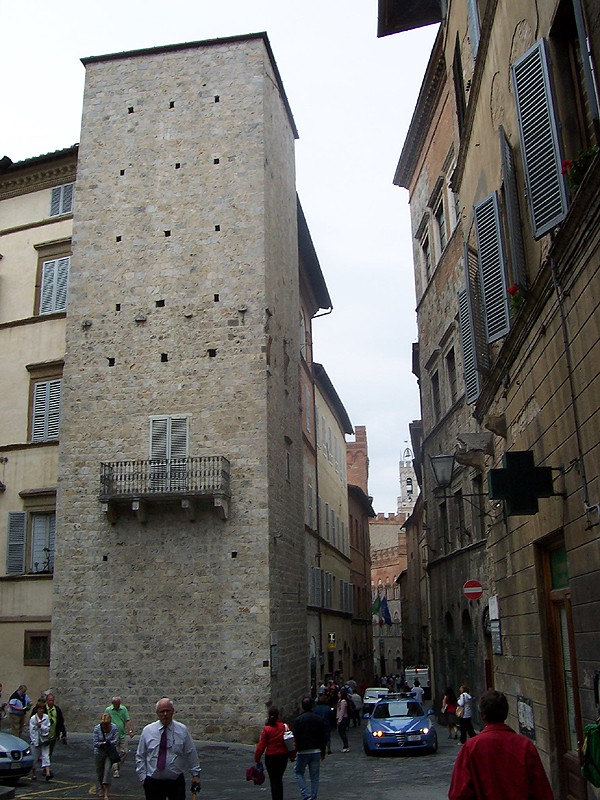
Via di Città
From the Campo, we’ll stroll along Via di Città, one of Siena’s most elegant streets and a key artery of the medieval city. This historic thoroughfare once connected the Campo to the cathedral and was lined with the palaces of Siena’s wealthiest families. As you walk, notice the graceful Gothic façades, ornate windows, and coats of arms that hint at the city’s proud past. Today, the street is alive with artisan workshops, boutiques, and inviting gelaterias—perfect for a leisurely pause. Keep an eye out for hidden courtyards and small chapels tucked between grand palazzi, reminders that Siena’s beauty often reveals itself in quiet details.
Siena Cathedral (Duomo di Siena)
Now, we’ll make our way to the Duomo di Siena, a triumph of Italian Gothic architecture dedicated to the Assumption of the Virgin Mary. Built between the 13th and 14th centuries, it dazzles with black-and-white marble stripes, a richly sculpted façade, and treasures by Michelangelo, Donatello, and Pisano. Inside, the inlaid marble floor—uncovered from late June to mid-October—depicts biblical scenes in extraordinary detail. The cathedral also houses the Piccolomini Library and access to the crypt and baptistery via the OPA SI Pass. Open March–October: Mon–Sat 10:00–19:00, Sun 13:30–18:00; winter hours shorter. Admission: €14 (regular), €16 when the floor is uncovered; free for children under 6. The OPA SI Pass (€21) includes all sites in the complex and is valid for three days.


Piccolomini Library
Inside the Duomo, we’ll step into the Piccolomini Library, a Renaissance jewel commissioned by Cardinal Francesco Piccolomini (later Pope Pius III) to honor his uncle, Pope Pius II. Painted between 1503 and 1508 by Pinturicchio with help from a young Raphael, its frescoes narrate Pius II’s life in vivid color, framed by grotesque motifs and classical scenes. The library also displays illuminated manuscripts and a Roman marble group of the Three Graces. Open daily with cathedral hours: March–October 10:00–19:00, Sundays 13:30–18:00; winter 10:30–17:30. Admission included in the cathedral ticket or OPA SI Pass.
Baptistery of San Giovanni
Next, we’ll descend beneath the Duomo to the Baptistery of San Giovanni, built in the early 14th century and adorned with frescoes by Vecchietta and others. Its centerpiece is the hexagonal baptismal font (1417–1431), a Renaissance masterpiece in marble and bronze featuring panels by Donatello, Ghiberti, and Jacopo della Quercia. Scenes like Donatello’s “Feast of Herod” showcase early perspective and dramatic storytelling. Open daily: April–October 10:00–19:00; November–March 10:30–17:30. Admission included in the OPA SI Pass or €6 as part of a combined ticket.


Santa Maria della Scala
Leaving the Duomo, we’ll cross to Santa Maria della Scala, once one of Europe’s oldest hospitals, caring for pilgrims on the Via Francigena. Today, its vast halls and frescoed wards form a museum complex spanning archaeology, sacred art, and contemporary exhibits. Highlights include the Pilgrims’ Hall, frescoed in the 1440s, and the original marble panels of Fonte Gaia. Open March 15–November 1: daily 10:00–19:00; winter hours shorter; closed Tuesdays in low season. Admission: €9 adults, €7 reduced, free for children under 11; family ticket €20. Combined tickets with civic museums available.
San Domenico Basilica
From here, we’ll head north to the Basilica of San Domenico, begun in 1226 and closely tied to St. Catherine of Siena, whose relics—including her head—are enshrined here. Inside, chapels display frescoes by Sodoma depicting Catherine’s life and mystical visions. Open daily: March–October 7:00–18:30; November–February 8:30–18:00. Admission is free, though donations are welcome. This is an active place of worship, so dress modestly and avoid visiting during Mass.

Did Someone say Gelato?
After your visit, to the Basilica of San Domenico, consider pausing for a treat at La Vecchia Latteria, located just across the street on Viale Curtatone. Known for its rich, creamy gelato made fresh daily, it’s widely considered one of the best in Siena. Watch the gelato being crafted through a glass window and try the pistachio—it’s legendary.
Another option is the Masgalano Gelateria, just across the street on Via della Sapienza. Whichever you choose, this sweet break adds a delightful note before we continue toward the next stop on our walk.

Porta Ovile
Next, we’ll follow Via Vallerozzi, a historic street that leads us to Porta Ovile, one of Siena’s oldest and most striking medieval gates. Originally built around 1230 and later reinforced in the 14th century, this brick gateway was a key defensive point and an important entrance for travelers and merchants. Its name, meaning “Gate of the Flock,” reflects its role in Siena’s pastoral economy. Inside the gate, look for a small aedicula with a fresco of the Madonna and Child between Saints Ansano and Bernardino, painted by Sano di Pietro—one of the oldest surviving frescoes on Siena’s walls. Today, it stands as a quiet reminder of Siena’s fortified past and offers a glimpse into the city’s medieval life. Open access at all times; free to visit.
San Francesco Basilica
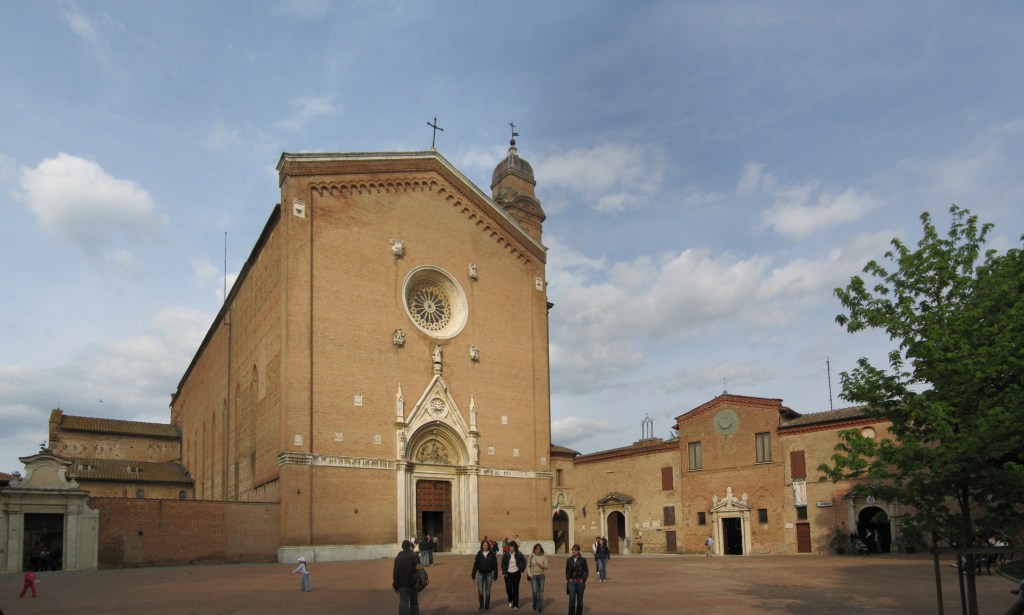
From here, we’ll continue southeast to the Basilica of San Francesco, built between the 13th and 15th centuries. Reflecting the Franciscan ideal of simplicity, it features a vast single nave and sober brick façade. Inside, look for frescoes by Ambrogio Lorenzetti and the chapel housing the Eucharistic Miracle of Siena—351 consecrated hosts that have remained intact since 1730. Open daily: 7:30–12:00 and 15:30–19:00. Admission is free. This peaceful stop offers a reflective pause before we make our way back toward the city center.

Palazzo Salimbeni
We’ll follow Via dei Rossi, a lively street lined with historic façades and artisan shops. Here stands the Palazzo Salimbeni, a 14th-century Gothic palace that serves as the historic headquarters of Monte dei Paschi di Siena, the world’s oldest surviving bank (founded in 1472). Its neo-Gothic façade, added in the 19th century, frames a square graced by a statue of economist Sallustio Bandini. While the palace is generally closed to the public, its exterior and piazza are worth a stop for their architectural harmony and financial history. Free to view from outside; check local listings for special openings.
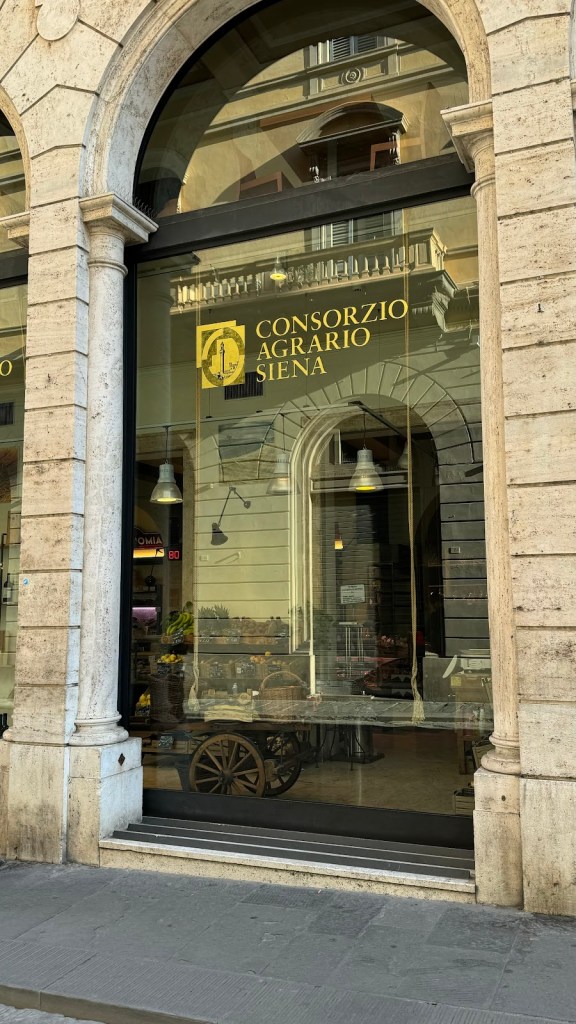
Consorzio Agrario di Siena
Just across the street from Piazza Salimbeni, we’ll stop at the Consorzio Agrario di Siena, a cooperative founded in the late 19th century to support local farmers. Today, it’s a showcase of Tuscan flavors, offering extra-virgin olive oil, pecorino cheese, handmade pasta, and Chianti wines. This is an excellent spot to pick up authentic gifts or sample regional specialties that reflect Siena’s agricultural heritage. Open Monday–Saturday 8:30–19:30; closed Sundays. Admission is free, and purchases are optional—but hard to resist!
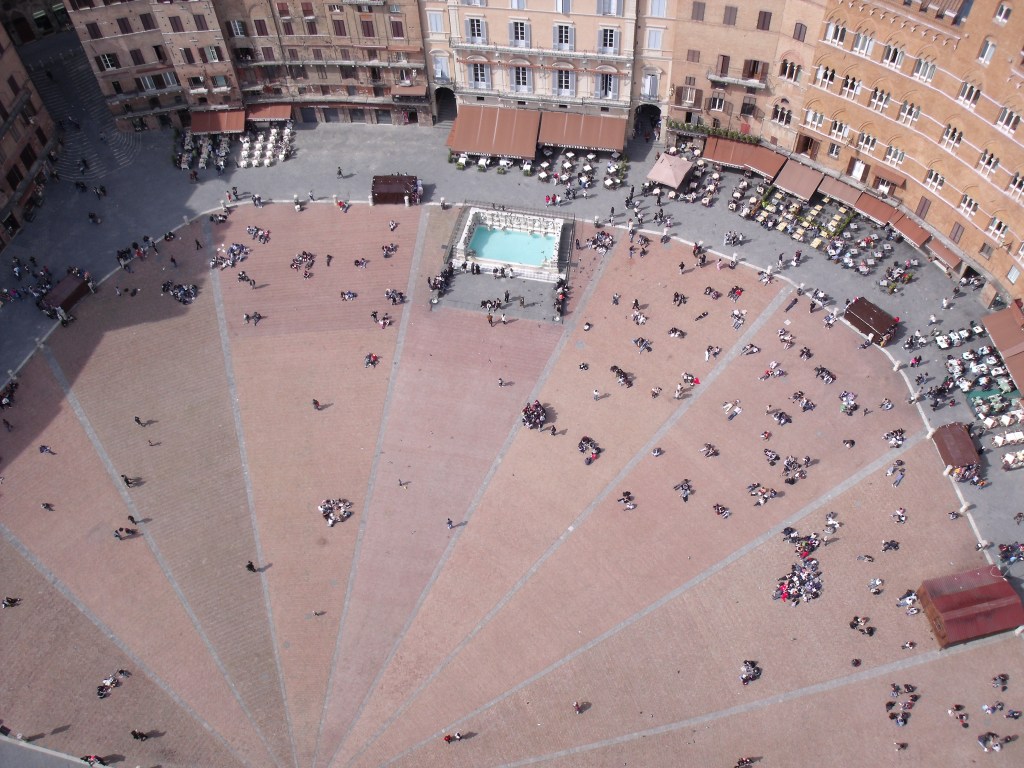
Return to Piazza del Campo
From here, it’s an easy walk back to Piazza del Campo: simply continue along Via dei Rossi, which slopes gently downhill, and follow the signs toward the Campo. In just a few minutes, you’ll find yourself back in Siena’s iconic square, ready to relax and take in the lively atmosphere.
Thanks for walking with me!
I hope you enjoyed this journey through Siena’s winding streets, soaring towers, and sacred spaces—where civic pride and spiritual beauty live side by side.
If you enjoyed the route, found a hidden gem, or have ideas for improving the experience, I’d love to hear from you! Your insights help me improve future walks and inspire fellow travelers. Please rate this walk using the stars below — and feel free to leave a comment. Thank you! — and happy exploring!
Thanks for your feedback!


Click here for more JCV Walks
Your journey doesn’t have to end here. Choose another walk and let’s keep exploring together—one step at a time.
JCV Walks in San Gimignano
Stroll through a hilltop town known for its medieval towers, panoramic views, and award-winning gelato. A short but scenic walk packed with character.
JCV Walks in Florence
Explore the heart of the Renaissance with walks through historic piazzas, iconic churches, artisan neighborhoods, and riverside gardens. Each route offers a mix of art, architecture, and local life.
JCV Walks in Pisa
Discover more than just the Leaning Tower with a walk through Pisa’s medieval center, riverside paths, and university district. A compact route with big visual impact.
Photo Credits
- Siena Panoramic – By I, Sixtus, CC BY-SA 3.0, Source
- Piazza del Campo – By Mark Sehnert – Licensed under Public Domain, Source
- Palazzo Pubblico & Torre del Mangia – By MarkusMark – Own work, Public Domain, Source
- Via di Città – Di MarkusMark – Opera propria, Pubblico dominio, Source
- Siena Cathedral (Duomo di Siena) – By © Raimond Spekking – Licensed under CC BY-SA 4.0, Source
- Piccolomini Library – By © José Luiz Bernardes Ribeiro, CC BY-SA 4.0, Source
- Baptistery of San Giovanni – By gaspa – Flickr, CC BY-SA 2.0, Source
- Santa Maria della Scala – By Lalupa – Own work, Public Domain, Source
- San Domenico Basilica – By Gryffindor – Own work, CC BY-SA 3.0, Source
- Porta Ovile – Di MarkusMark – Opera propria, Pubblico dominio, Source
- San Francesco Basilica – By This image was created with Hugin., CC BY-SA 3.0, Source
- Palazzo Salimbeni – By . Ray in Manila – CC BY 2.0, Source
- Consorzio Agrario di Siena – Google Street View
- Piazza del Campo Sienna -By Photographed by Krzysztof Wysocki, CC BY-SA 3.0, Source
