The Quiet Island Where Venice began
Welcome to Torcello, a peaceful island that feels worlds away from the bustle of Venice — and yet, this is where it all began. Long before the rise of the Grand Canal and St. Mark’s Square, Torcello was the heart of the Venetian lagoon, home to thousands of residents, churches, and traders. Today, only a handful of people live here, but the island’s early glory still echoes in its ancient stone paths, Romanesque churches, and wide open spaces. This short walk invites you to step back in time and explore the spiritual and architectural roots of Venice.
This is a short walk following a peaceful canal to the island’s historic core, where ancient churches, stone bridges, and grassy squares recall a time when Torcello was the heart of a growing civilization. It’s a short, scenic loop through one of the most quietly significant places in Venice’s story.


How to navigate with your mobile device
JCVWalks are designed to be easy to follow on your mobile device. As you walk, you can tap the header or photo for each point of interest to open the location directly in Google Maps. This will help you navigate from your current location to the next point of interest. If you’d like to learn more about any stop along the way, just click the links in the description for additional details and context.
Torcello Vaporetto Stop
Our walk begins at the small landing dock where the vaporetto lets you off. From here, follow the stone path that leads inland along a quiet canal. The walk to the heart of the island takes about 10 minutes and is lined with reeds, wildflowers, and the occasional heron. It’s a peaceful introduction to an island that invites reflection. As you walk, you’ll pass a few trattorias and gardens before reaching the cluster of historic buildings that form the core of Torcello’s past and present.

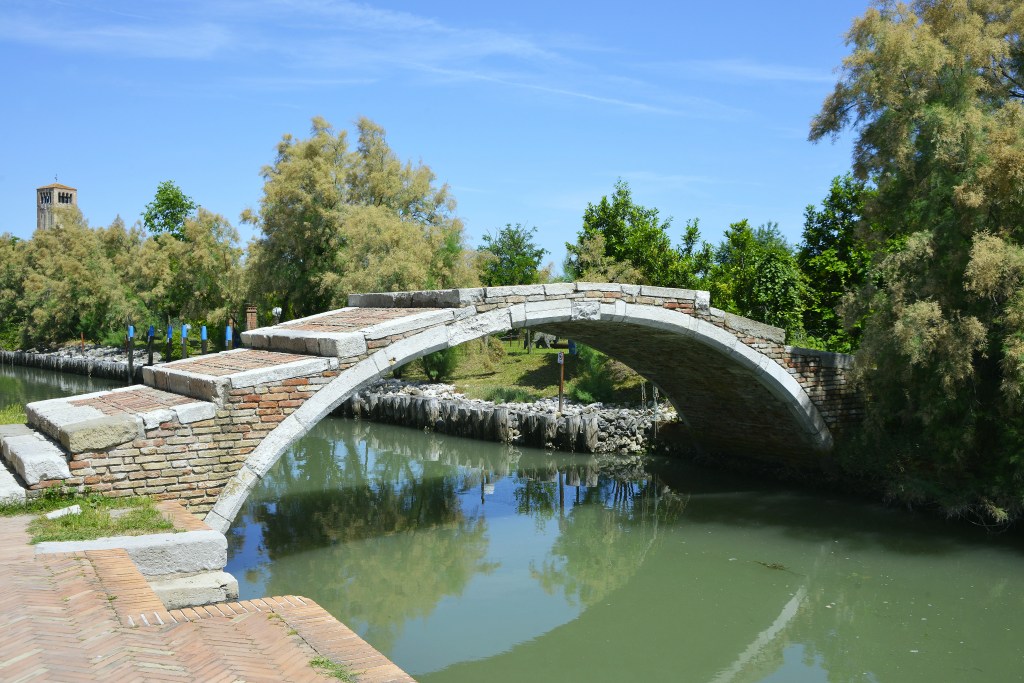
Ponte del Diavolo (Devil’s Bridge)
Before reaching the main square, take a short detour to see the Ponte del Diavolo, or Devil’s Bridge — one of only two bridges in the lagoon without railings. Its name comes from a local legend involving a pact with the devil, but its charm lies in its simplicity. The bridge’s graceful arch and mossy stones make it a favorite for photographers. Though you can’t cross it, the view from the nearby path is lovely. After your visit, return to the main walkway and continue toward the island’s historic heart.
Piazza Torcello & Throne of Attila
At the center of the island is a quiet open space often called Piazza Torcello, though it feels more like a grassy courtyard than a formal square. Here you’ll find the Throne of Attila, a stone chair once used by local magistrates — not the infamous Hun. The square is surrounded by Torcello’s most important landmarks: the cathedral, the smaller Church of Santa Fosca, and the island’s modest museum. It’s a peaceful place to sit and imagine what this island must have felt like when it was the beating heart of the lagoon.


Cathedral of Santa Maria Assunta
Founded in 639 AD, the Cathedral of Santa Maria Assunta is the oldest church in the Venetian lagoon. Its Romanesque façade is simple, but step inside and you’ll find one of the most breathtaking mosaics in Italy: a glittering Byzantine Last Judgment that covers the entire west wall. The cathedral also features a stunning apse mosaic of the Virgin and Child, marble floors, and remnants of early Christian carvings. The cathedral is open daily from 10:30 AM to 6:00 PM (March–October) and from 10:00 AM to 5:00 PM (November–February), with last entry 30 minutes before closing. Adult admission is €5. After your visit, step outside and walk a few paces to the smaller, but equally atmospheric, Church of Santa Fosca.
Church of Santa Fosca
Next to the cathedral stands the Church of Santa Fosca, a graceful 11th-century structure with a five-sided portico and a serene, almost monastic atmosphere. Built in the Byzantine style, it was dedicated to a young martyr whose relics were brought here from North Africa. The church is free to enter and offers a quiet contrast to the grandeur of the cathedral. Its symmetry and simplicity make it one of the most beautiful small churches in the lagoon. After your visit, take a few moments to enjoy the view across the open fields before beginning your return walk. Admission is free.

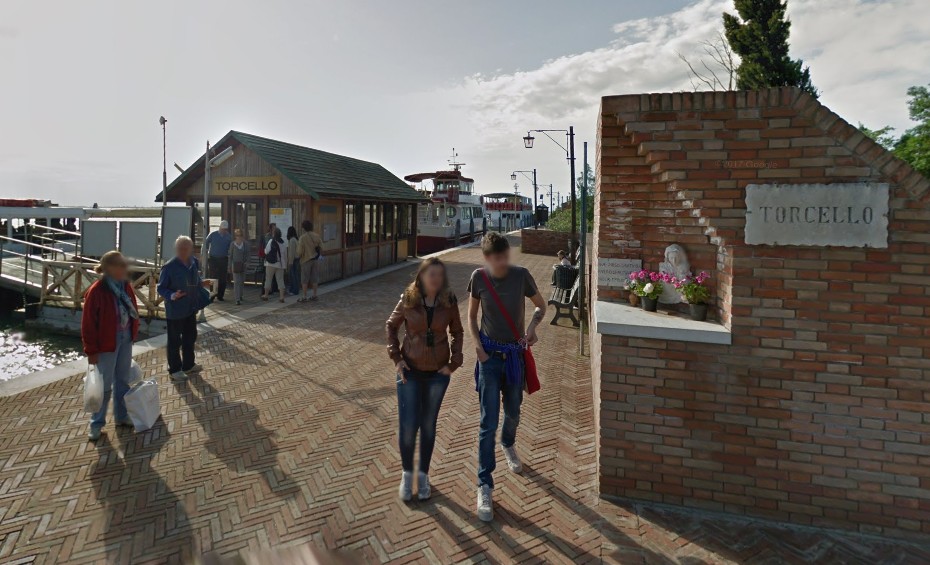
Return to the Vaporetto Stop
To complete the loop, retrace your steps along the canal path, passing the same peaceful scenery in reverse. The walk back to the vaporetto stop is just under half a mile and offers one last chance to enjoy Torcello’s quiet beauty. With its ancient churches, open skies, and timeless calm, this island offers a glimpse of what Venice once was — and what it still remembers.
Thanks for walking with me!
Thanks for walking with me. I hope you enjoyed this exploration of Burano—where color, craft, and community shape everyday life. Whether you came for the lace, the leaning tower, or the painted houses, I hope you leave with a clearer sense of what makes this island so special.
If you enjoyed the route, found a hidden gem, or have ideas for improving the experience, I’d love to hear from you! Your insights help me improve future walks and inspire fellow travelers. Please rate this walk using the stars below — and feel free to leave a comment. Grazie! — and happy exploring!
Thanks for your feedback!


Click here for more JCV Walks
Your journey doesn’t have to end here. Choose another walk and let’s keep exploring together—one step at a time.
JCV Walks in Murano
Murano is Venice’s glassmaking island, where artisans have shaped molten sand into shimmering works of art for centuries. You’ll find active furnaces, galleries, and the Glass Museum, along with quiet canals and the Church of San Donato. It’s a place where fire, craft, and tradition still thrive.
JCV Walks in Burano
Burano is a cheerful island of vivid colors and lace-making heritage. Women still weave intricate designs by hand, continuing a tradition that once made Burano lace famous across Europe. With quiet canals, leaning towers, and a strong sense of community, Burano is both photogenic and deeply local.
JCV Walks in Giudecca
Giudecca sits just across the lagoon from central Venice, offering stunning skyline views and a slower pace. Once home to palaces and factories, it’s now a quiet residential island with leafy promenades, local cafés, and a lived-in feel. It’s Venice from a distance—calm, reflective, and authentic.
Photo Credits
- Ponte del Diavolo (Devil’s Bridge) – Photo by Alberto-g-rovi – Licensed under CC BY 4.0, Source
- Piazza Torcello & Throne of Attila – Photo by Ethan Doyle White – Licensed under CC BY-SA 4.0, Source
- Cathedral of Santa Maria Assunta – Photo by Till Niermann – Licensed under CC BY 3.0, Source
- Church of Santa Fosca – Photo by Didier Descouens – Licensed under CC BY-SA 4.0, Source
- Vaparetto Stop – Google Maps Street View
