A walk through the Heart of Venice
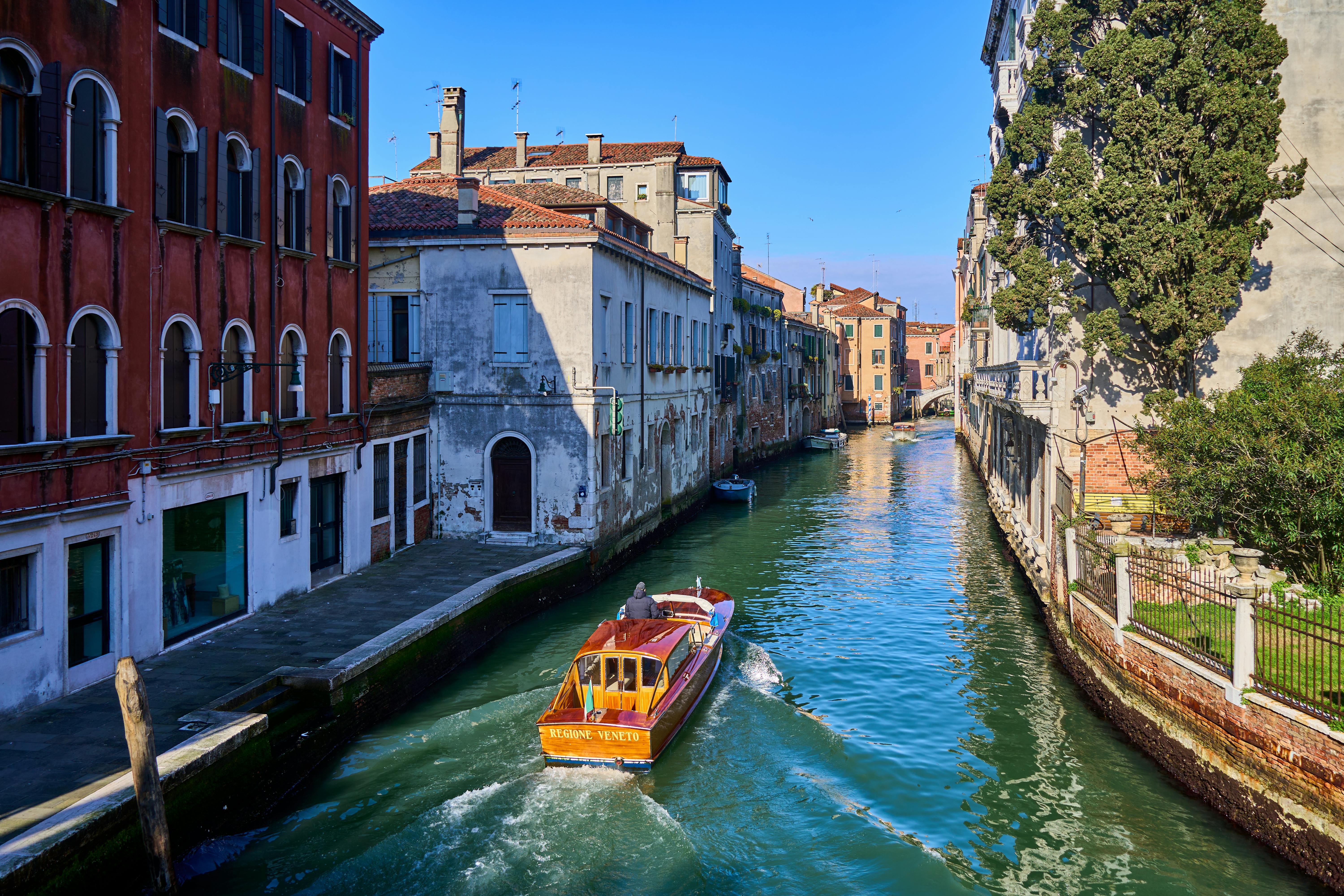
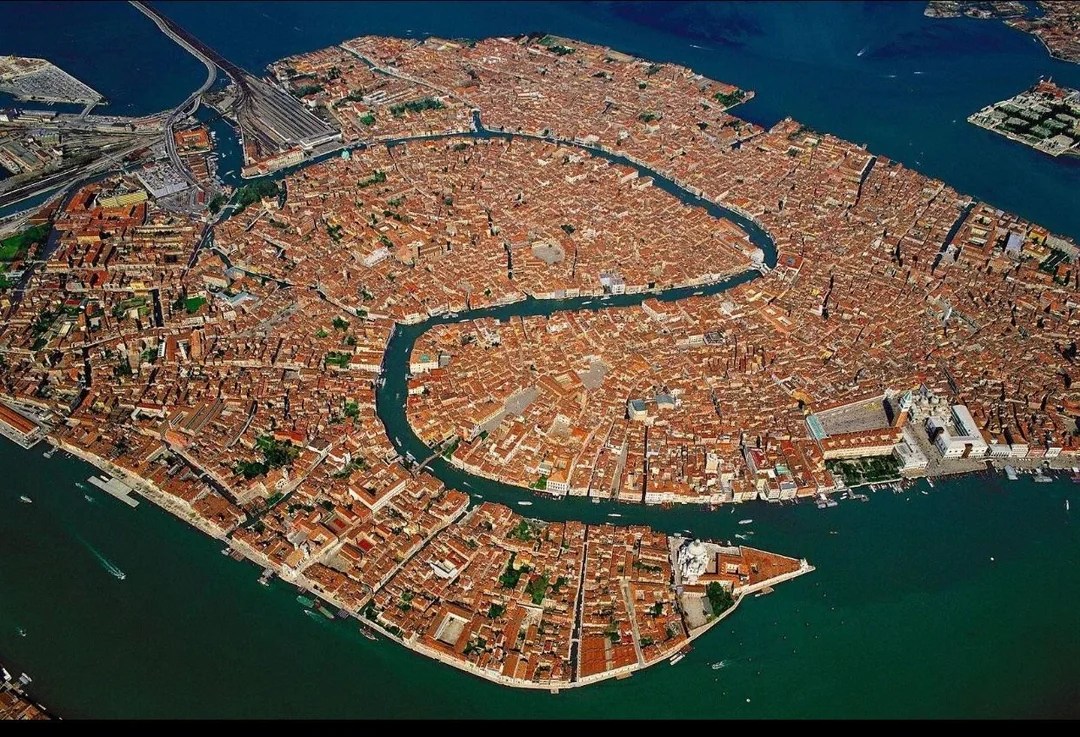
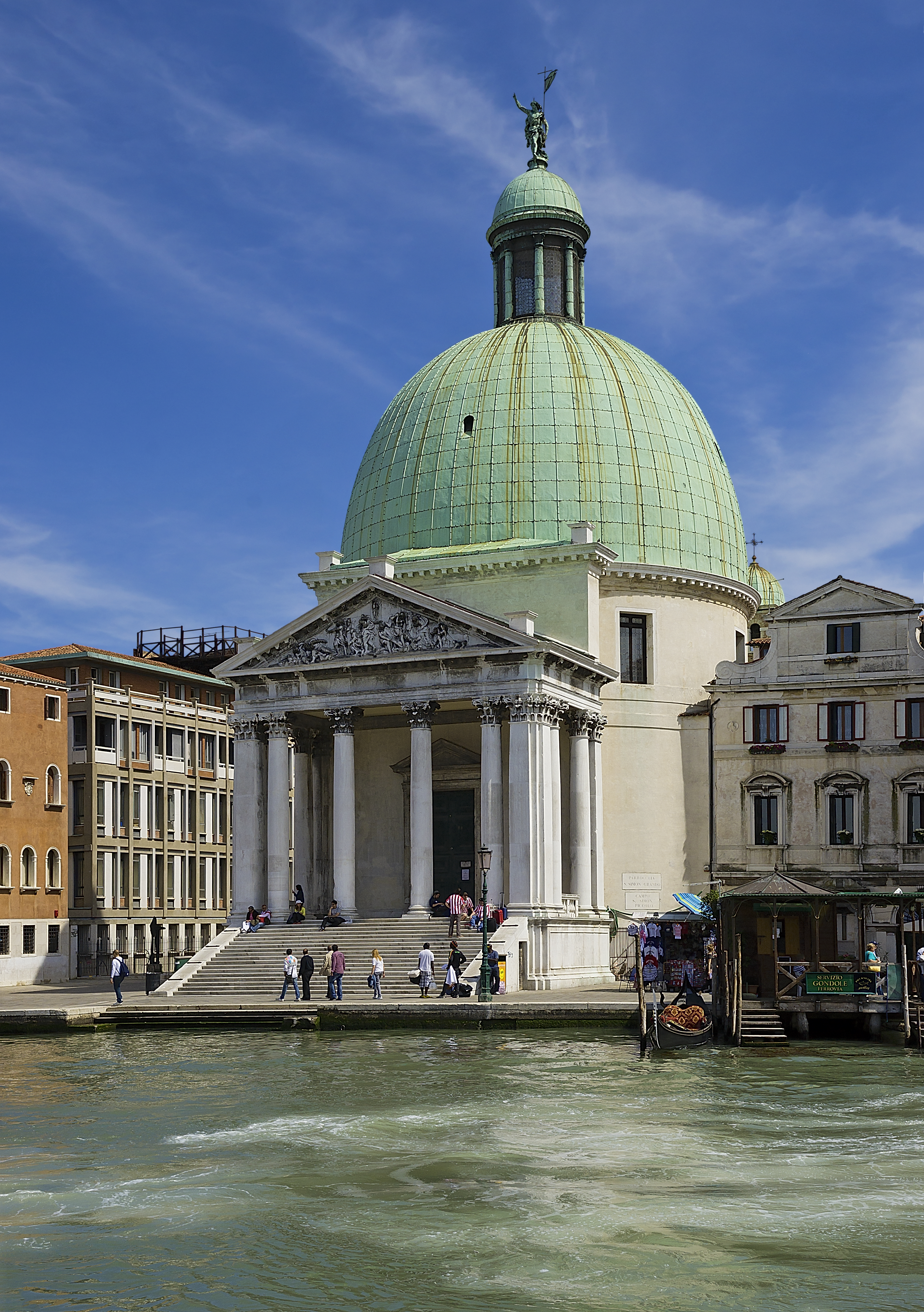
This self-guided walk explores the historic San Marco district, the ceremonial and cultural heart of Venice. Starting in St. Mark’s Square, the route leads you past world-famous landmarks, through narrow alleyways, and into peaceful campos that reveal the city’s layered history. Along the way, you’ll encounter Byzantine mosaics, Renaissance façades, and glimpses of everyday Venetian life behind the grandeur.


How to navigate with your mobile device
JCVWalks are designed to be easy to follow on your mobile device. As you walk, you can tap the header or photo for each point of interest to open the location directly in Google Maps. This will help you navigate from your current location to the next point of interest. If you’d like to learn more about any stop along the way, just click the links in the description for additional details and context.
St. Mark’s Square (Piazza San Marco)
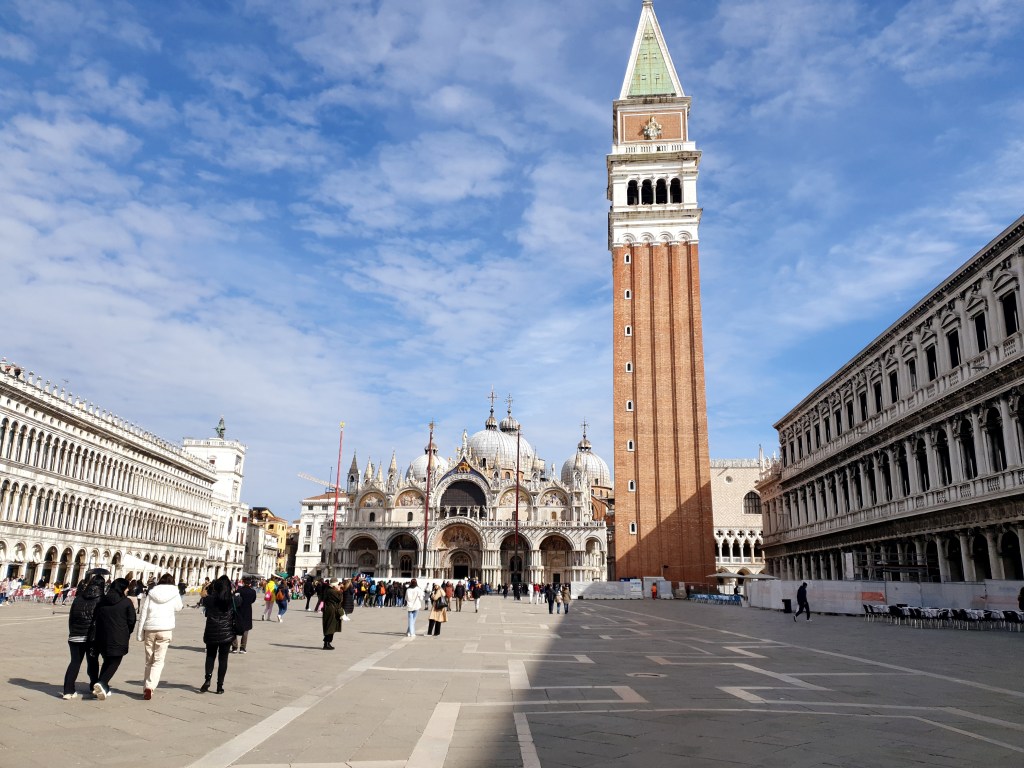
Often described as the most beautiful square in the world, Piazza San Marco has been the ceremonial and political heart of Venice for over a millennium. Surrounded by architectural icons like St. Mark’s Basilica, the Doge’s Palace, and the Bell Tower, or Campanile, the square reflects the city’s historical role as a powerful maritime republic. Visitors can enter St. Mark’s Basilica for free, though access to the museum and terrace costs around €5–€10, while the Doge’s Palace offers a comprehensive museum pass for about €30. You can also check Viator or Get your Guide, both offer several guided tour and or skip the line options.
Travelers should be cautious in this area, as pickpockets are known to operate in the crowds, often using distractions like staged arguments or requests for help to divert attention.
St. Marks Square (Piazza San Marco)
Click here for a focused walk within one of the great piazzas of Italy—Piazza San Marco
Torre dell’Orologio
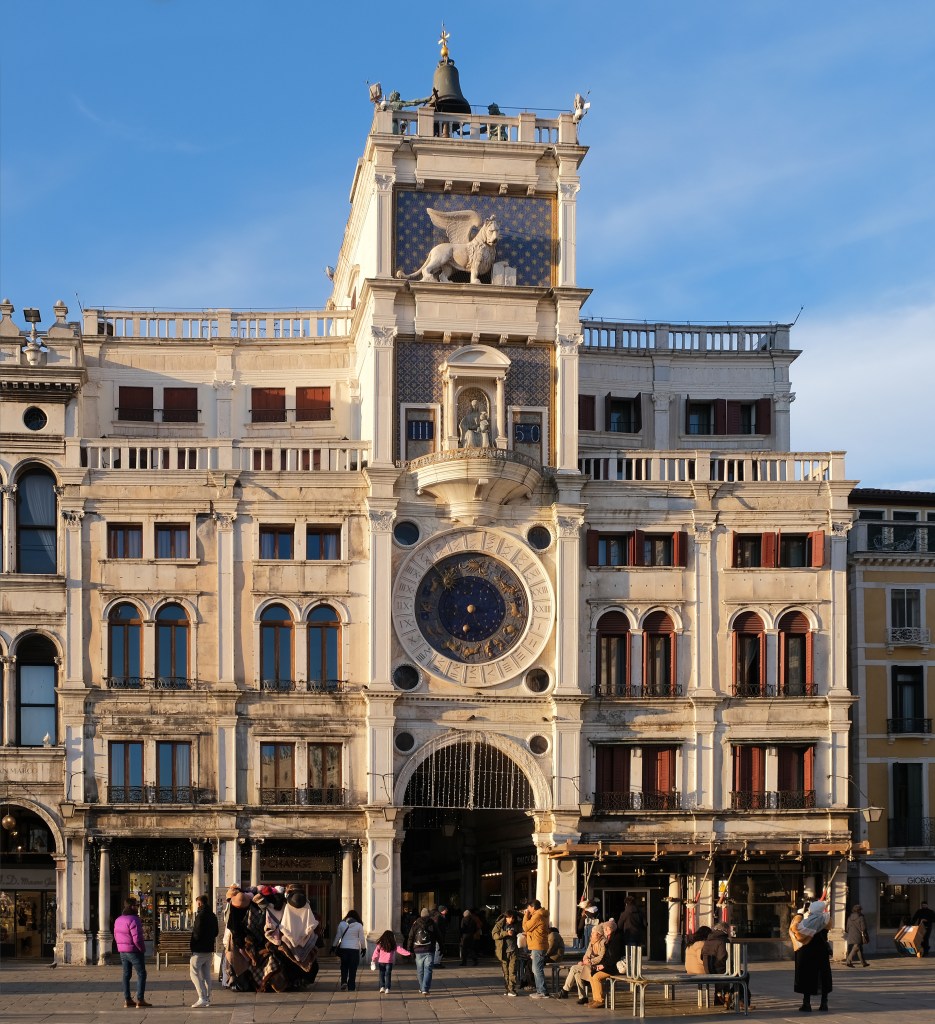
Passing beneath the Torre dell’Orologio, a 15th-century Renaissance clock tower with an intricate astronomical dial, you enter the Mercerie—Venice’s historic shopping streets. These narrow lanes, including Merceria dell’Orologio, Merceria San Zulian, and Merceria San Salvador, have connected St. Mark’s Square to the Rialto since the Middle Ages. The clock tower once helped sailors track tides and time, while the Mercerie bustled with merchants selling silks, spices, and luxury goods, reflecting Venice’s role as a global trading hub. You may want to wander around the streets of the Mercerie before moving on.
Chiesa di San Salvador
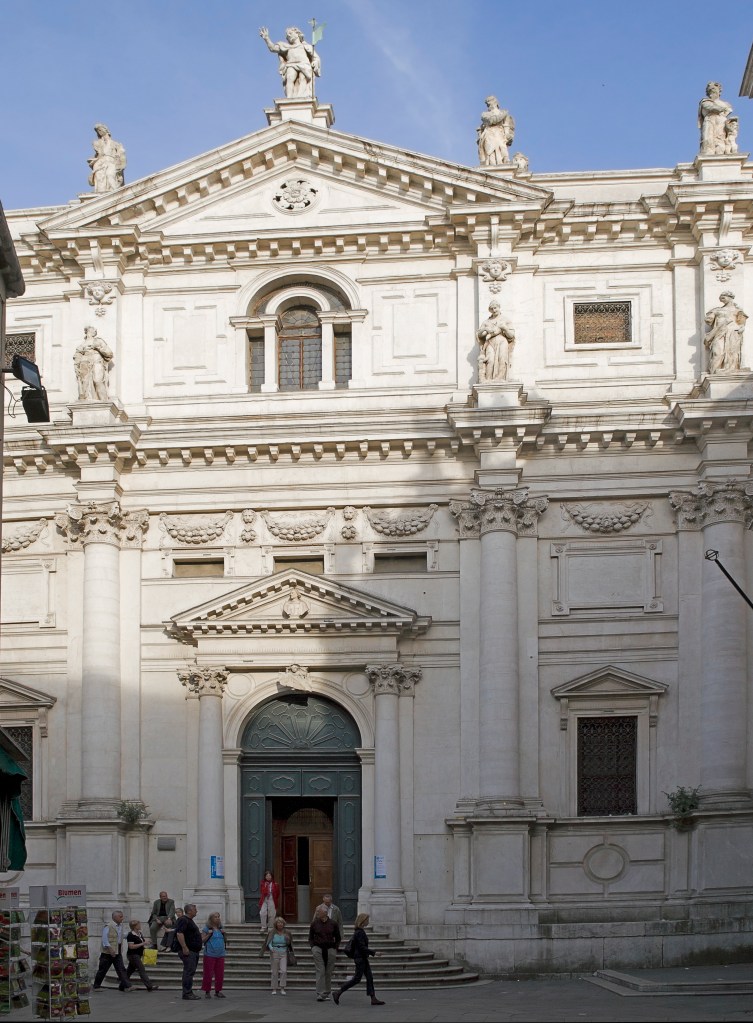
Built in the 16th century, the Chiesa di San Salvador is a serene Renaissance church tucked just off the Mercerie. It houses masterpieces by Titian, including The Transfiguration of Christ, and was commissioned by a powerful religious confraternity. The church’s elegant architecture and rich artwork offer a glimpse into the spiritual and artistic life of Venice during its golden age, when religious devotion and civic pride were deeply intertwined. Admission is free.
Dining & Drinking in Crowded Tourist Zones: What to Know
In Venice’s busiest areas, restaurants and cafés often cater more to foot traffic than to food quality. While the views and ambiance can be stunning, prices tend to be inflated and the food may be underwhelming. Here are a few tips to help travelers enjoy the experience without falling into common traps:
- Expect higher prices: In places like St. Mark’s Square, even a simple coffee can cost €10 or more, especially if there’s live music. Some cafés add a “music surcharge” of €6–€10 per person, even if you didn’t request it.
- Check the menu before sitting down: Always look for a posted menu with prices. If it’s not visible, ask to see it before ordering. Be cautious of vague pricing or “market price” listings without clarification.
- Avoid sitting fees: Many cafés charge extra just for sitting at a table, especially in high-traffic areas. If you’re just grabbing a drink or snack, consider standing at the bar (which is often half the price).
- Watch for hidden charges: Some places add service fees or cover charges that aren’t clearly disclosed. Always check your bill carefully before paying.
- Don’t assume location equals quality: A restaurant with a canal view or a spot in a famous square doesn’t guarantee good food. Often, the best meals are found a few blocks away in quieter neighborhoods.
- Ask locals or staff for recommendations: If you’re unsure, ask your hotel concierge, a shopkeeper, or even a Vaporetto staff member where they eat. Venetians know where to find quality and value.
- Use Google Maps or TripAdvisor filters: Look for places rated highly for food and service, not just location. Filter by “moderate price” and “local cuisine” to find hidden gems.
Campo San Bartolomeo
Just before crossing the Rialto Bridge, pause in Campo San Bartolomeo, a lively square that has long served as a meeting point for Venetians and visitors. It’s anchored by a statue of Carlo Goldoni, Venice’s beloved 18th-century playwright, and surrounded by shops and cafés. This square offers excellent people-watching and a glimpse into the city’s literary heritage.


XR SantaCroce
Ponte di Rialto
The Rialto Bridge, completed in 1591, is the oldest and most iconic bridge spanning the Grand Canal. Designed by Antonio da Ponte, it replaced a wooden structure and became a symbol of Venice’s engineering ingenuity and commercial dominance. Lined with shops and offering panoramic views of the canal, the bridge was once the gateway to the city’s financial district and remains a vibrant crossroads of Venetian life.
NOTE: Travelers should be cautious in this area, as there have been reports of street artists placing paintings on the ground and accusing passersby of damaging them, demanding payment. Accomplices are known to bump you into stepping on the artwork. Also, be wary of unsolicited help with luggage or directions, as these may be part of aggressive scams targeting tourists by distracting you while an accomplice picks your pocket.
Teatro Goldini
Teatro Goldoni. Named after Carlo Goldoni, this 17th-century theater has been a cornerstone of Venetian performing arts for centuries. It was originally built as Teatro Vendramin and later renamed in honor of the playwright who revolutionized Italian comedy. The theater has hosted everything from classical plays to modern performances and remains a vibrant cultural venue. The theater is open Tuesday to Friday from 10:00 am to 1:00 pm and 3:00 pm to 6:30 pm, and Saturday from 10:30 am to 6:00 pm. Admission for performances ranges from €12 to €29 depending on seating and event.

Palazzo Grimani
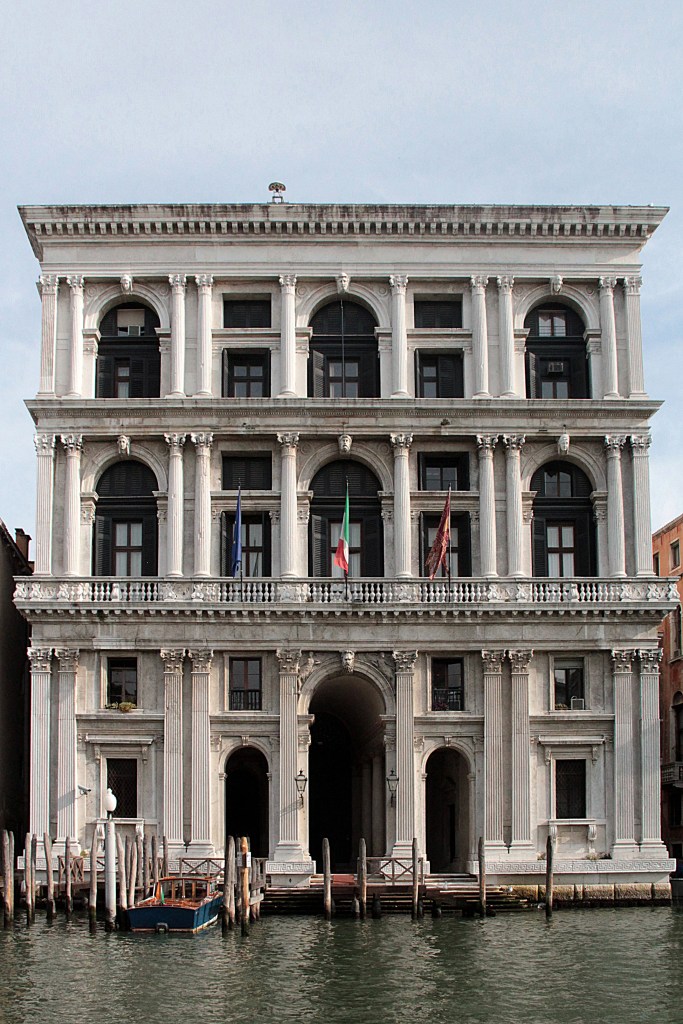
Palazzo Grimani. Once home to the powerful Grimani family, this palace stands out for its classical architecture and Roman-inspired interior. It reflects the humanist ideals of the Renaissance and the family’s deep ties to the Venetian Republic. Now a museum, it houses archaeological treasures and art collections that showcase the tastes of its former residents. The museum is open Tuesday to Sunday from 10:00 am to 7:00 pm, with last admission at 6:30 pm. Adult admission is €13, with reduced tickets at €6 for EU citizens aged 18–25. Entry is included in the Venice City Pass.
Campo Manin
Campo Manin. Named after Daniele Manin, a 19th-century patriot who led Venice’s resistance against Austrian rule, this square offers a moment of reflection. His statue stands at the center, surrounded by residential buildings and a few shops. Historically, it was a site of political gatherings and civic pride. Today, it’s a quieter space that invites you to consider Venice’s struggle for independence and its enduring spirit.

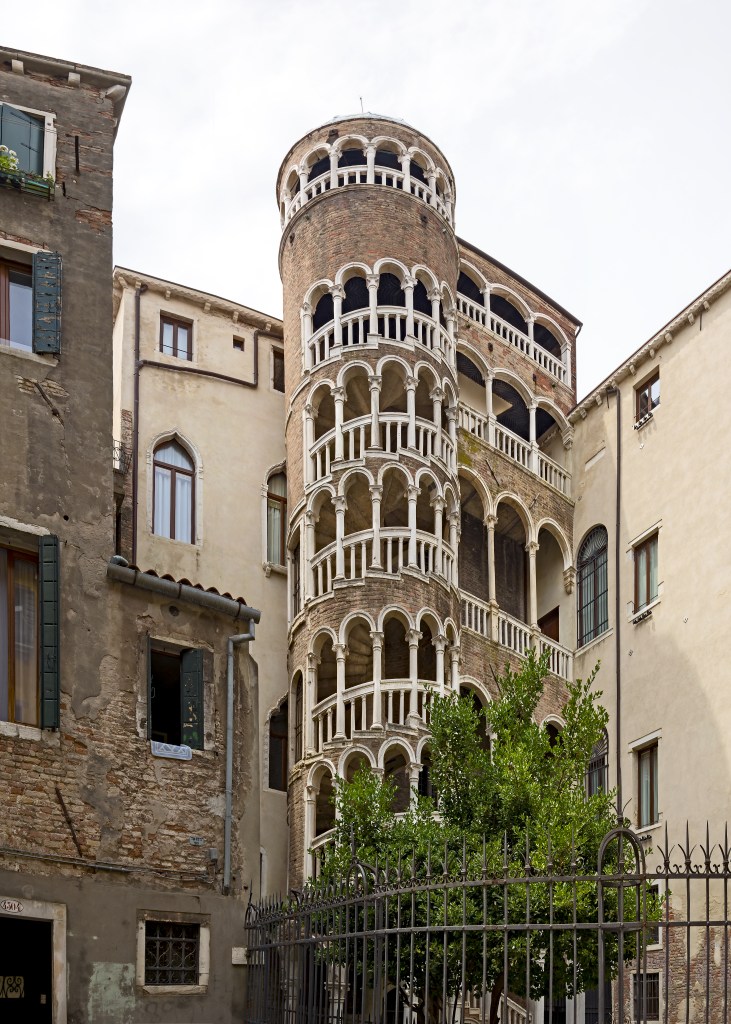
Palazzo Contarini del Bovolo
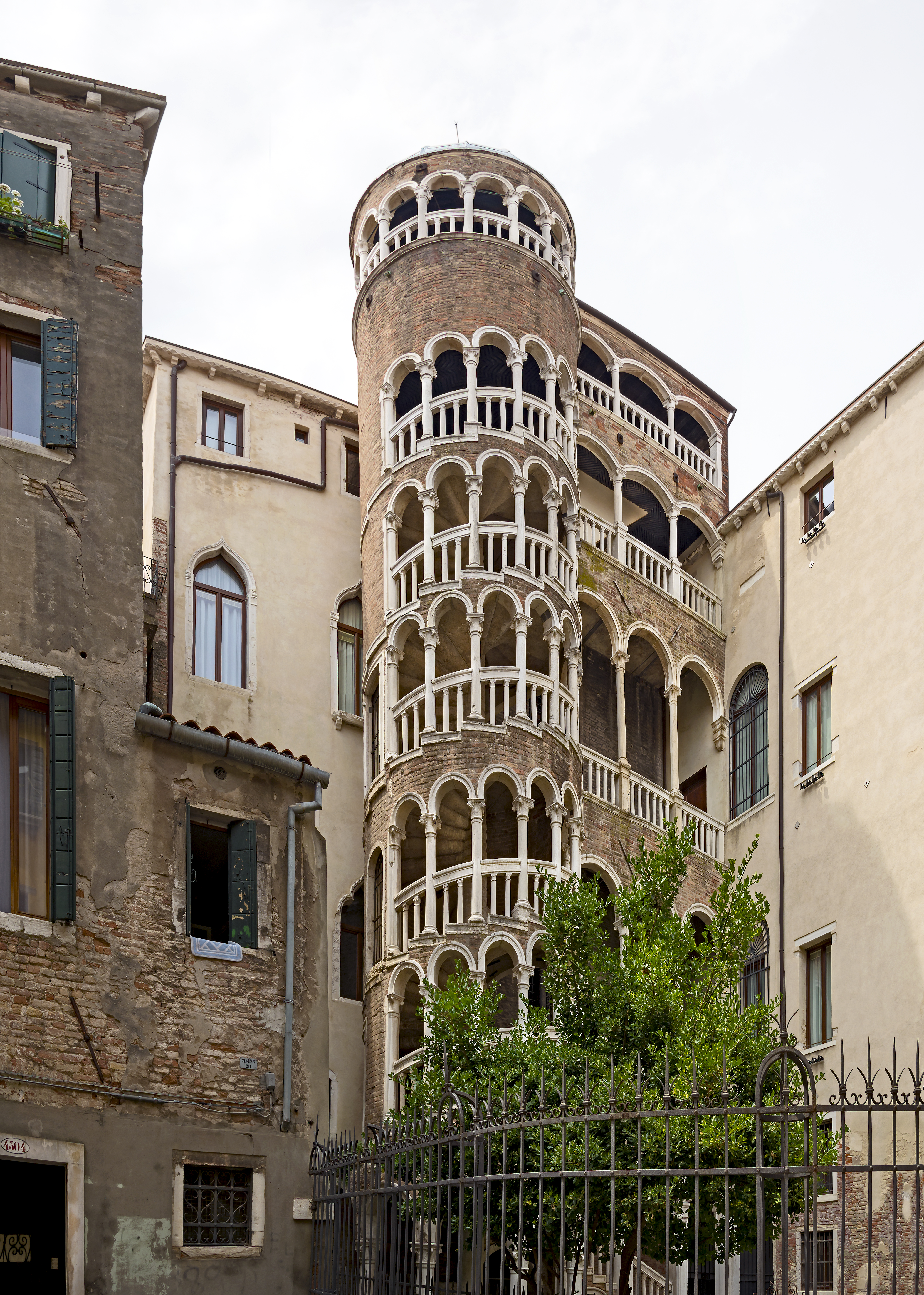
Hidden in a quiet courtyard, the Palazzo Contarini del Bovolo is famous for its spiral staircase, the Scala Contarini del Bovolo. Built in the late 15th century by a wealthy merchant family, the staircase is a rare architectural flourish in Venice, blending Gothic and Renaissance styles. It was designed to impress and elevate the family’s status, and today it offers panoramic views of the city from its upper levels. Admission is around €8 with a timed ticket during busy seasons. You can get your tickets through the official site or purchase them purchase them through Viator or Get your Guide. Admission Included with Venice City Pass
Teatro La Fenice
Teatro La Fenice, meaning “The Phoenix,” is one of Italy’s most renowned opera houses, known for its resilience after multiple fires and reconstructions. Since its opening in 1792, it has hosted premieres by composers like Verdi and Rossini and remains a symbol of Venice’s cultural vitality. Even without attending a performance, touring its opulent interior reveals the city’s deep connection to music, drama, and artistic rebirth. Admission for a self-guided tour is about €12. You can get your tickets through the official site or purchase them through Viator or Get your Guide.

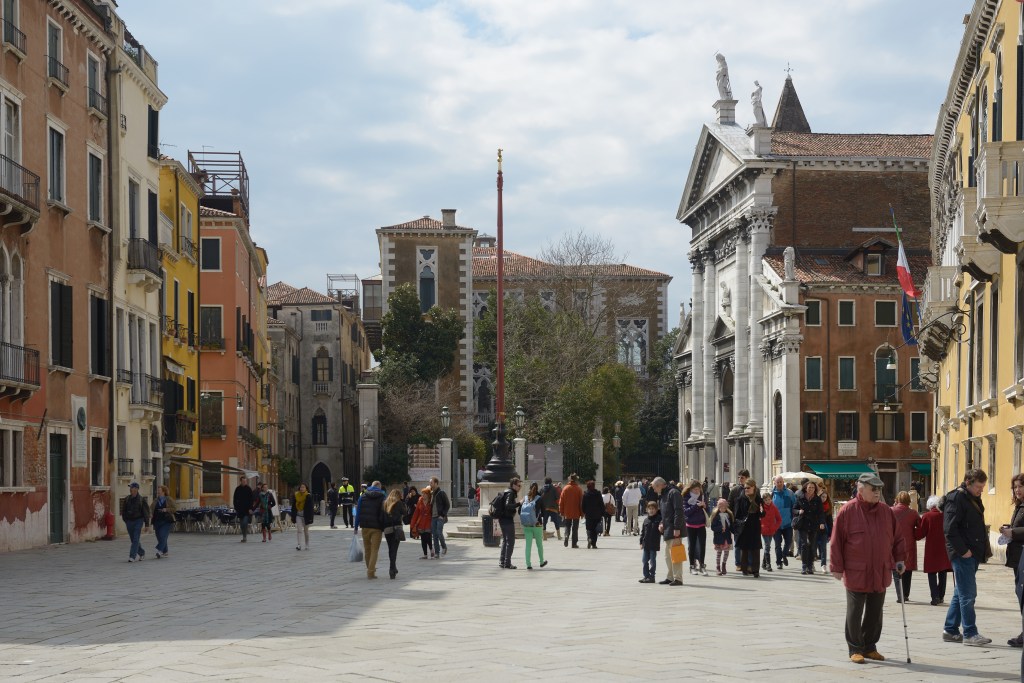
Campo Santo Stefano
Campo Santo Stefano. This large square is a favorite among locals for its open space and nearby cafés. Historically, it was a gathering place for public events and religious festivals. It’s surrounded by notable buildings, including the Church of Santo Stefano and several palazzi. The square offers a quieter moment to rest and observe daily life in Venice.
From here, you can continue the walk back to St. Mark’s Square by clicking ther next Point of Interest, or you can explore Dorsoduro or Giudecca with one of the walks below.
Click here for more JCV Walks in Venice
Your journey doesn’t have to end here. Choose another walk and let’s keep exploring together—one step at a time.
JCV Walks in Dorsoduro
Continue to the Ponte dell’Accademia and explore the Dorsoduro district in two distinct directions—each offering a unique blend of art, architecture, and local life. There is also an option to combine the two walks into one longer walk.
JCV Walks in Giudecca
Cross the canal to Giudecca, a peaceful island with wide waterfront paths, local artisan studios, and stunning views back toward the heart of Venice.
Chiesa di Santa Maria del Giglio
Chiesa di Santa Maria del Giglio. Also known as Santa Maria Zobenigo, this church is striking for its elaborate façade, which features maps, reliefs, and statues celebrating the military exploits of the Barbaro family. Built in the late 17th century, it reflects the Baroque era’s emphasis on drama and detail. Inside, you’ll find works by Rubens and other notable artists. The church is open Monday to Saturday from 10:30 am to 1:30 pm and 2:30 pm to 5:00 pm, with last admission at 4:20 pm. Adult admission is €3, with reduced tickets at €1.50.

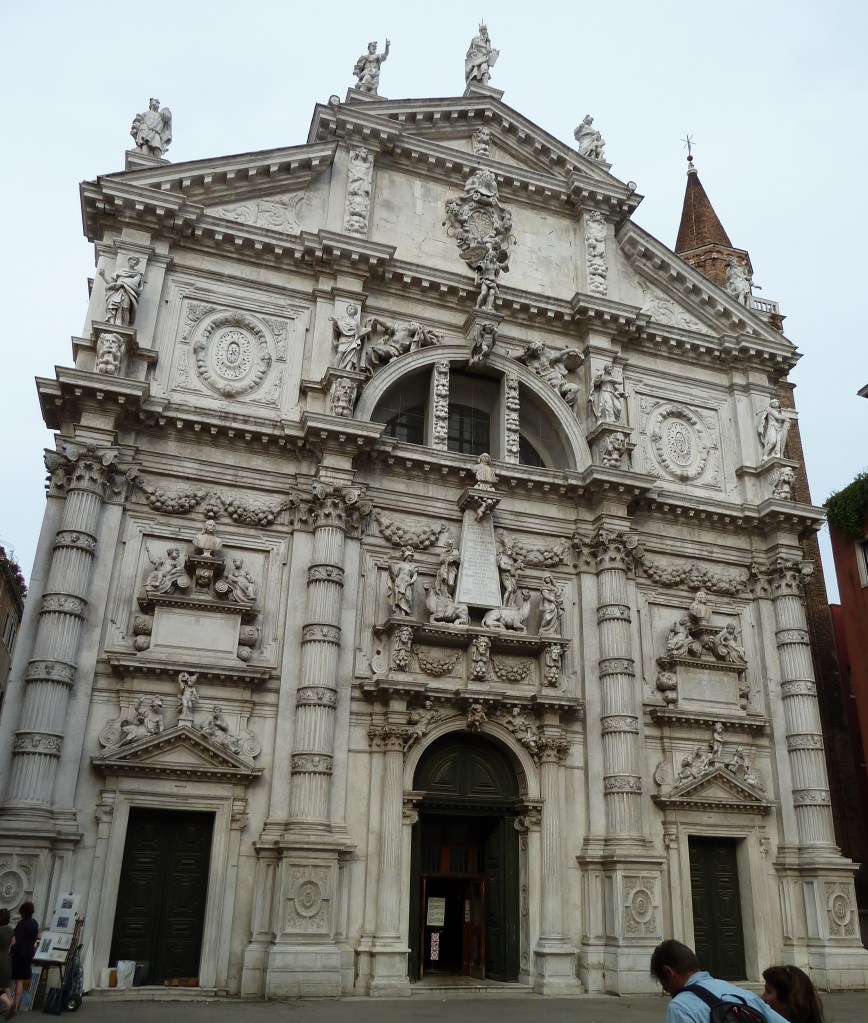
Chiesa Parrocchiale di San Moise
Chiesa Parrocchiale di San Moisè. This Baroque church is known for its dramatic façade filled with sculptural detail. Though modest in size, it features ornate decorations and a peaceful interior. Built in the 17th century, it reflects the period’s artistic exuberance and the city’s devotion to religious expression. It’s often overlooked by visitors rushing to the Basilica, but it offers a quieter moment of reflection. The church is open daily from 3:30 pm to 7:00 pm. Admission is free.
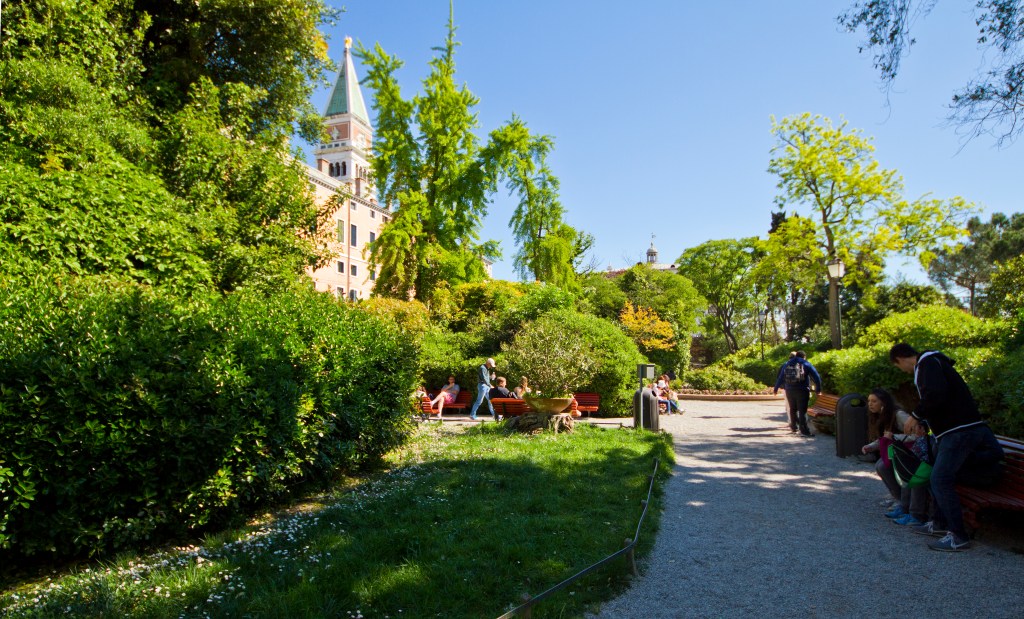
Giardini Reali
We will end this walk at the Giardini Reali, or Royal Gardens. These restored 19th-century gardens were originally commissioned by Napoleon, and offer a tranquil escape from the crowds. With shaded paths, benches, and views of the Bacino di San Marco, the gardens are ideal for a short rest. The recent restoration has revived the original layout and added a sleek café pavilion, blending history with modern design.
Thanks for walking with me!
You’ve just explored San Marco, the ceremonial heart of Venice, where centuries of history unfold across grand squares, iconic bridges, quiet churches, and lively markets. From the architectural splendor of St. Mark’s Square to the artistic treasures tucked into hidden courtyards, this walk offers a rich introduction to the city’s cultural and civic life—one that blends grandeur with intimacy at every turn.
If you enjoyed the route, found a hidden gem, or have ideas for improving the experience, I’d love to hear from you! Your insights help me improve future walks and inspire fellow travelers. Please rate this walk using the stars below — and feel free to leave a comment. Grazie! — and happy exploring!


Click here for more JCV Walks in Venice
Your journey doesn’t have to end here. Choose another walk and let’s keep exploring together—one step at a time.
JCV Walks in San Polo
Return to the Rialto Bridge to discover the rich history of Venice’s oldest sestiere in San Polo, home to Gothic churches, quiet campos, and the city’s vibrant food markets.
JCV Walks in Castello
Explore the quieter, more residential side of Venice in Castello, where naval history, leafy gardens, and hidden churches reveal a different rhythm of city life.
JCV Walks in Giudecca
Cross the canal to Giudecca, a peaceful island with wide waterfront paths, local artisan studios, and stunning views back toward the heart of Venice.
JCV Walks in Murano & Burano
Take a scenic boat ride to Murano and Burano, where glassblowing traditions and colorful fishermen’s houses offer a vivid contrast to the main islands.
Photo Credits
- Water Taxi – Photo by Gotta Be Worth It, licensed under Free to use via Pexels, source
- Scala Contarini del Bovolo (Venice) – Photo by Didier Descouens, licensed under CC BY-SA 4.0, source
- Arial Map of Venice – Photo by Unknown, licensed under Unknown,
- The Venetian Arsenal – Photo by nikola_pu, licensed under CC BY-SA 3.0, source
- St. Mark’s Square – Photo by Pieter van Eekeren, licensed under CC BY-SA 4.0, source
- St Mark’s Clocktower 2 – Photo by kallerna, licensed under CC BY-SA 4.0, source
- Chiesa di San Salvador – Photo by Didier Descouens, licensed under CC BY-SA 4.0, source
- Campo San Bartolomeo (Venice) – Photo by Didier Descouens, licensed under CC BY-SA 4.0, source
- Rialto Bridge – Rialto Gondoliers – Photo by Saffron Blaze, licensed under CC BY-SA 3.0, source
- San Giacomo di Rialto (Facade) – Photo by Didier Descouens, licensed under CC BY-SA 4.0, source
- San Giovanni Elemosinario (Venice) – Interior – Photo by Orlando Paride, licensed under Public Domain, source
- Campo della Pescaria – Photo by ARIANE C., licensed under TripAdvisor media, source
- Ponte delle Tette (Venice) – Photo by Didier Descouens, licensed under CC BY-SA 4.0, source
- Campo San Polo (Venice) – Photo by Didier Descouens, licensed under CC BY-SA 4.0, source
- Facade of Santa Maria Gloriosa dei Frari (Venice) – Photo by Didier Descouens, licensed under CC BY-SA 4.0, source
- Scuola Grande di San Rocco (Venice) – Il Salone Maggiore – Photo by Didier Descouens, licensed under CC BY-SA 4.0, source
- San Rocco Venezia (Facciata) – Photo by Didier Descouens, licensed under CC BY-SA 4.0, source
- Scuola Grande di San Giovanni Evangelista – Venezia – Photo by Didier Descouens, licensed under CC BY-SA 4.0, source
- Casa Goldoni – Photo by Sailko, licensed under CC BY 3.0, source
- Palazzo Vendramin Grimani – Photo by La Biennale di Venezia, licensed under Institutional media, source
- Grand Canal & Rialto Bridge – Photo by Martin Falbisoner, licensed under CC BY-SA 4.0, source
- La Fenice Opera House from the Stage – Photo by Pietro Tessarin, licensed under CC BY-SA 4.0, source
