A walk through the Merchant Soul of Venice
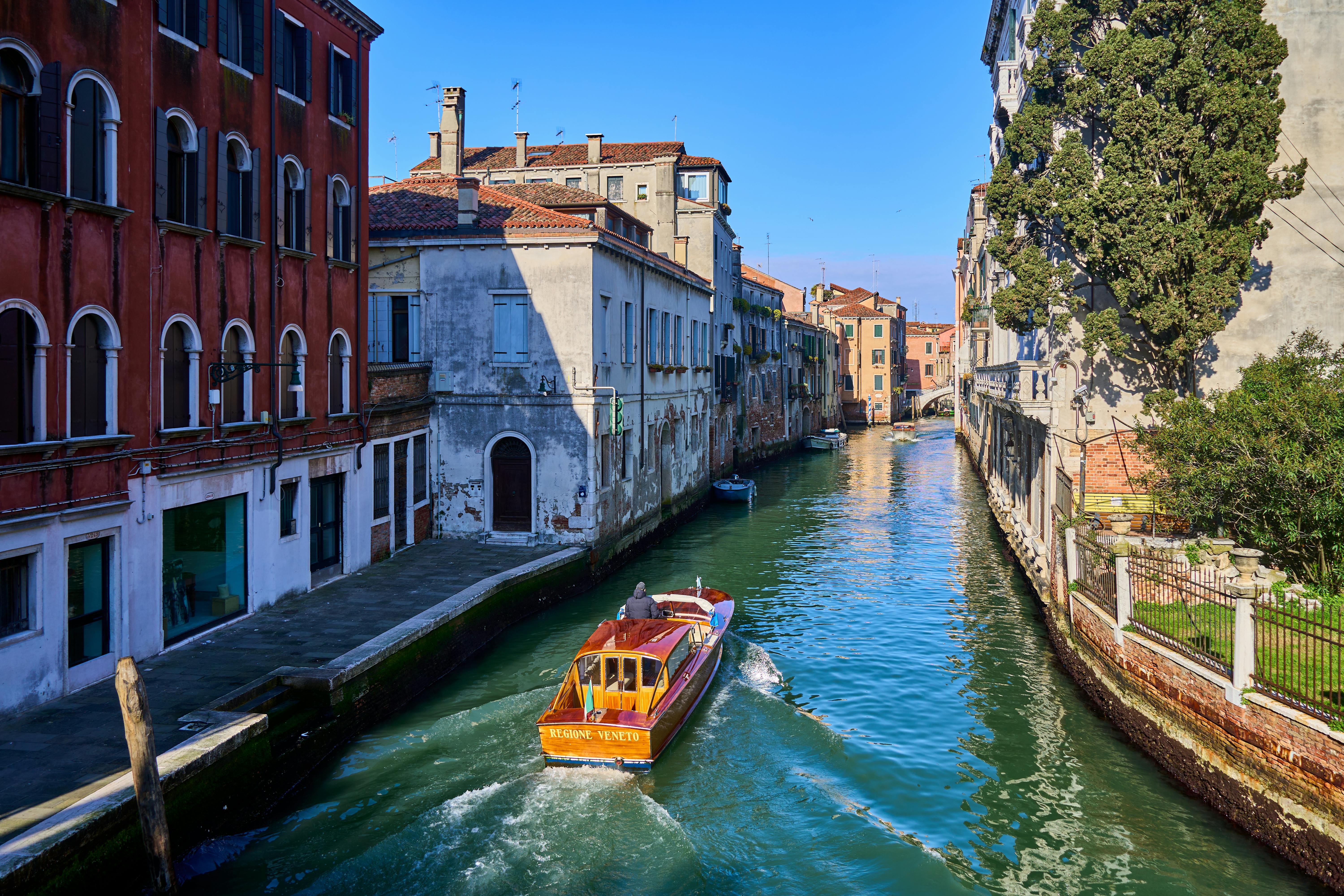
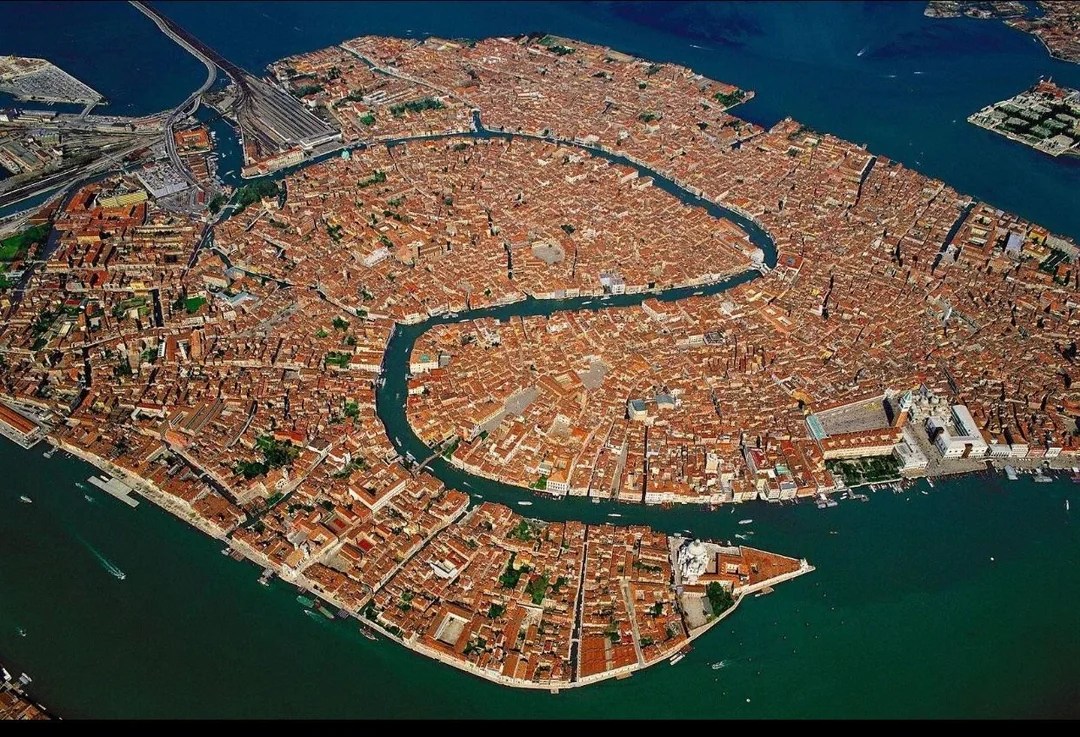

This self-guided walk explores the rich cultural and commercial legacy of Venice’s San Polo district, beginning and ending at the iconic Rialto Bridge. From this historic crossing over the Grand Canal, the route winds through bustling markets, quiet campos, hidden architectural gems, and centuries-old churches. Along the way, you’ll encounter Renaissance masterpieces, Gothic basilicas, and the everyday rhythms of Venetian life—offering a vivid portrait of the city’s past and present.


How to navigate with your mobile device
JCVWalks are designed to be easy to follow on your mobile device. As you walk, you can tap the header or photo for each point of interest to open the location directly in Google Maps. This will help you navigate from your current location to the next point of interest. If you’d like to learn more about any stop along the way, just click the links in the description for additional details and context.

Ponte di Rialto
We will begin our exploration of San Polo at the Ponte di Rialto, or Rialto Bridge. Completed in 1591, it is the oldest and most iconic bridge spanning the Grand Canal. Designed by Antonio da Ponte, it replaced a wooden structure and became a symbol of Venice’s engineering ingenuity and commercial dominance. Lined with shops and offering panoramic views of the canal, the bridge was once the gateway to the city’s financial district and remains a vibrant crossroads of Venetian life.
NOTE: Travelers should be cautious in this area, as there have been reports of street artists placing paintings on the ground and accusing passersby of damaging them, demanding payment. Accomplices are known to bump you into stepping on the artwork. Also, be wary of unsolicited help with luggage or directions, as these may be part of aggressive scams targeting tourists by distracting you while an accomplice picks your pocket.
Dining & Drinking in Crowded Tourist Zones: What to Know
In Venice’s busiest areas, restaurants and cafés often cater more to foot traffic than to food quality. While the views and ambiance can be stunning, prices tend to be inflated and the food may be underwhelming. Here are a few tips to help travelers enjoy the experience without falling into common traps:
- Expect higher prices: In places like St. Mark’s Square, even a simple coffee can cost €10 or more, especially if there’s live music. Some cafés add a “music surcharge” of €6–€10 per person, even if you didn’t request it.
- Check the menu before sitting down: Always look for a posted menu with prices. If it’s not visible, ask to see it before ordering. Be cautious of vague pricing or “market price” listings without clarification.
- Avoid sitting fees: Many cafés charge extra just for sitting at a table, especially in high-traffic areas. If you’re just grabbing a drink or snack, consider standing at the bar (which is often half the price).
- Watch for hidden charges: Some places add service fees or cover charges that aren’t clearly disclosed. Always check your bill carefully before paying.
- Don’t assume location equals quality: A restaurant with a canal view or a spot in a famous square doesn’t guarantee good food. Often, the best meals are found a few blocks away in quieter neighborhoods.
- Ask locals or staff for recommendations: If you’re unsure, ask your hotel concierge, a shopkeeper, or even a Vaporetto staff member where they eat. Venetians know where to find quality and value.
- Use Google Maps or TripAdvisor filters: Look for places rated highly for food and service, not just location. Filter by “moderate price” and “local cuisine” to find hidden gems.
Chiesa di San Giacomo di Rialto
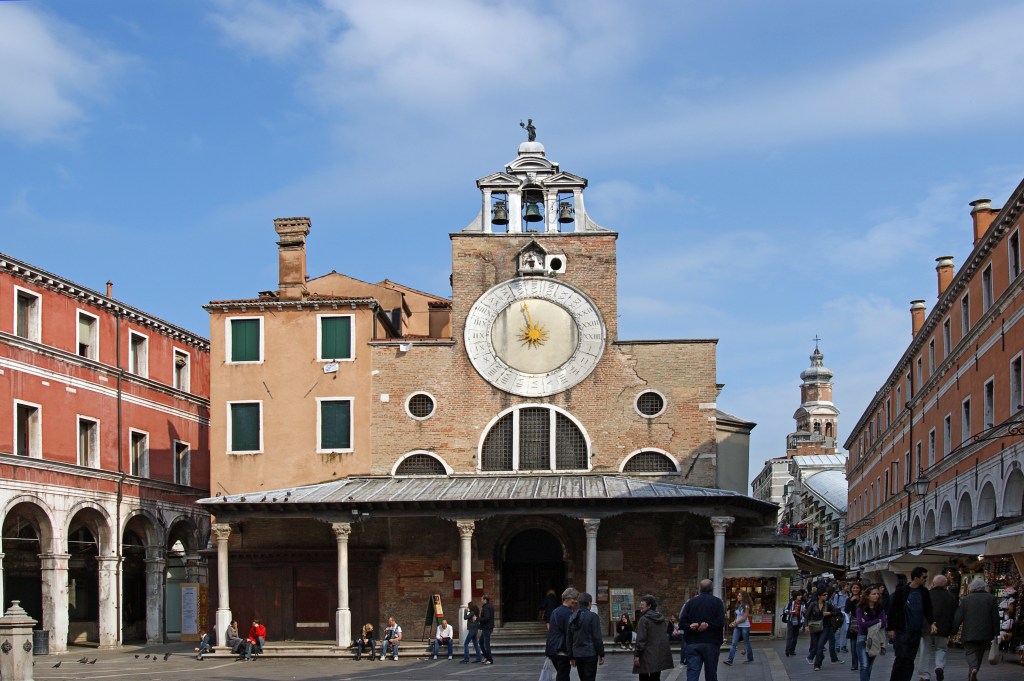
Just beyond the Rialto Bridge stands the Chiesa di San Giacomo di Rialto, believed to be the oldest church in Venice, dating back to the legendary founding year of 421 AD. Its large 15th-century clock and Gothic portico mark it as a historic gathering place for merchants. In front of the church, you’ll find the Il Gobbo di Rialto (“The Hunchback of Rialto”), a small stone figure atop a pedestal that once served as a public platform for official proclamations and punishments. Citizens would climb the statue to read edicts aloud or deliver public announcements, making it a symbol of civic life in the bustling Rialto Market area. The church’s modest appearance belies its significance as a spiritual anchor in this commercial heart of Venice. San Giacomo di Rialto is open Monday through Saturday from 10:00 am to 12:30 pm, and admission is free.
Church of San Giovanni Elemosinario
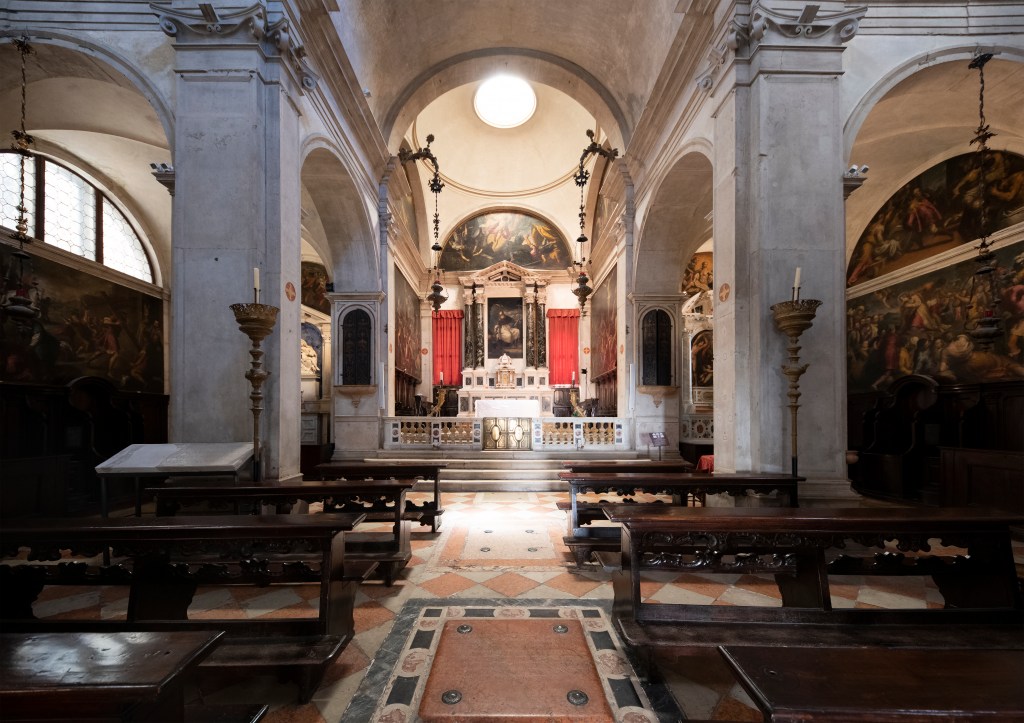
Just behind the market stalls, the Church of San Giovanni Elemosinario is a hidden Renaissance gem built in the 16th century after a devastating fire. It features a graceful dome and a striking altarpiece by Titian, and its quiet interior offers a peaceful retreat from the busy market. Though small, it’s a fine example of Venetian sacred architecture and a rewarding stop for art lovers. The church is open Wednesday and Thursday from 10:30 am to 1:30 pm. Admission is €3.
Before leaving this area, be sure to check out Campo Bella Vienna is a lively and compact square just steps from the Church of San Giovanni Elemosinario and the bustling Rialto Market. Known for its mix of locals and tourists, the campo is surrounded by casual eateries serving cicchetti and prosecco—often enjoyed standing at the bar. The square features souvenir stalls and is a gateway to the nearby fruit and vegetable market (Campo de la Pescaria) through a back alleyway.
Campo de la Pescaria / Mercato di Rialto
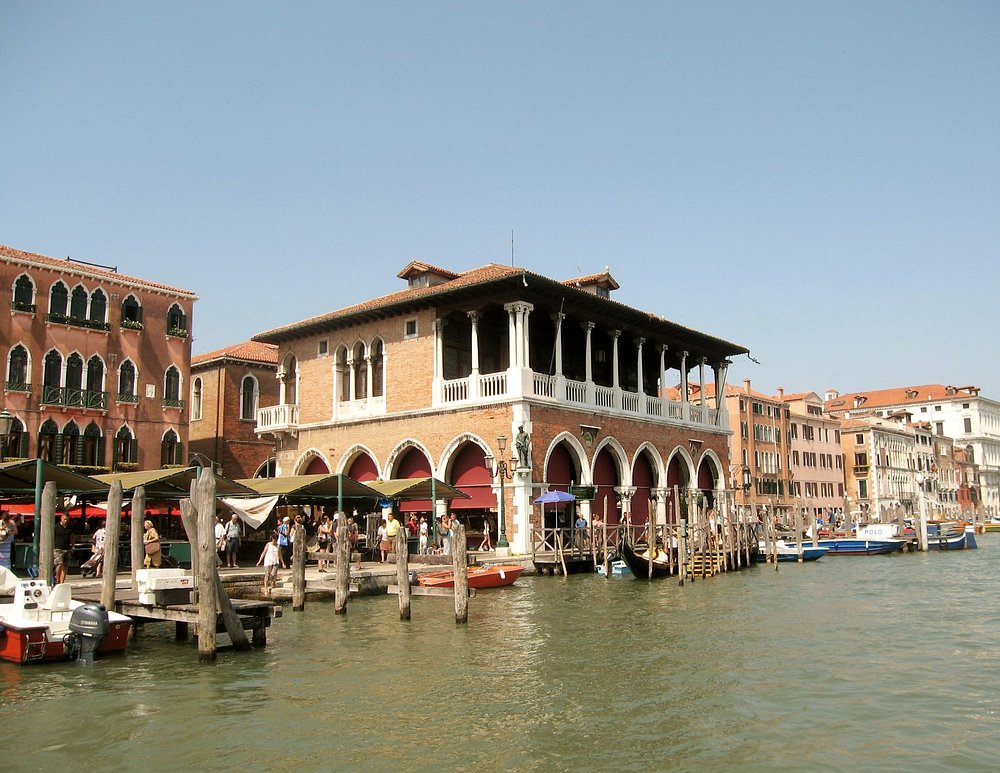
The Mercato di Rialto, centered around Campo de la Pescaria, is one of Europe’s oldest and most vibrant markets. The fish market, active since the 11th century, is a sensory feast in the mornings, with fresh seafood, produce, and spices on display. This area has long been the commercial soul of Venice.

Ponte delle Tette
A short detour from the market brings you to the Ponte delle Tette, or “Bridge of the Breasts,” named for its curious history. In the 16th century, this area was part of Venice’s legalized red-light district, and women were encouraged to display their breasts from windows and balconies to attract clients and discourage homosexuality, which the state sought to suppress. Today, the bridge is a quiet, unassuming spot, but it offers a fascinating glimpse into the city’s social history and the complex relationship between morality, commerce, and control in Renaissance Venice.

Basilica di Santa Maria Gloriosa dei Frari (Frari Church)
A short walk from Ponte della Tette brings you to the Frari Church, one of Venice’s most important religious and artistic landmarks. Built by the Franciscans in the 14th century, this massive Gothic basilica houses masterpieces by Titian, including the Assumption of the Virgin and the Pesaro Altarpiece, as well as a sculpture of Saint John the Baptist by Donatello—his only work in Venice. The church’s austere brick exterior contrasts with its richly decorated interior, making it a must-see for lovers of Renaissance art and sacred architecture. The Frari is open Monday to Saturday from 9:00 am to 6:00 pm, and Sundays and holidays from 1:00 pm to 6:00 pm. Adult admission is €5
Scuola Grande di San Rocco
Just across from the Frari is the Scuola Grande di San Rocco, a 16th-century confraternity building renowned for its extraordinary cycle of paintings by Tintoretto. Often called the “Sistine Chapel of Venice,” the upper hall is filled with dramatic, large-scale canvases depicting biblical scenes, all executed with Tintoretto’s signature energy and theatrical flair. The scuola is still active today and remains one of the best-preserved examples of Venetian civic and artistic life. It is open daily from 9:30 am to 5:30 pm, with last entry at 5:00 pm. Adult admission is €10, with reduced tickets at €8 for youth under 26 and seniors over 65. It was beautiful. No advance reservation is required.

Church of San Rocco
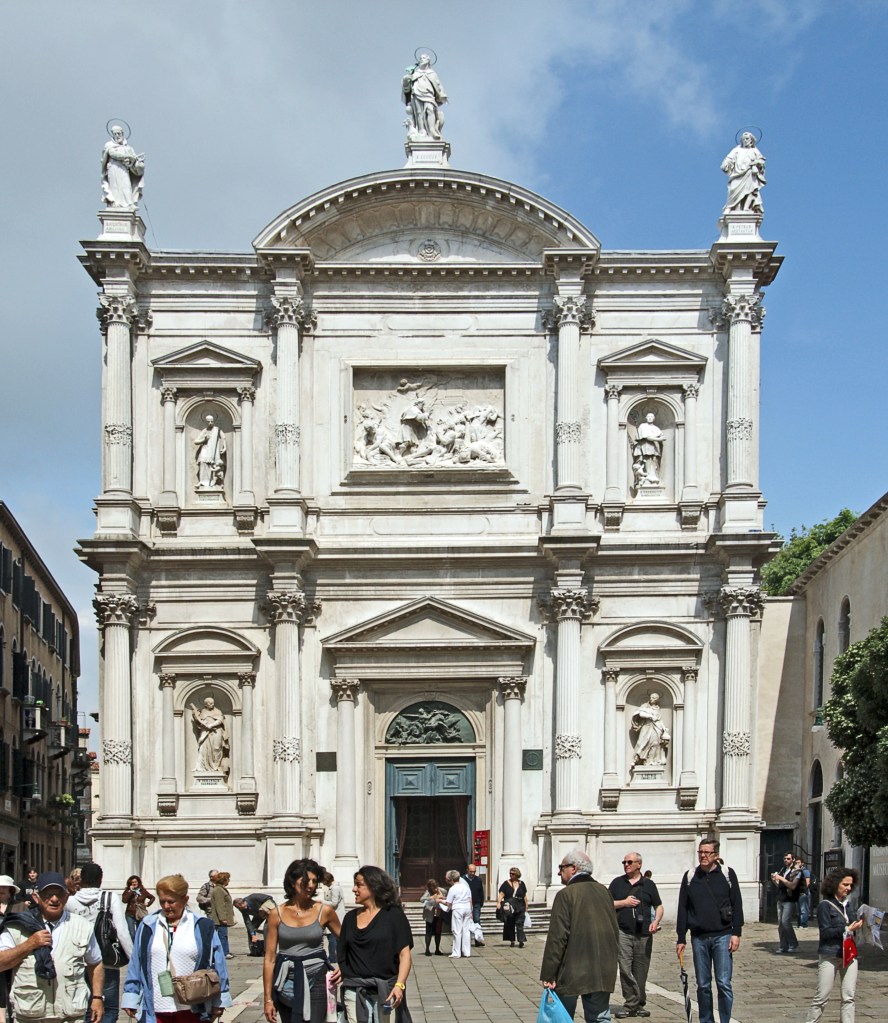
Next door to the scuola is the Church of San Rocco, dedicated to the patron saint of plague victims. The church contains additional works by Tintoretto, including scenes from the life of St. Roch. Though less grand than the scuola, it complements the experience with its intimate scale and spiritual focus. The church is free to enter, and its quiet interior offers a moment of reflection amid the artistic intensity of the surrounding area. The church is open Monday through Saturday from 9:30 am to 5:30 pm, and Sunday from 1:30 pm to 5:30 pm. Adult admission is €3.50.
Casa di Carlo Goldoni
Continue to the Casa di Carlo Goldoni, the 18th-century home of Venice’s most famous playwright. Now a museum, it offers a glimpse into the life and work of Carlo Goldoni, who revolutionized Italian theater with his witty, character-driven comedies. The house includes period furnishings, manuscripts, and a small puppet theater. Admission is modest, and the museum provides a charming and personal look at Venice’s literary heritage. The museum is open daily from 10:00 am to 4:00 pm (last admission at 3:30 pm), closed on Wednesdays. Adult admission is €8, and no advance reservation required. We visited. There was not much to see.

Vendramin Grimani Palace
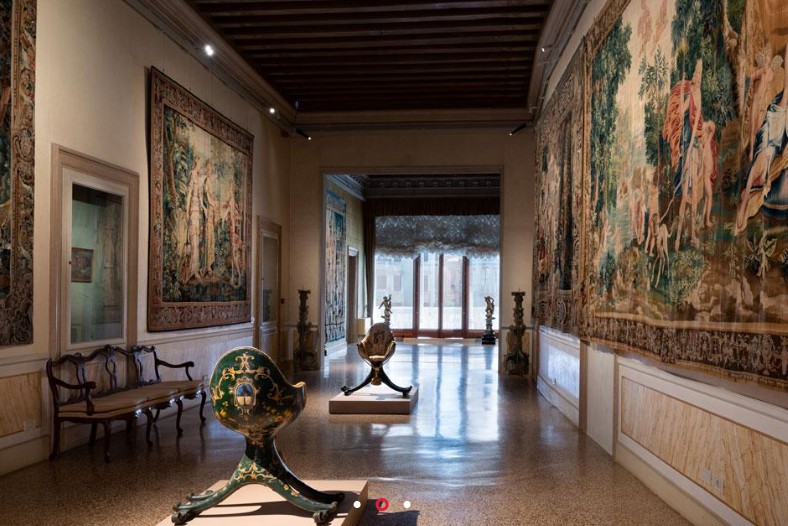
As an option, just a short detour off our route, the Vendramin Grimani Palace is a beautifully restored Renaissance residence that now serves as a cultural foundation and exhibition space. Once home to the powerful Grimani family, the palace features elegant interiors, frescoed ceilings, and rotating exhibits that explore Venetian art, architecture, and history. Admission is by reservation only, and tickets can be purchased online or at the palace without additional fees. While its grand façade faces the Grand Canal, those interested can take a brief diversion to view its understated land-side entrance and exhibit signage.
Campo San Polo
We will now make our way to Campo San Polo, the largest open square in Venice after St. Mark’s. Historically used for public gatherings, bullfights, and even masked balls during Carnival, today it’s a peaceful, sunlit space where locals gather and children play. The square is surrounded by elegant palazzi and is home to the Church of San Polo, which features works by Tintoretto and Giandomenico Tiepolo. Its a big square but there was not much going on here.

Rio Terà San Silvestro
From Campo San Polo, head east toward Rio Terà San Silvestro, a street that was once a canal, filled in during the 19th century to accommodate foot traffic. Lined with local shops, bakeries, and cafés, it offers a quieter, more residential glimpse of Venice. The transformation from waterway to walkway illustrates how Venice has adapted its urban landscape while preserving its unique character.
Riva del Vin
Continue toward the Grand Canal and stroll along the Riva del Vin, a lively promenade once used for unloading wine barrels—hence its name. Today, it’s lined with restaurants and offers scenic views of gondolas and historic buildings. This stretch reflects Venice’s mercantile past and its enduring charm.
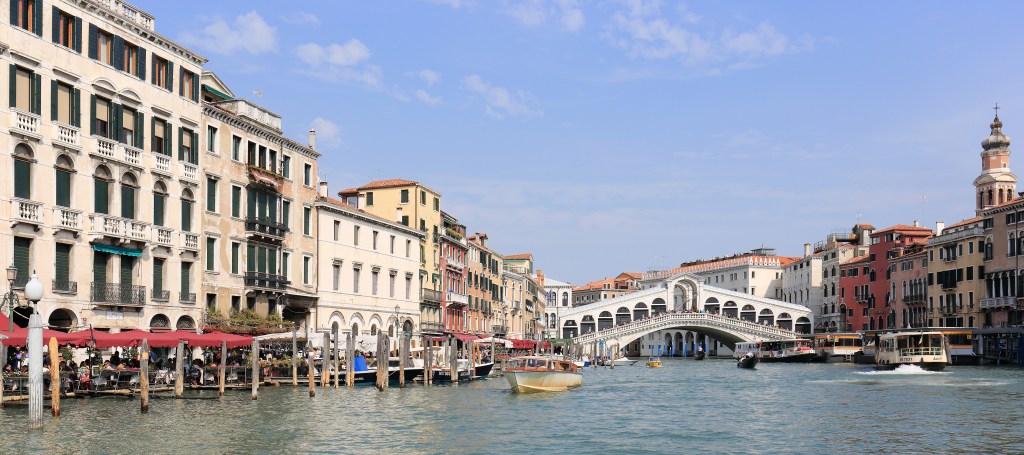
End at Rialto Bridge
This walk ends where it began—at the Rialto Bridge—bringing you full circle through the cultural and commercial heart of Venice. If you’d like to continue exploring, a short stroll east will take you to Campo Santa Maria Formosa, the starting point of the Castello West Walk, where quieter canals and historic naval landmarks await.

Click here for more JCV Walks in Venice
Your journey doesn’t have to end here. Choose another walk and let’s keep exploring together—one step at a time.
JCV Walks in San Marco
Explore the historic San Marco district, and Piazza San Marco these walks exploring the ceremonial and cultural heart of Venice.
JCV Walks in Santa Croce
This walk begins in San Polo at Campo San Toma and explores the blend between Venice’s transportation infrastructure and the local neighborhoods that surround it.
JCV Walks in Castello
Explore the quieter, more residential side of Venice in Castello, where naval history, leafy gardens, and hidden churches reveal a different rhythm of city life.
JCV Walks in Giudecca
Cross the canal to Giudecca, a peaceful island with wide waterfront paths, local artisan studios, and stunning views back toward the heart of Venice.
JCV Walks in Murano & Burano
Take a scenic boat ride to Murano and Burano, where glassblowing traditions and colorful fishermen’s houses offer a vivid contrast to the main islands.
Thanks for walking with me!
You’ve just explored the commercial heart of Venice—moving from the bustling Rialto markets through quiet churches, hidden bridges, and historic palazzi that shaped the city’s commercial and cultural identity.
If you enjoyed the route, found a hidden gem, or have ideas for improving the experience, I’d love to hear from you! Your insights help me improve future walks and inspire fellow travelers. Please rate this walk using the stars below — and feel free to leave a comment. Grazie! — and happy exploring!


Photo Credits
- Water Taxi – Photo by Gotta Be Worth It, licensed under Free to use via Pexels, source
- Scala Contarini del Bovolo (Venice) – Photo by Didier Descouens, licensed under CC BY-SA 4.0, source
- Arial Map of Venice – Photo by Unknown, licensed under Unknown,
- The Venetian Arsenal – Photo by nikola_pu, licensed under CC BY-SA 3.0, source
- Rialto Bridge – Rialto Gondoliers – Photo by Saffron Blaze, licensed under CC BY-SA 3.0, source
- San Giacomo di Rialto (Facade) – Photo by Didier Descouens, licensed under CC BY-SA 4.0, source
- San Giovanni Elemosinario (Venice) – Interior – Photo by Orlando Paride, licensed under Public Domain, source
- Campo della Pescaria – Photo by ARIANE C., licensed under TripAdvisor media, source
- Ponte delle Tette (Venice) – Photo by Didier Descouens, licensed under CC BY-SA 4.0, source
- Campo San Polo (Venice) – Photo by Didier Descouens, licensed under CC BY-SA 4.0, source
- Facade of Santa Maria Gloriosa dei Frari (Venice) – Photo by Didier Descouens, licensed under CC BY-SA 4.0, source
- Scuola Grande di San Rocco (Venice) – Il Salone Maggiore – Photo by Didier Descouens, licensed under CC BY-SA 4.0, source
- San Rocco Venezia (Facciata) – Photo by Didier Descouens, licensed under CC BY-SA 4.0, source
- Casa Goldoni – Photo by Sailko, licensed under CC BY 3.0, source
- Palazzo Vendramin Grimani – Photo by La Biennale di Venezia, licensed under Institutional media, source
- Grand Canal & Rialto Bridge – Photo by Martin Falbisoner, licensed under CC BY-SA 4.0, source
