Two quiet walks through Venice’s artistic and local side
Dorsoduro is one of Venice’s most captivating districts, known for its blend of artistic heritage, quiet canals, and vibrant local life. Home to world-class museums, student-filled piazzas, and peaceful residential lanes, it offers a more relaxed and authentic experience of the city—where grand architecture meets everyday Venetian rhythms.
These two curated walks begin at the iconic Ponte dell’Accademia and explore the Dorsoduro district in two distinct directions—each offering a unique blend of art, architecture, and local life. There is also an option to combine the two walks into one longer walk.
Note. I have prepared this walk for our first trip to Venice at the end of September, 2025. I will update it once we complete the walk.
JCV Walks in Dorsoduro
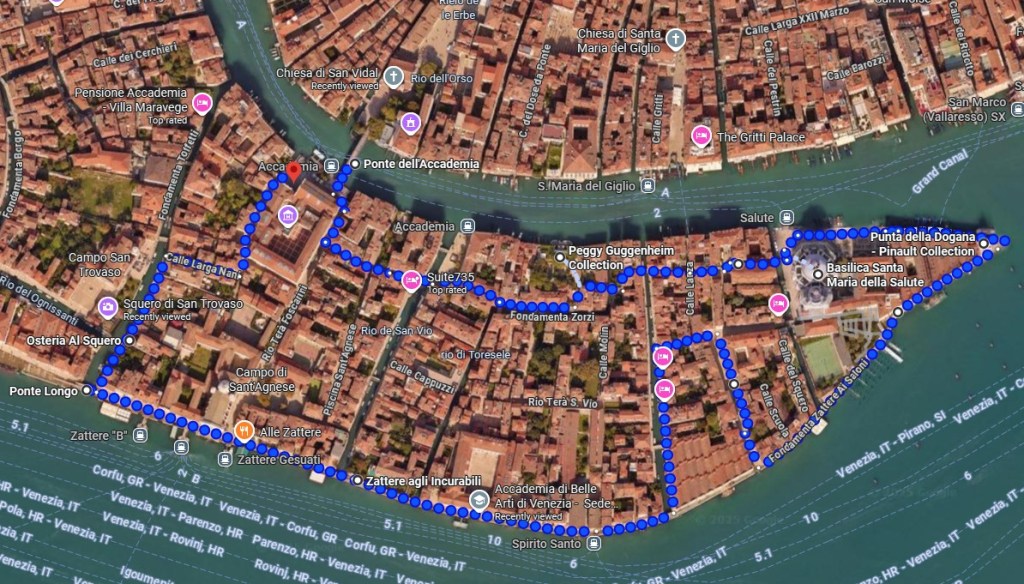
Dorsoduro East
This East walk begins at the Ponte dell’Accademia, and follows the Grand Canal toward the tip of Dorsoduro, blending classical and modern art, dramatic architecture, and sweeping lagoon views. Highlights include renowned museums, a baroque basilica, and the Zattere promenade, where locals gather for gelato and sunset light before the walk loops back inland.

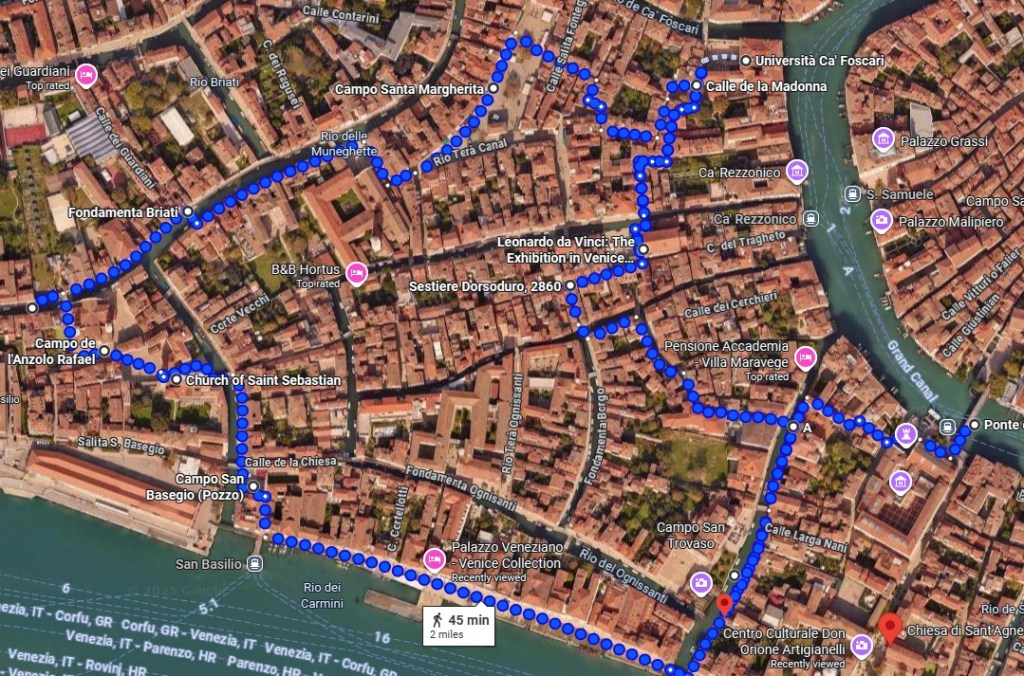
Dorsoduro West
The West walk begins at the Ponte dell’Accademia and winds west through Venice’s quieter, residential side. You’ll pass peaceful canals, frescoed churches, and student-filled piazzas, ending at Campo Santa Margherita. The route loops past a historic gondola yard and finishes with aperitivo or gelato along the canal near the Squero di San Trovaso.

Want to combine the walks? The navigation points below are designed so you can take each walk on its own or combine them into a single, immersive experience. To do so, start with the East Walk and continue into the West. The full route begins at the Ponte dell’Accademia and loops through both sides of Dorsoduro, offering a complete experience of the district’s artistic landmarks, quiet canals, and vibrant local life. Covering approximately 3 miles (4.8 kilometers), or about 5,900 steps, it’s a relaxed yet culturally rich journey through one of Venice’s most authentic neighborhoods.
How to navigate with your mobile device
JCVWalks are designed to be easy to follow on your mobile device. As you walk, you can tap the header or photo for each point of interest to open the location directly in Google Maps. This will help you navigate from your current location to the next point of interest. If you’d like to learn more about any stop along the way, just click the links in the description for additional details and context.
Dorsoduro East
The East walk begins at Campo Sant’Agnese and meanders east through Venice’s artistic and spiritual heart. You’ll explore quiet cloisters, canal-side palaces, and hidden chapels, passing through the Zattere waterfront and the Giudecca Canal’s breezy edge. The route includes stops at iconic churches and art spaces, ending with options for a scenic aperitivo or gelato overlooking the Grand Canal.
Ponte dell’Accademia
This walk begins at the Ponte dell’Accademia, built in 1933, one of only four bridges that cross the Grand Canal. It connects the San Marco and Dorsoduro districts and offers one of the most photographed views in Venice. From the bridge, you can see the dome of Santa Maria della Salute and the island of San Giorgio Maggiore. The bridge is named after the nearby Accademia Gallery, which houses a major collection of Venetian art.

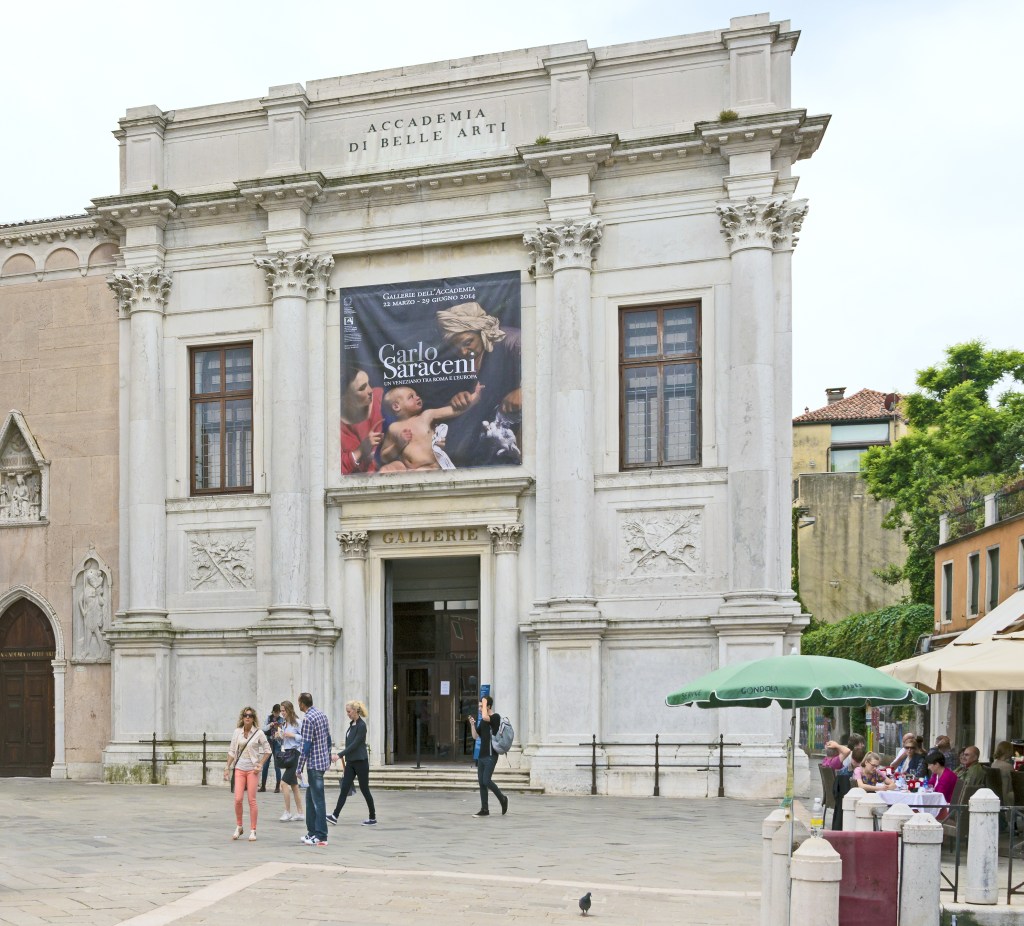
Gallerie dell’Accademia
Located just steps from the bridge, the Gallerie dell’Accademia is Venice’s premier art museum, showcasing works from the 14th to the 18th century. Housed in a former convent and school of fine arts, the museum features masterpieces by Bellini, Titian, Tintoretto, Veronese, and Canaletto. It offers a deep dive into the artistic legacy that shaped Venice’s cultural identity. Even if you don’t enter, the building and its surroundings are worth noting as a key cultural landmark in Dorsoduro. From here, follow Calle de la Chiesa along the Grand Canal.
Just before reaching the Peggy Guggenheim Collection, the Corner Pub offers a relaxed canal-side spot for a quick break or a longer linger. It’s especially popular for its low-priced spritz and cicchetti—ideal for a casual aperitivo with a view.
Peggy Gugenheim Collection
As you walk along Calle de la Chiesa, you’ll pass the Peggy Guggenheim Collection, one of Europe’s most important modern art museums. Housed in the unfinished Palazzo Venier dei Leoni, this canal-side museum was once the home of American heiress and art patron Peggy Guggenheim. The collection includes works by Picasso, Pollock, Dalí, Kandinsky, and many others, offering a striking contrast to Venice’s classical art heritage. Even if you don’t enter, the museum’s sculpture garden and Grand Canal terrace are visible from the path and add a layer of cultural richness to this part of Dorsoduro.

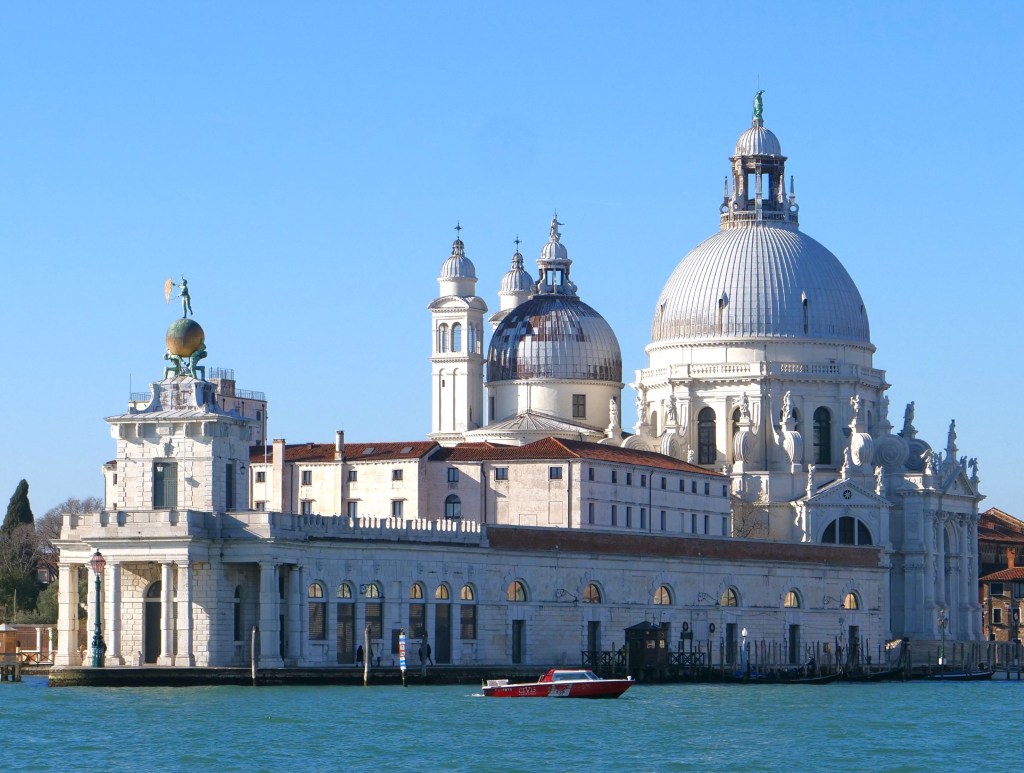
Basilica di Santa Maria della Salute
Continuing along Calle Nuova Sant’Agnese, you’ll arrive at the Basilica di Santa Maria della Salute, built in 1631 after a plague killed nearly a third of Venice’s population. The city vowed to build a church dedicated to the Virgin Mary if the plague ended, and this baroque structure was the result. Designed by Baldassare Longhena, the church stands at the entrance to the Grand Canal and is one of Venice’s most recognizable landmarks. Inside are works by Titian and Tintoretto. Entry to the main church is free; the sacristy may require a small fee. The church’s octagonal design and sweeping dome make it a favorite subject for artists and photographers.
Punta della Dogana
Walk around the church to reach the Punta della Dogana, the triangular tip of Dorsoduro, once used as a customs checkpoint for ships entering Venice. The building dates to the 1600s and was restored in the early 2000s to house contemporary art exhibitions from the Pinault Collection. Even if you don’t visit the museum, the location offers wide views of San Marco, the lagoon, and the Grand Canal. It’s a symbolic spot that reflects Venice’s history as a maritime and mercantile powerhouse. Retrace your steps and turn south along the Fondamenta Zattere ai Gesuati.

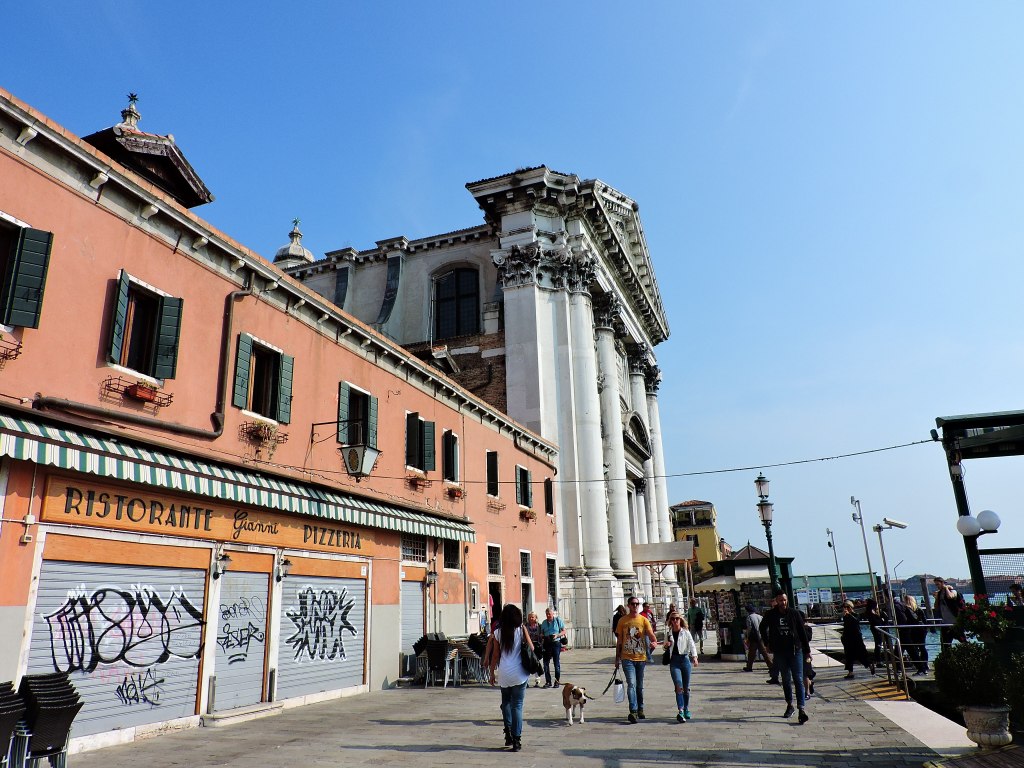
Fondamenta Zattere ai Gesuati
The Fondamenta Zattere ai Gesuati stretches along the Giudecca Canal and was historically used for unloading timber—“zattere” means rafts, a nod to the floating platforms that once carried goods into Venice. Today, this wide promenade offers one of the most serene waterfront walks in the city, with uninterrupted views across to the island of Giudecca and the occasional passing vaporetto or cargo boat. Feel free to deviate from the main path and explore side streets like the Rio di San Vio or Rio Terrà Foscarini, which offer glimpses of daily Venetian life and hidden architectural gems. Continue west along the Zattere until you reach the next landmark.
Ospedale degli Incurabili
As you continue along the Fondamenta Zattere ai Gesuati you’ll pass the site of the former Ospedale degli Incurabili, a 16th-century hospital established to care for patients with chronic and incurable illnesses. Though the hospital itself no longer operates, the building remains a significant landmark and now houses part of the Accademia di Belle Arti di Venezia, continuing its legacy as a place of learning and creativity. The name “Zattere agli Incurabili” reflects both the area’s historical role in public health and its enduring connection to Venice’s civic and cultural life. Continue walking until you reach Ponte Longo, a small bridge that marks the transition point for the East and West walks.


Santa Maria del Rosario (Gesuati)
Just before reaching the Ponte Longo, you’ll come upon the elegant Santa Maria del Rosario, commonly known as I Gesuati. This 18th-century Baroque church, designed by Giorgio Massari, was commissioned by the Dominican order and stands prominently along the Giudecca Canal. Its bright façade and harmonious proportions reflect the Dominican emphasis on clarity and spiritual grandeur. Inside, you’ll find stunning ceiling frescoes by Giovanni Battista Tiepolo, along with works by other notable Venetian artists. The church offers a quiet and contemplative stop along the Zattere, with benches nearby for resting and admiring the canal views. It’s a beautiful example of Venice’s artistic and religious legacy, and a highlight of this eastern stretch of Dorsoduro.
Ponte Longo
The Ponte Longo is a modest stone bridge tucked into the southern edge of Dorsoduro, connecting the Fondamenta Zattere to the inner lanes of the district. While it may not be as grand or photographed as Venice’s major bridges, it plays a quiet but important role in local life—linking residential areas, student paths, and scenic canal views.
Before crossing the bridge, turn and walk north along the Fondamenta Nani, a peaceful canal-side path lined with local cafés and gelaterie. It’s a great spot to pause for gelato or cicchetti, especially in the late afternoon when the light softens and the canal reflects the surrounding buildings. Gelato options here are included below.
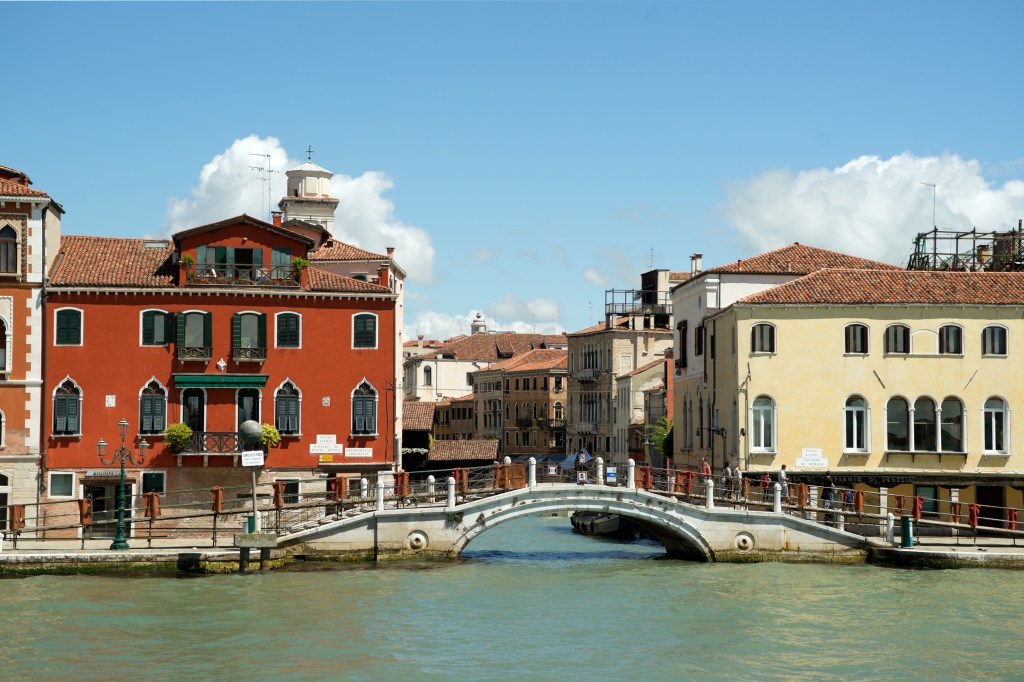
Gelato in Venice

Gelato is Italy’s beloved version of ice cream, but it’s denser, smoother, and typically lower in fat. Unlike ice cream, which is churned quickly to incorporate air, gelato is churned slowly, giving it a rich texture and more intense flavor. It’s served slightly warmer than ice cream, which helps the flavors shine.
Here, you have two excellent options. Gelateria Lo Squero, just steps from the gondola workshop, is known for its handmade flavors and quiet setting. It’s a favorite among locals and offers a peaceful spot to enjoy your gelato with views of the canal and the squero. Alternatively, walk a few minutes south to the Zattere waterfront, where Gelateria Nico has been serving gelato since 1935. It’s especially famous for its gianduiotto—a block of chocolate hazelnut gelato topped with whipped cream. Both spots offer a relaxing break with scenic views and a taste of Venetian tradition.
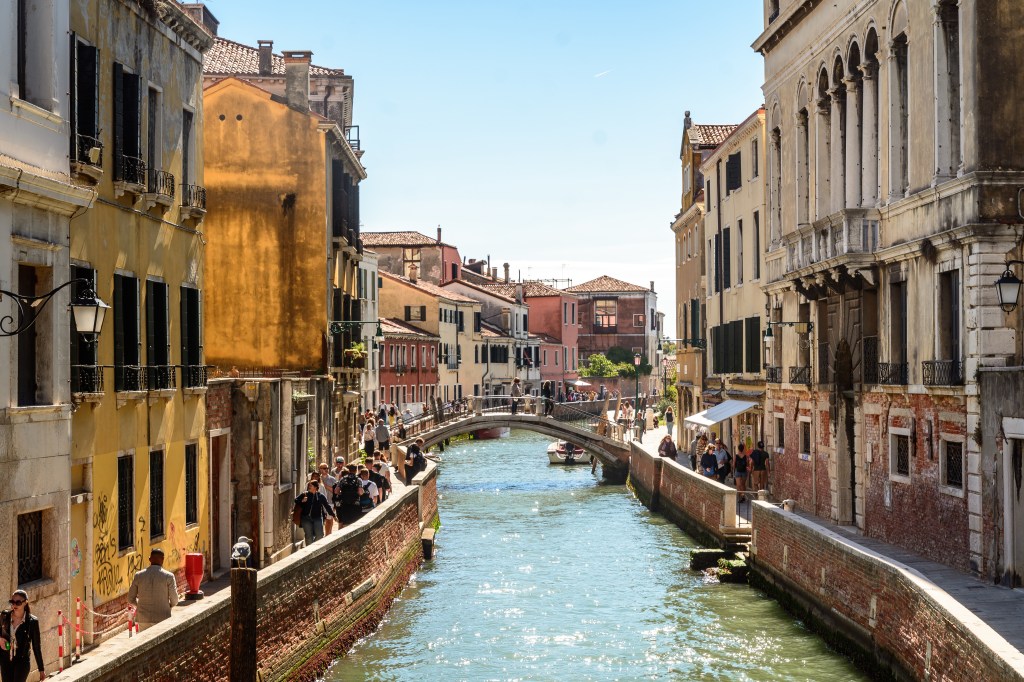
Fondamenta Nani and Rio de San Trovaso
The Fondamenta Nani runs alongside the Rio de San Trovaso, a quiet canal that parallels the Giudecca Canal. Its location near Ca’ Foscari University, one of Italy’s top universities founded in 1868, gives the area a youthful and intellectual energy. Students often gather in the cafés and bookshops that line the canal, making it a lively but relaxed place to explore.
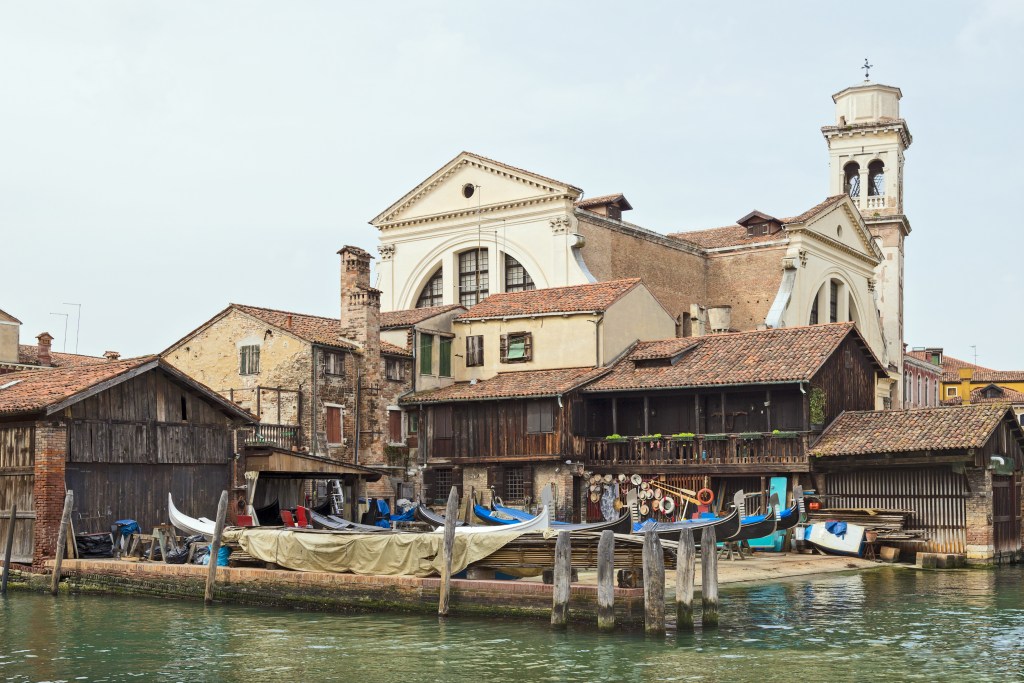
Squero di San Trovaso
Look to your left across the canal from Osteria Al Squero, the Squero di San Trovaso is one of the oldest gondola workshops in Venice, dating back to the 17th century. Gondolas are still built and repaired here using traditional methods. Though the workshop isn’t open to visitors, you can see it clearly from across the canal. It’s a rare chance to observe a craft that’s central to Venice’s identity.
Click the button above to complete the Dorsoduro East walk and return to the Ponte dell’Accademia and San Marco.
Click the button below to continue the navigation for the Dorsoduro West walk which resumes at Ponte Longo and returns to this location.
Dorsoduro West
The West walk begins at the Ponte dell’Accademia and winds west through Venice’s quieter, residential side. You’ll pass peaceful canals, frescoed churches, and student-filled piazzas, ending at Campo Santa Margherita. The route loops past a historic gondola yard and finishes with aperitivo or gelato along the canal near the Squero di San Trovaso.
Ponte dell’Accademia
The Ponte dell’Accademia marks the starting point of this walk. Built in 1933, it is one of only four bridges that cross the Grand Canal. It connects the San Marco and Dorsoduro districts and offers one of Venice’s most iconic views, including the dome of Santa Maria della Salute and the island of San Giorgio Maggiore. The Ponte dell’Accademia is named after the nearby Gallerie dell’Accademia, and serves as a symbolic gateway into Dorsoduro’s quieter, more residential side.
Gallerie dell’Accademia
Located just steps from the bridge, the Gallerie dell’Accademia is Venice’s premier art museum, showcasing works from the 14th to the 18th century. Housed in a former convent and school of fine arts, the museum features masterpieces by Bellini, Titian, Tintoretto, Veronese, and Canaletto. It offers a deep dive into the artistic legacy that shaped Venice’s cultural identity. Even if you don’t enter, the building and its surroundings are worth noting as a key cultural landmark in Dorsoduro. The museum is open Monday from 9:00 am to 2:00 pm, and Tuesday to Sunday from 9:00 am to 7:00 pm, with last admission one hour before closing. Adult admission is €15. Continue west along Fondamenta Nani, following the canal toward the Squero di San Trovaso.
Fondamenta Nani Rio de San Trovaso
The Fondamenta Nani runs alongside the Rio de San Trovaso, a quiet canal that parallels the Giudecca Canal. Its location near Ca’ Foscari University, one of Italy’s top universities founded in 1868, gives the area a youthful and intellectual energy. Students often gather in the cafés and bookshops that line the canal, making it a lively but relaxed place to explore. Continue along the canal until you reach the historic Squero di San Trovaso.
Squero di San Trovaso
Look across the canal from Osteria Al Squero, the Squero di San Trovaso is one of the oldest gondola workshops in Venice, dating back to the 17th century. Gondolas are still built and repaired here using traditional methods. Though the workshop isn’t open to visitors, you can see it clearly from across the canal. It’s a rare chance to observe a craft that’s central to Venice’s identity.
Did Someone Say Gelato?
Gelato is Italy’s beloved version of ice cream, but it’s denser, smoother, and typically lower in fat. Unlike ice cream, which is churned quickly to incorporate air, gelato is churned slowly, giving it a rich texture and more intense flavor. It’s served slightly warmer than ice cream, which helps the flavors shine.
Here, you have two excellent options. Gelateria Lo Squero, just steps from the gondola workshop, is known for its handmade flavors and quiet setting. It’s a favorite among locals and offers a peaceful spot to enjoy your gelato with views of the canal and the squero. Alternatively, walk a few minutes south to the Zattere waterfront, where Gelateria Nico has been serving gelato since 1935. It’s especially famous for its gianduiotto—a block of chocolate hazelnut gelato topped with whipped cream. Both spots offer a relaxing break with scenic views and a taste of Venetian tradition.

Ponte Longo
The Ponte Longo is a modest stone bridge tucked into the southern edge of Dorsoduro, connecting the Fondamenta Zattere to the inner lanes of the district. While it may not be as grand or photographed as Venice’s major bridges, it plays a quiet but important role in local life—linking residential areas, student paths, and scenic canal views. Cross the bridge and walk west along the Zattere al Ponte Longo.
Zattere al Ponte Longo
As you walk along the Zattere al Ponte Longo, you’ll pass the Palazzo Veneziano, now part of the Venice Collection of boutique hotels. Though modernized, the Palazzo Veneziano retains its historic façade and reflects how Venice’s noble residences have been adapted for contemporary use. Continue west until you reach the quiet Campo San Basegio.

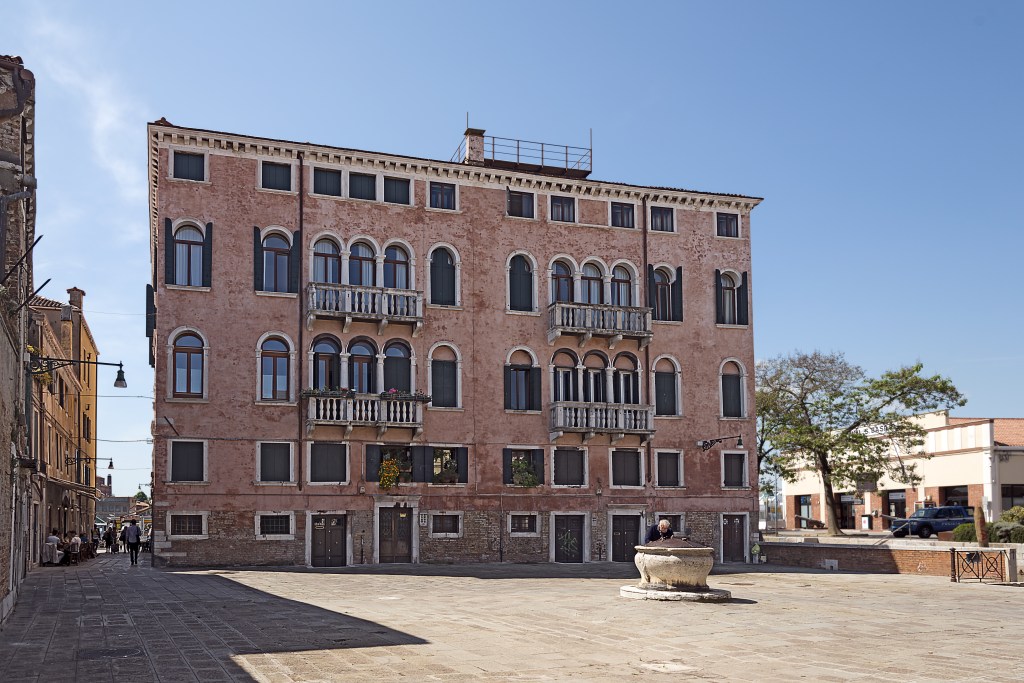
Campo San Basegio (Pozzo)
The Campo San Basegio is a quiet square with a central wellhead, or pozzo, typical of Venetian campos. Surrounded by residential buildings, it offers a peaceful break and a reminder of how these public spaces once served as vital sources of fresh water. From here, head north toward the Chiesa di San Sebastiano.
Chiesa di San Sebastiano
The Chiesa di San Sebastiano is one of Venice’s hidden artistic gems. Built in the 16th century, it’s renowned for its interior frescoes and paintings by Paolo Veronese, who is also buried here. Its richly decorated interior contrasts with its modest exterior and reflects the artistic patronage of Venice’s religious institutions. The church is open Monday to Saturday from 10:30 am to 1:30 pm and 2:30 pm to 5:00 pm, with last admission at 4:15 pm. Adult admission is €3.50, with reduced tickets at €1.50. Entry is included in the Venice City Pass. Continue north through the residential lanes to Campo de l’Anzolo Rafael.


Campo de l’Anzolo Rafael
The Campo de l’Anzolo Rafael is named after the Church of the Guardian Angel, which once stood nearby. Though the church no longer exists, the campo remains a quiet residential space that preserves the memory of its spiritual past. Continue walking north cross the bridge and turn right to walk along Fondamenta Briati.
Fondamenta Briati
The Fondamenta Briati is named after Giuseppe Briati, a renowned 18th-century glassmaker who helped elevate Murano glass to international fame. While the street itself is quiet, it connects you to Venice’s legacy of craftsmanship and innovation. Cross the bridge back across the canal and follow the Calle de le Pazienza to to Calle Lunga San Barnaba.
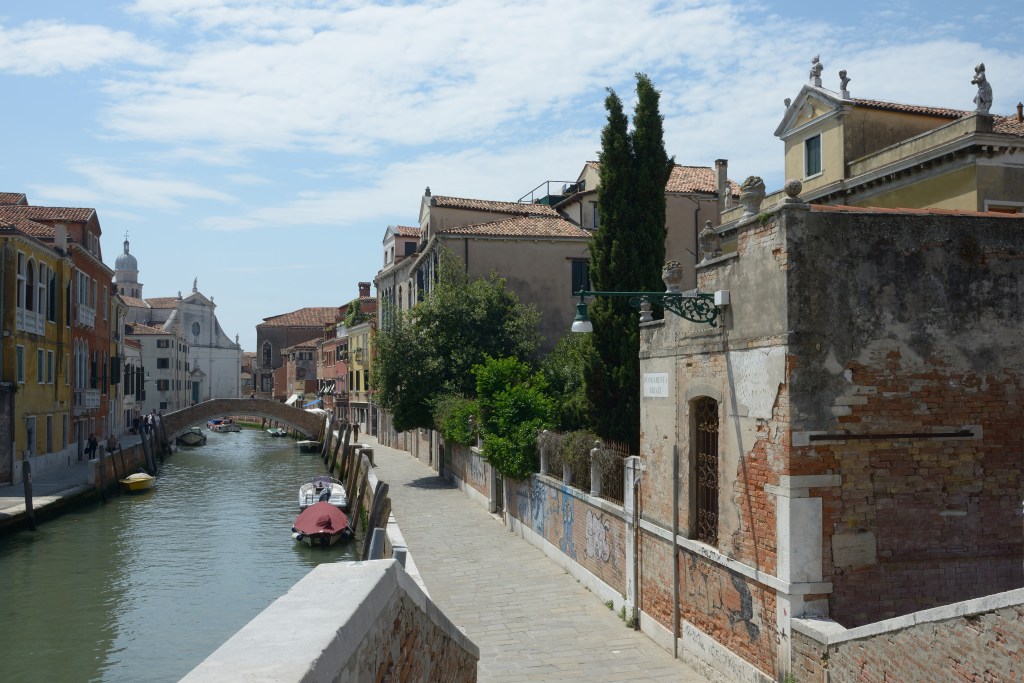

Campo Santa Margherita
Campo Santa Margherita is a spacious, tree-lined gathering place in the heart of Dorsoduro. Historically a communal hub, it continues to serve as a social center for locals, university students, and visitors alike. The campo is surrounded by historic buildings, small shops, and a mix of cafés and bars that spill out onto the square, creating a vibrant atmosphere from morning to late evening. If you’re ready for aperitivo or dinner, several casual and affordable options are listed below. From here, head east toward Università Ca’ Foscari.
Options for Apperitivo or Dinner
- Skilla Bar – Popular with students and locals alike, this lively bar offers casual cocktails, cicchetti, and occasional live music, with plenty of outdoor seating on Campo Santa Margherita.
- Ristorante Pizzeria Ai Sportivi – Casual and affordable, this no-frills spot is great for hearty pasta, pizza, and a refreshing spritz—perfect for a relaxed dinner or aperitivo.
- Osteria Do Torri – A laid-back, local favorite right on Campo Santa Margherita. Serves simple pasta dishes, classic cicchetti, and rotating daily specials at friendly prices.
- Osteria Alla Bifora – A cozy, candlelit spot ideal for a relaxed aperitivo. Known for generous charcuterie boards, Venetian small plates, and a warm, rustic atmosphere.
Università Ca’ Foscari
The Università Ca’ Foscari, founded in 1868, is one of Italy’s top institutions and a major presence in Dorsoduro. It brings youthful energy to the area and supports a vibrant intellectual and cultural scene. The university’s original campus is housed in the 15th-century Ca’ Foscari palace, built by Doge Francesco Foscari and donated by the city to serve as the headquarters of Italy’s first business school. With its prime location on the Grand Canal, the palace has hosted royalty and scholars alike, and today remains a symbol of Venice’s blend of tradition and innovation. Continue toward the Church of San Barnaba, now home to the Leonardo da Vinci Exhibition.


San Barnaba Church
The Church of San Barnaba now hosts a permanent exhibition on Leonardo da Vinci’s inventions and designs. This adaptive reuse reflects Venice’s commitment to preserving historical spaces while giving them new life. Just outside the square to the right, the Calle Lunga San Barnaba is a long, narrow street that leads deeper into Dorsoduro’s residential core. Lined with small shops and cafés, it offers a glimpse of Venice as a lived-in city. If you’d like to explore further, head west and take a left at either of the next two streets to cross the canal. The Rio di San Barnaba, often called the “canal of mirrors” for its calm, reflective surface, adds a poetic touch to this quiet corner of the city. Its still waters mirror the surrounding bridges and buildings, making it a favorite spot for photographers and daydreamers alike. The church and museum are open daily from 10:00 am to 7:00 pm. Admission to the Leonardo da Vinci exhibition is €9 for adults and €6 for reduced tickets.
Option: Private Gondola Ride

Gondola Ride – Campo San Barnaba
If you’re interested in a gondola ride, Campo San Barnaba is an excellent place to begin. Located along the peaceful Rio di San Barnaba, often called the “canal of mirrors” for its calm, reflective surface, this area offers a quieter and more intimate experience than the busy stations near Rialto or St. Mark’s Square. Gondoliers here typically navigate through residential canals and under charming bridges, giving you a more authentic glimpse of daily Venetian life.
As of 2025, standard daytime gondola rides cost €90 for 30 minutes, accommodating up to five passengers. After 7 p.m., the price rises to €110 for 30 minutes. These are fixed rates set by the city, so you shouldn’t be charged more unless you request a longer ride. It’s best to confirm the duration and price before boarding, and cash is typically preferred. While singing or guided commentary may be offered, these come at an additional cost and should be agreed upon in advance.
Ponte de la Maravegie
Continue along the Fondamenta Toletta toward the Ponte de le Maravegie, which connects Calle Lunga San Barnaba to the final stretch of the walk. Its name—“Bridge of Wonders”—adds a poetic touch, and like many Venetian bridges, it offers quiet views of canals and passing gondolas. The name is rooted in both history and legend. One story attributes it to the noble Maraviglia family, who lived nearby during the Renaissance and whose members played prominent roles in Venetian society. Another, more romantic tale tells of a young gondolier named Zuane who fell ill and blamed his misfortune on the least beautiful of seven sisters living near the bridge. One night, he saw her praying alone, and above her appeared seven stars—six dimming while the seventh grew bright. Moved by her selfless love and prayers for his recovery, Zuane abandoned his resentment, regained his strength, won a regatta, and married her. From that moment, the bridge was said to have worked “wonders” in his heart.
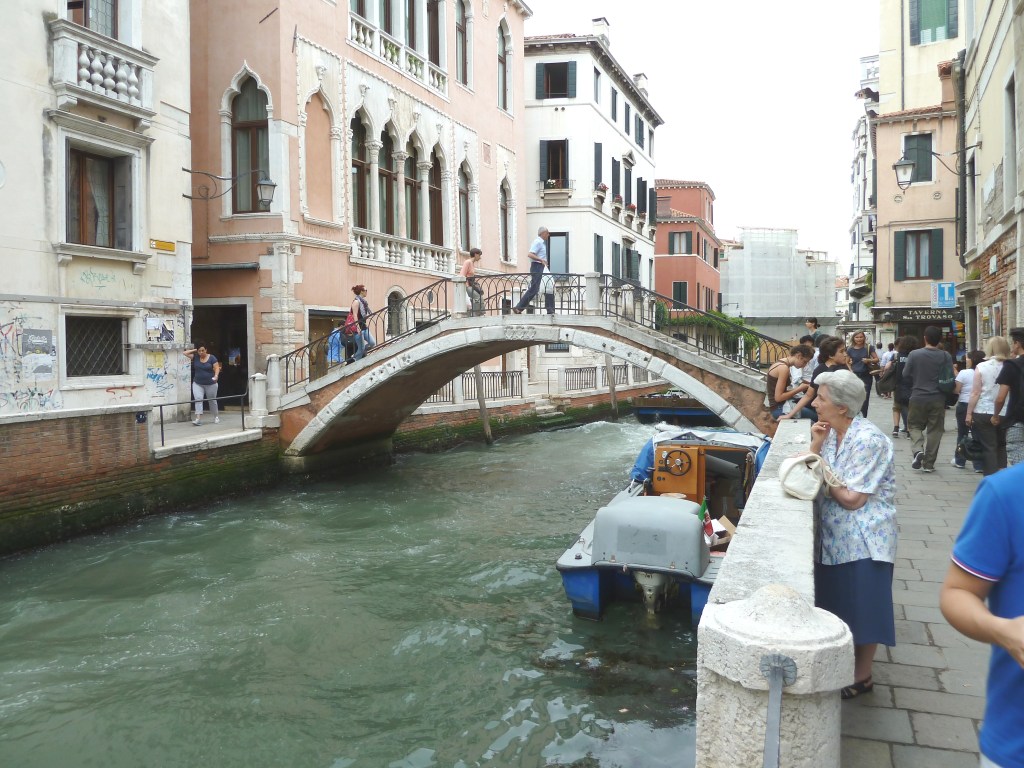
end

Campo de la Carità
The walk ends at Campo della Carità, a peaceful square nestled between the Gallerie dell’Accademia and the Accademia di Belle Arti. Historically part of a religious complex dedicated to charity and education, the campo now serves as a quiet, reflective space framed by academic buildings and cultural institutions.
From here, you’re just steps away from the Ponte dell’Accademia, where the walk began. If you’re heading back to San Marco, simply cross the bridge and follow signs or the Grand Canal eastward—it’s about a 10-minute walk through lively streets and elegant storefronts. This makes Campo della Carità not only a fitting end to your Dorsoduro Walk, but also a convenient launch point for your next Venetian adventure.
Are you interested in a Gondola Ride?

Gondola Ride – Santa Maria del Giglio
If you’re interested in a gondola ride, you might find some options here and the Ponte dell’ Academia or at the Vaparetto station at Santa Maria del Giglio, located just steps from the Ponte dell’Accademia. Gondoliers here often take routes through less crowded canals, offering a more relaxed and intimate experience compared to the busy stations near Rialto or St. Mark’s Square. Gondolas have been part of Venice’s transportation system for centuries and remain a symbol of the city’s romantic and historic charm.
As of 2025, standard daytime gondola rides cost €90 for 30 minutes, accommodating up to five passengers. After 7 p.m., the price rises to €110 for 30 minutes. These are fixed rates set by the city, so you shouldn’t be charged more unless you request a longer ride. It’s best to confirm the duration and price before boarding, and cash is typically preferred. While singing or guided commentary may be offered, these come at an additional cost and should be agreed upon in advance.
Thanks for walking with me!
Whether you’ve explored Dorsoduro East, West, or taken on the full combined walk, you’ve just experienced one of Venice’s most artful and tranquil districts. From sweeping views of the Grand Canal to the quiet charm of the Zattere waterfront, from world-class museums to hidden chapels and artisan workshops, this walk reveals the layered beauty of Venetian life. Along the way, you’ve traced centuries of history, admired architectural gems, wandered peaceful canals, and hopefully paused for a perfect gelato or cicchetti with a view!
If you enjoyed the route, found a hidden gem, or have ideas for improving the experience, I’d love to hear from you! Your insights help me improve future walks and inspire fellow travelers. Please rate this walk using the stars below — and feel free to leave a comment. Grazie! — and happy exploring!


Click here for more JCV Walks in Venice
Your journey doesn’t have to end here. Choose another walk and let’s keep exploring together—one step at a time.
JCV Walks in Giudecca
Giudecca sits just across the lagoon from central Venice, offering stunning skyline views and a slower pace. Once home to palaces and factories, it’s now a quiet residential island with leafy promenades, local cafés, and a lived-in feel. It’s Venice from a distance—calm, reflective, and authentic.
JCV Walks in San Marco
Explore the historic San Marco district, with this loop walk exploring the ceremonial and cultural heart of Venice.
JCV Walks in San Polo
Discover the rich history of Venice’s oldest sestiere in San Polo, home to Gothic churches, quiet campos, and the city’s vibrant food markets.
Photo Credits
- Accademia Bridge – Photo by Didier Descouens, licensed under CC BY-SA 4.0. Source
- Gallerie dell’Accademia – Photo by Didier Descouens – licensed under CC BY-SA 4.0, Source
- Peggy Gugenheim Collection – Photo by Lothar John, Licensed under CC BY-SA 3.0, Source
- Punta Della Dogana Und Santa Maria Della Salute – Photo by Barnos, licensed under CC BY-SA 4.0. Source
- View from Punta Della Dogana – Photo by Jean-Pol GRANDMONT – licensed under CC BY 4.0, Source
- Fondamenta Zattere Ai Gesuati – Photo by Mister No – Licensed under CC BY 3.0, Source
- Ospedale Degli Incurabili – Photo by Abxbay – licensed under CC BY-SA 3.0, Source
- Santa Maria del Rosario – Photo by Marc Ryckaert (MJJR) – Licensed under CC BY 3.0, Source
- Ponte Longo – Photo by Didier Descouens – Licensed under CC BY-SA 3.0, Source
- Gelato on Display – Photo by EquipmentAndConcepts – Licensed under CC BY-SA 4.0, Source
- Zattere al Ponte Longo – Photo by Wolfgang Moroder. Licensed under CC BY-SA 3.0, Source
- Rio De San Trovaso – Photo by Domenico Convertini, licensed under CC BY-SA 2.0. Source
- Squero Di San Trovaso – Photo by Didier Descouens, licensed under CC BY-SA 4.0. Source
- Campo de la Carita – Photo by Moleskine – Licensed under CC BY-SA 4.0, Source
- Campo San Basegio – Photo by Didier Descouens – Licensed under CC BY-SA 4.0, Source
- Chiesa di San Sebastiano – Photo by Didier Descouens – Licensed under CC BY-SA 3.0, Source
- Campo Se l’Anzolo Rafael – Photo by Didier Descouens – Own work, CC BY-SA 4.0, Source
- Fondamenti Briati – Photo by Wolfgang Moroder. Licensed under CC BY-SA 3.0, Source
- Campo Santa Margherita – Photo by Didier Descouens, licensed under CC BY-SA 4.0. Source
- Ca’ Foscari – Photo by Didier Descouens, licensed under CC BY-SA 4.0, source
- Ca’ Foscari Venice (street view) – Photo by Didier Descouens, licensed under CC BY-SA 4.0, source
- San Barnaba Church – Photo by Didier Descouens – Licensed under CC BY-SA 4.0, Source
- San Barnaba Gondolas – Photo by dconvertini – licensed under CC BY-SA 2.0, Source
- Ponte De La Maravegie – Photo by Abxbay, licensed under CC BY-SA 3.0. Source
- Santa Maria Del Giglio Gondolas – Photo by Son of Groucho from Scotland, licensed under CC BY 2.0. Source
