A Walk Through Lisbon’s Elegant Core
Baixa & Boulevards
This scenic and culturally rich begins at the riverside Praça do Comércio and winds through grand boulevards, historic squares, and lively pedestrian streets. The route stretches north into the Avenida da Liberdade district—Lisbon’s tree-lined boulevard known for its stately architecture and stylish flair—before looping back toward the heart of Baixa.
Along the way, you’ll encounter neoclassical landmarks, artistic promenades, and vibrant street life that reflect Lisbon’s royal past and contemporary charm. The walk concludes at the stately Lisbon City Hall, offering a well-rounded glimpse into the civic and cultural soul of the city.

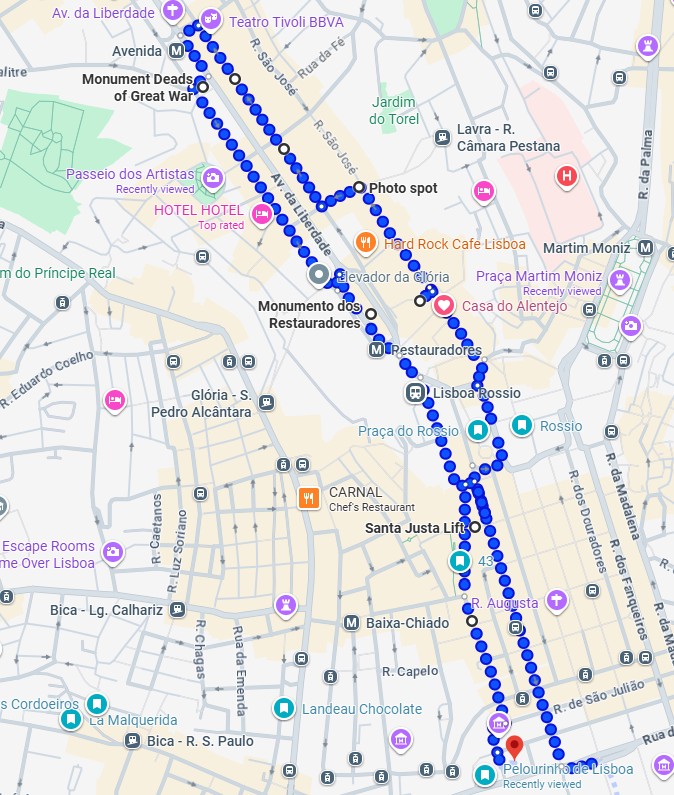
How to navigate with your mobile device
JCVWalks are designed to be easy to follow on your mobile device. As you walk, you can tap the header or photo for each point of interest to open the location directly in Google Maps. This will help you navigate from your current location to the next point of interest. If you’d like to learn more about any stop along the way, just click the links in the description for additional details and context.
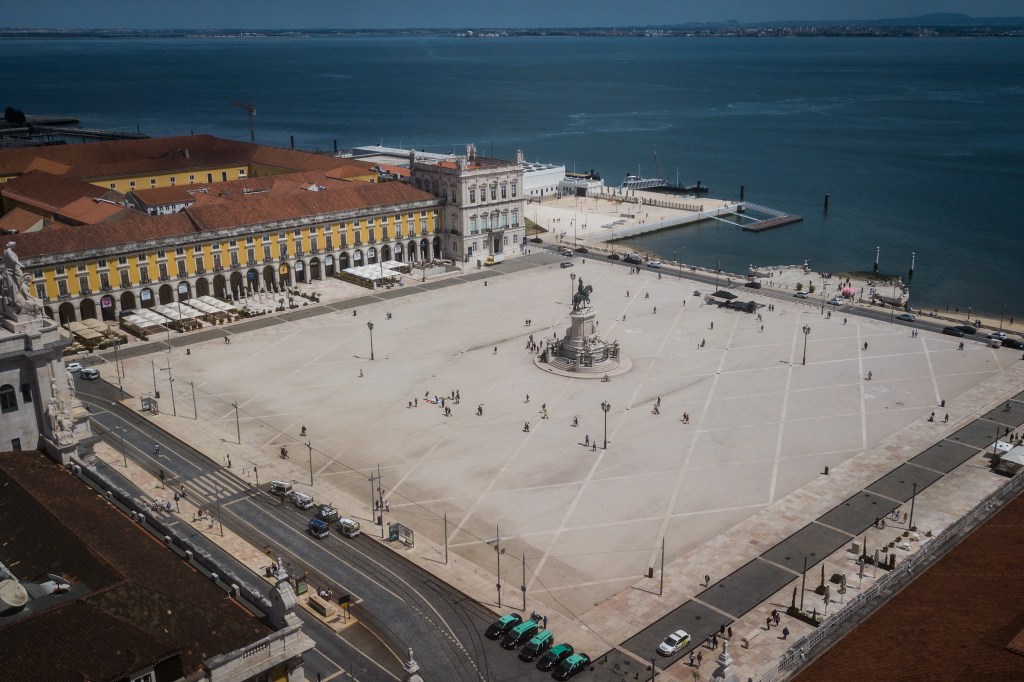
This walk begins at Praça do Comércio, Lisbon’s grand riverside square and a symbol of the city’s rebirth after the devastating 1755 earthquake. Flanked by elegant yellow buildings and open to the Tagus River, this plaza has long served as a gateway to the city. At its heart stands the Rua Augusta Arch, a triumphal monument celebrating Portugal’s resilience and glory, while just steps away, the Cais das Colunas—a pair of marble columns descending into the river—marks the historic landing point for dignitaries arriving by sea. This area blends architectural splendor with maritime heritage, offering a dramatic and inspiring start to your journey through Lisbon.

Rua Augusta Arch
For just €3, you can head to the top of the Arco da Rua Augusta, the iconic arch that marks Lisbon’s recovery after the 1755 earthquake. It’s easy to overlook, but the views from the summit are fantastic — you’ll get a full sweep of Praça do Comércio, the river, and a unique look down the narrow streets of Rua Augusta that you just can’t appreciate from ground level. It’s also a great spot to pause and point out places you’ve already explored — or plan to check out next.
Praça do Comércio
Praça do Comércio, Lisbon’s grand waterfront square, was completely rebuilt after the devastating 1755 earthquake and tsunami — an event even mentioned by Voltaire in his Poème sur le désastre de Lisbonne. The reconstruction wiped out the old medieval layout and replaced it with the symmetrical government buildings you see today, designed to manage customs and port activity — hence the name “comércio.” It’s a striking space, open to the river, and full of history if you know where to look.

Cais das Colunas
At the edge of Praça do Comércio, you’ll find Cais das Colunas — a marble staircase that once served as Lisbon’s grand entrance from the river. Heads of state and other dignitaries used to arrive here by boat, stepping straight into the heart of the city. The pier gets its name from the two elegant columns flanking the steps, designed by Eugénio dos Santos as part of the post-1755 earthquake reconstruction. They’re said to be replicas of the pillars from Solomon’s Temple, symbolizing wisdom and devotion. Today, it’s a peaceful spot to sit by the water and take in the view.
Rua Augusta Shops
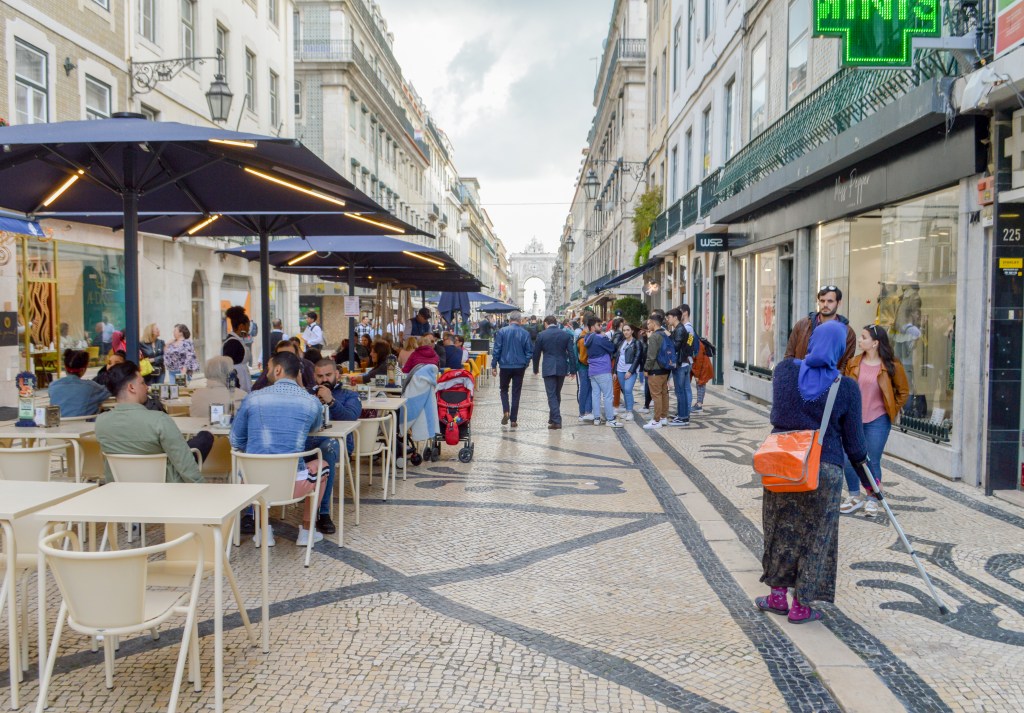
Rua Augusta is a lively pedestrian street that leads up from the archway into the center of Baixa. It’s lined with fashion shops, cafés, and a few interesting spots selling local treats like pastéis de nata and bolo rei, the traditional Portuguese Christmas fruitcake. There are plenty of outdoor bars and cafés with heaters and shelter in winter — a nice place to pause and soak up the atmosphere. That said, travelers might find the pushy restaurant hosts a bit annoying here. They’ll try hard to get you to sit down, but these aren’t the best places to eat in town. It’s worth wandering a bit off the main drag if you’re looking for a more authentic meal.

Fonte Sul do Rossio
The two monumental fountains in Rossio Square are hard to miss — they’ve been adding beauty and a bit of cool relief to this busy plaza since 1889. While Lisbon has other fountains scattered around, these stand out for their scale and presence, right in what feels like the city’s living room. They’re classic 19th-century Lisbon, and even if you’re just passing through, they’re worth a pause.
Right in the middle of Rossio Square, the Teatro Nacional Dona Maria II stands out — not just for its grand neoclassical façade, but for the quality of the performances inside. Named after Queen Maria II, who was a strong supporter of the arts, the theater has long been a stage for top national and international productions. It was rebuilt in the late 1800s after a major fire and still holds its place as one of Lisbon’s cultural landmarks — and a notable stop along the Tram 28 route.

Monumento dos Restauradores
This 30-meter-tall obelisk in Restauradores Square was put up in 1886 to commemorate Portugal’s independence from Spain in 1640, after sixty years of Spanish rule. The revolt began on December 1st, and the monument marks key battles from the Restoration War that followed. The bronze statues — one representing Liberty, the other Victory — were created by sculptors Simões de Almeida and Alberto Nunes, while the overall design came from António Tomás da Fonseca. It’s a striking piece of Lisbon’s history, though travelers might walk right past it without realizing what it stands for.
Avenida da Liberdade
Built in the 19th century to resemble Paris’s boulevards, Avenida da Liberdade is Lisbon’s most elegant avenue. It’s lined with leafy trees, fountains, and statues, and flanked by luxury shops, embassies, and historic cafés. Walking here feels like stepping into a more refined Lisbon, where the pace slows and the architecture speaks of grandeur. It’s also a cultural corridor, hosting parades, festivals, and public art.
As you walk along the avenue, keep an eye out for the Passeio dos Artistas, a sidewalk tribute to Portuguese actors and performers. It’s Lisbon’s version of the Hollywood Walk of Fame, adding a touch of local pride and creativity to your path.

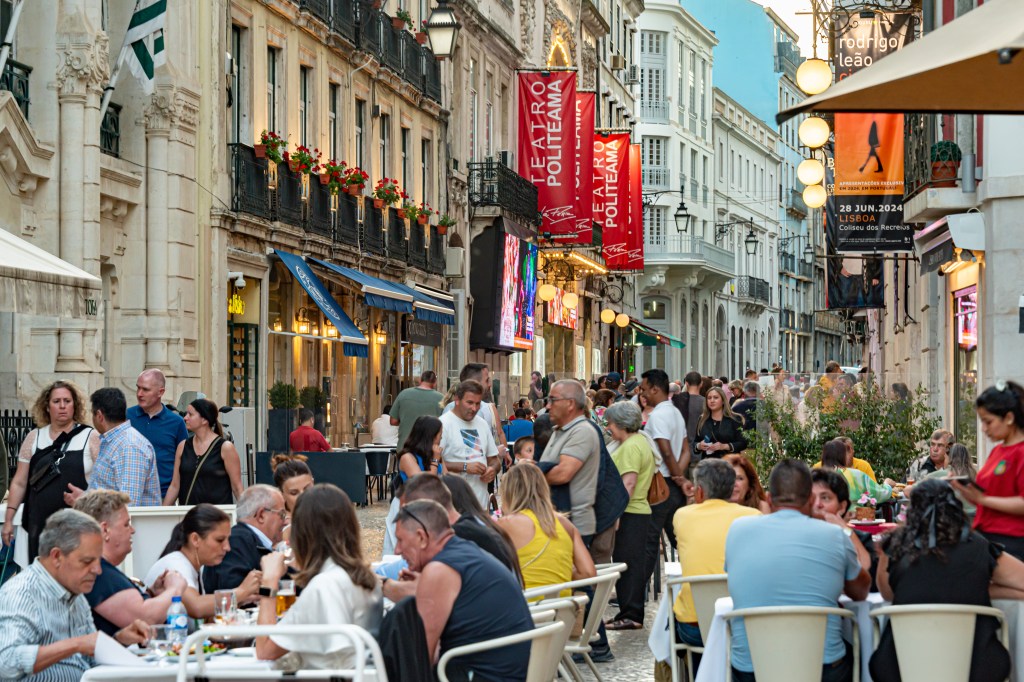
Rua das Portas de Santo Antão
Looping back toward the city center, you’ll descend along Rua das Portas de Santo Antão, a lively pedestrian street known for its theaters and eateries. One standout is Bonjardim, a no-frills local favorite famous for its frango assado (roast chicken) served with crispy skin and homemade piri-piri sauce. It’s a great spot to refuel and soak in the local flavor.
Elevador de Santa Justa
Designed by Raoul Mesnier du Ponsard, a student of Gustave Eiffel, the Elevador de Santa Justa (Santa Justa Lift) is a striking iron structure that connects the Baixa district to the higher Carmo area. Even if you don’t ride it, the lift’s gothic details and panoramic views make it a visual highlight of the walk.

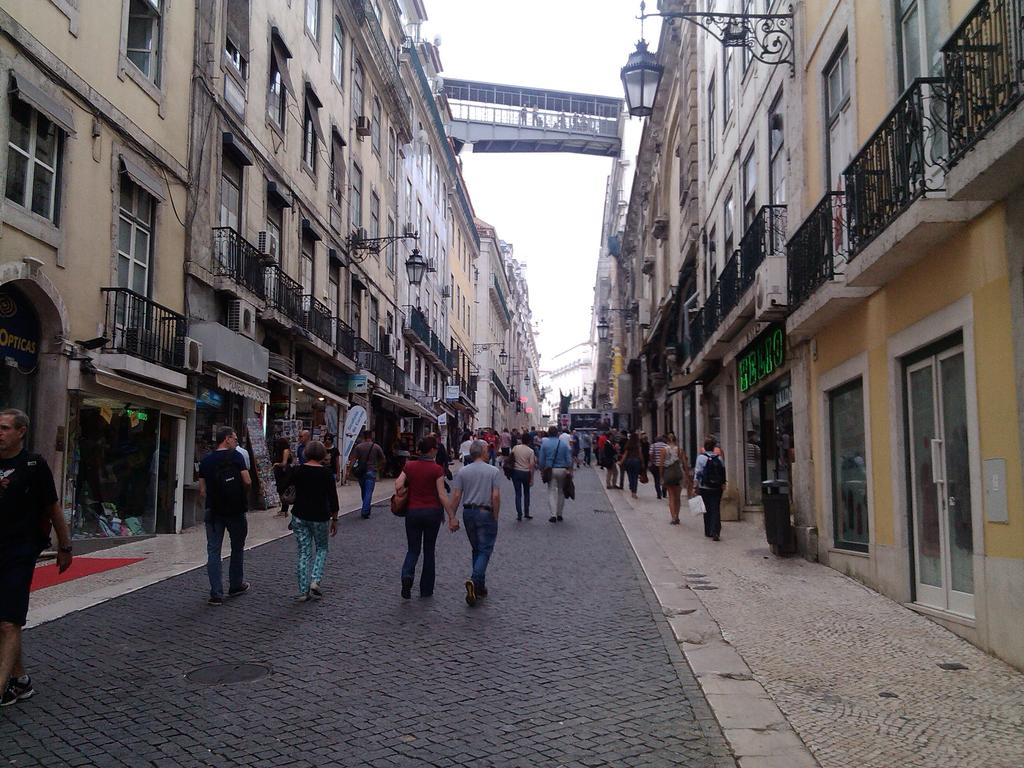
Rua do Carmo
Rua do Carmo is one of Lisbon’s most charming pedestrian streets, linking the upper city to the heart of Baixa. Once part of the city’s aristocratic quarter, it now blends historic elegance with modern flair. The street is lined with graceful 18th- and 19th-century buildings, many of which house boutiques, bookstores, and cafés tucked behind wrought-iron balconies and tiled facades.
As you walk, you’ll notice the ruins of the Carmo Convent peeking above the rooftops—a haunting reminder of the 1755 earthquake. The street also offers a view of the Santa Justa Lift, whose ironwork rises dramatically nearby. Rua do Carmo is more than a shopping street; it’s a quiet passage through Lisbon’s layered past, where every stone seems to whisper a story.
Lisbon City Hall
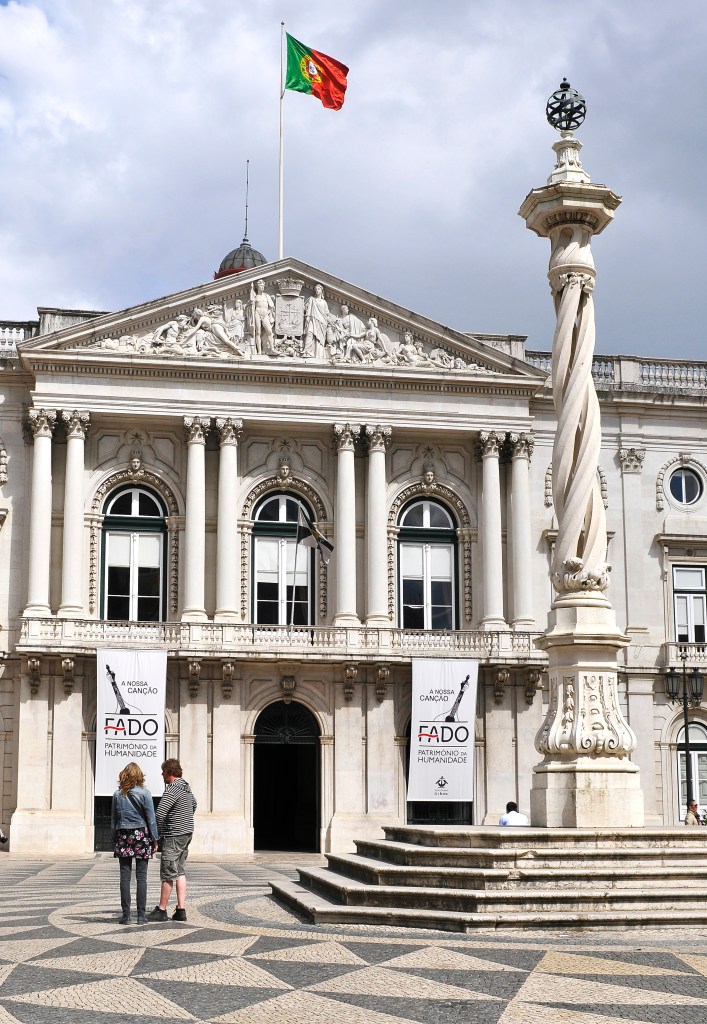
Our walk ends at the elegant Lisbon City Hall, a neoclassical building that reflects the city’s post-earthquake reconstruction and civic pride. Completed in the late 18th century, the building features a grand triangular pediment, Corinthian columns, and a sweeping staircase that leads to its formal entrance. It’s not just an administrative center—it’s a symbol of Lisbon’s resilience and governance.
The square in front of City Hall is often quiet, offering a moment of calm after your journey through the bustling city. Look for the calçada portuguesa pavement designs and the nearby sculptures that add artistic flair to the space. Ending your walk here feels fitting: from the river to the heart of civic life, you’ve traced Lisbon’s story through its streets.
Thanks for walking with me!
You’ve just explored some of Lisbon’s most iconic and meaningful places—from the riverside grandeur of Praça do Comércio to the elegance of Avenida da Liberdade, the charm of Rua do Carmo, and the civic pride of Lisbon City Hall. Along the way, you’ve walked through centuries of history, admired architectural gems, and hopefully discovered a few local favorites.
If you enjoyed the route, found a hidden gem, or have ideas for improving the experience, I’d love to hear from you! Your insights help me improve future walks and inspire fellow travelers. Please rate this walk using the stars below — and feel free to leave a comment. Obrigado! — and happy exploring!


Click here for more JCV Walks in Lisbon
Your journey doesn’t have to end here. Choose another walk and let’s keep exploring together—one step at a time.
JCV Walks along Tram 28
Enjoy two walks that allow you to skip the que and explore the route of historic Tram 28.
JCV Walks in Belém
Explore one of Lisbon’s most storied districts, where Portugal’s Age of Exploration comes to life.
JCV Walks in Sintra
Step into a fairy tale with a day trip and walks in this magical UNESCO heritage site.
Photo Credits
- Rua Augusta Arch – Photo By Rehman Abubakr, licensed under CC BY-SA 4.0, source
- Praça do Comércio – Photo By European Union, 2025, licensed under CC BY 4.0, source
- Cais das Colunas – Photo by Susanne Nilsson – licensed under CC BY-SA 2.0, source
- Rua Augusta – Photo by Francisco Anzola from United States – licensed under CC BY 2.0, source
- Rossio Square Lisbon – Photo by Vitor Oliveira, licensed under CC BY 2.0, source
- Praça dos Restauradores – Photo by deror avi – licensed under CC BY-SA 3.0, source
- Avenida da Liberdade – Photo by -wuppertaler – licensed under CC BY-SA 4.0, source
- Rua das Portas de Santo Antão – Photo by Jorge Franganillo, licensed under CC BY 2.0, source
- Lisbon Elevator – Photo by Kit Suman on Unsplash
- Rua do Carmo – Photo by JCVWalks, used with permission
- Lisbon City Hall – Photo by LBM1948, licensed under CC BY-SA 4.0, source
