The Green Heart of Manhattan

Central Park is the green heart of Manhattan—a sprawling 843-acre oasis in the middle of one of the world’s busiest cities. Designed by Frederick Law Olmsted and Calvert Vaux in the mid-19th century, it was America’s first major landscaped public park and remains one of its most iconic. Opened in 1858, the park was created to provide New Yorkers with a natural escape from the growing urban environment, blending meadows, woodlands, lakes, and formal promenades into a carefully planned landscape.
Today, Central Park is more than a park—it’s a cultural landmark, hosting concerts, theater, and seasonal activities while offering countless opportunities for walking, cycling, and quiet reflection. From historic bridges and sculptures to sweeping lawns and hidden gardens, every path tells a story of design, community, and the enduring need for green space in the city that never sleeps.
Let’s Explore Central Park
This is a one-way walk that covers the lower portion of the park and begins just above the Metropolitan Museum of Art (The Met). Though we will only see a small portion of the park, this walk will introduce you to some of Central Park’s most iconic sights. There’s so much to see in Central Park, but I’ve selected highlights that give you a great overview. I have also added a few optional diversions along the way in case you want to spend more time and explore more of the park. Feel free to improvise along the way. You can always skip stops by clink the link to where you want to go next.


To get to the Met, take the Lexington Avenue Subway ④, ⑤, or ⑥ uptown to 86th Street, then walk one block west toward Central Park (look for the trees at the end of the street!).
Depending on your schedule, you can spend a couple of hours at The Met, the largest art museum in the United States and one of the most visited in the world. Admission is $25 per person—and worth it if you have the time. If museums aren’t your thing, or you’re short on time, snap a photo of the museum’s famous front steps and head a block uptown to begin your park adventure.
How to navigate with your mobile device
JCVWalks are designed to be easy to follow on your mobile device. As you walk, you can tap the header or photo for each point of interest to open the location directly in Google Maps. This will help you navigate from your current location to the next point of interest. If you’d like to learn more about any stop along the way, just click the links in the description for additional details and context.
The Metropolitian Museum
The Metropolitan Museum of Art is vast, but in just a couple of hours you can still savor its essence. Step into the Great Hall, then wander to the glass-walled Temple of Dendur, where ancient Egypt meets Central Park. Marvel at knights in shining armor in the Arms and Armor galleries, pause before Van Gogh’s Self-Portrait and Sargent’s Madame X in the European wing, and finish in the American Wing’s sunlit court among Tiffany glass and monumental sculpture. If the season allows, cap your visit with rooftop views over Manhattan—a perfect snapshot of the Met’s grandeur in miniature.


Start at 85th Street Entrance
We will enter the park from just above the Met on Fifth Avenue just past 85th Street. This entrance is convenient because it’s nearby and offers quick access to the Reservoir paths. Public restrooms are available nearby at the Great Lawn Restroom (just west of the Reservoir). I will point out additional public restrooms along the way.
Jacqueline Kennedy Onassis Reservoir – South Gate House
As you enter the park, just ahead and slightly to the right is the Jacqueline Kennedy Onassis Reservoir, the largest body of water in the park. Pause here for a few photos—the skyline views here are stunning. As you walk toward the Reservoir, you’ll notice the Gatehouse to your left, a small stone structure that was part of the original water system for the park. Built in the late 19th century, it served as a control point for the flow of water into the Reservoir, which was once a key source of drinking water for New York City. Today, it stands as a reminder of the park’s functional history and its role in the city’s development.


Alexander Hamilton Monument
From the gatehouse, cross the bridge but not the road and follow the path toward the Alexander Hamilton Monument. This bronze statue honors one of America’s Founding Fathers—Alexander Hamilton—who played a pivotal role in shaping the nation’s financial system and served as the first Secretary of the Treasury. The monument was sculpted by Carl Conrads and installed in 1880, making it one of the earliest statues placed in Central Park. Hamilton’s influence on New York City was profound; he helped establish the city as a financial hub and was instrumental in creating the U.S. Mint and national banking system.
Continue along the path. On your right is the Great Lawn, the geographical center of Central Park and one of the most famous lawns in the world. This 55-acre expanse was originally the site of the Croton Reservoir, which supplied water to the city in the 19th century. When the reservoir was drained in the 1930s, the area was transformed into the Great Lawn as part of a major park redesign during the Works Progress Administration era.
Over the decades, the Great Lawn has become a cultural icon and gathering place for New Yorkers. It has hosted countless concerts and events, including legendary performances by Simon & Garfunkel, Elton John, and Garth Brooks, as well as the New York Philharmonic’s summer concerts under the stars. It’s also been the stage for papal masses, political rallies, and community celebrations. Today, it’s a favorite spot for picnics, sunbathing, and informal sports, offering a rare sense of openness in the heart of Manhattan.
The Egyptian Obelisk
Ahead and to your left, through the trees, you’ll spot an Egyptian Obelisk, named Cleopatra’s Needle. Dating back to around 1450 B.C., it’s the oldest man-made object in Central Park and the oldest outdoor monument in New York City. Originally carved from red granite during the reign of Pharaoh Thutmose III, the obelisk once stood in the ancient city of Heliopolis before being moved to Alexandria by the Romans. The obelisk was gifted to the United States by Egypt in 1881 as a gesture of goodwill and to commemorate the opening of the Suez Canal. Transporting it was a monumental feat—it weighed nearly 200 tons and had to be shipped across the Atlantic and hauled through Manhattan streets to its current location behind the Metropolitan Museum of Art. Its hieroglyphic inscriptions honor Thutmose III and later rulers, offering a direct link to Egypt’s ancient past.

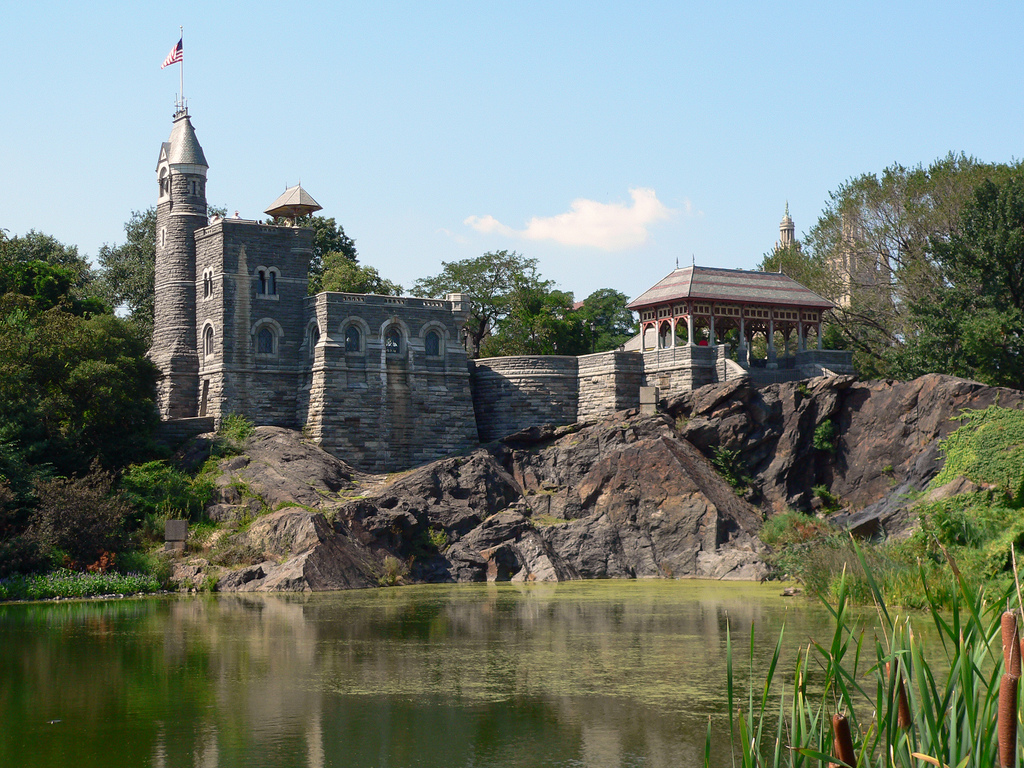
Belvedere Castle
From here, follow the path below the Great Lawn bending to the right and uphill. Look for signs to Belvedere Castle. “Belvedere” means “beautiful view” in Italian, and this Norman Gothic structure delivers exactly that. Perched atop Vista Rock, it offers sweeping views of the park and city.
From the terrace of Belvedere Castle, you’ll enjoy some of the most picturesque vistas in Central Park. Directly below is Turtle Pond, a serene body of water named for its resident turtles, which you can often spot basking on rocks or swimming near the edges. Beyond the pond to the left sits the Delacorte Theater, home to the famous Shakespeare in the Park series—a summer tradition offering free performances under the open sky. Looking further out, you’ll see the expanse of the Great Lawn. On clear days, the Manhattan skyline frames the entire scene, creating a stunning contrast between nature and city. It’s a short climb to the upper terrace if you want to get a higher perspective.
Shakespeare Garden
From the castle, continue west along the path to Shakespeare Garden. This four-acre garden is a quiet tribute to the works of William Shakespeare, featuring plants and flowers mentioned in his plays and poems. Bronze plaques with quotes are tucked among the greenery, and rustic benches invite you to pause for a moment. In spring and summer, the garden is alive with color, making it one of the park’s most charming spots.


The Ramble
From the garden, follow the path back toward Belvedere Castle and then down the stone steps into The Ramble. This 36-acre “wild garden” was designed for wandering, with twisting paths that lead to shaded groves, rocky outcrops, and quiet landings along the lake. It’s a favorite for birdwatchers and anyone looking for a peaceful escape. From here, you will either “ramble” toward the Central Park Boathouse and café or to the Bow Bridge, both among the park’s most photographed spots. Click one of the links above if you have a preference, or the link below and let google maps decide!
Optional Diversion – Strawberry Fields
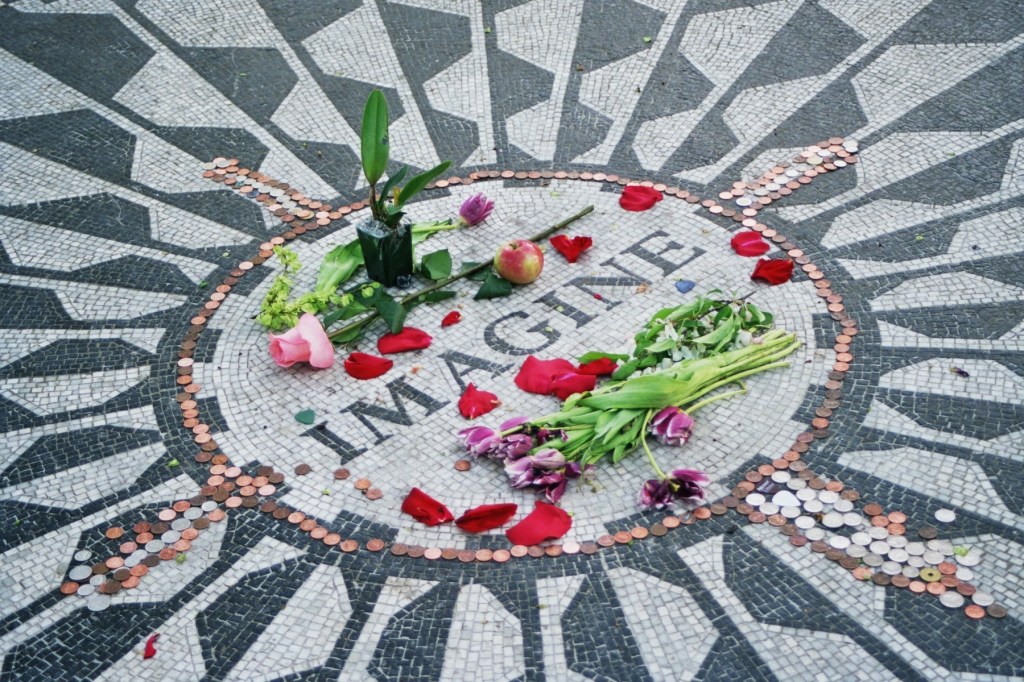
Strawberry Fields
Strawberry Fields is a peaceful memorial to John Lennon, located near the park’s west side at 72nd Street. Its centerpiece is the iconic Imagine mosaic, a symbol of peace visited by fans from around the world. The surrounding landscape is designated as a quiet zone, offering a reflective pause in the city’s bustle. From Bow Bridge, cross to the west side of the lake and follow the path toward the park’s West Drive. Continue north along West Drive until you reach the 72nd Street entrance, where Strawberry Fields is located. After your visit, retrace your steps south along West Drive, then turn east to return to Bethesda Terrace and resume the main walk.
Bethesda Fountain & Terrace
Whether you approach from the Central Park Boathouse or cross Bow Bridge, continue along the lakeshore until you reach Bethesda Fountain, one of Central Park’s most iconic and photographed spots. Installed in 1873, the fountain commemorates the Croton Aqueduct system, which first brought fresh water to New York City in 1842—a milestone in the city’s growth and public health. From the fountain, walk up the steps to Bethesda Terrace, a grand gathering space designed as the architectural centerpiece of the park. Its intricate stonework, carved panels, and sweeping view over the lake make it a favorite for visitors and photographers.
NOTE: Public restrooms are available here, making it a convenient stop before continuing your walk.


The Mall & Literary Walk
From Bethesda Terrace, continue up the stairs to The Mall, the park’s only straight path. Lined with towering American elms, it creates a cathedral-like canopy overhead—one of the most photographed scenes in Central Park. This formal promenade was envisioned by designers Frederick Law Olmsted and Calvert Vaux as a place for leisurely strolls and social gatherings. The Mall has also become a favorite backdrop for filmmakers and appears in numerous movies, including Kramer vs. Kramer, Big Daddy, and Enchanted. Its cinematic appeal comes from the dramatic tree-lined walkway and the sense of grandeur it brings to any scene. At the southern end is Literary Walk, where statues of literary greats—including Shakespeare, Robert Burns, and Sir Walter Scott—stand among the trees, honoring the writers who shaped the world of letters.
Naumburg Bandshell
As you walk down The Mall, on your left you’ll come across the Naumburg Bandshell, a semicircular structure built in 1923 as a gift from philanthropist Elkan Naumburg. It was designed to host free classical music concerts for the public—a tradition that continues today with summer performances. The Bandshell has also been a stage for historic speeches and cultural events, including appearances by Martin Luther King Jr. and Duke Ellington. Its elegant design and open-air acoustics make it a centerpiece of The Mall and a reminder of Central Park’s role as a gathering place for art and community.


Olmstead Flower Bed
Located near the southern end of The Mall, the Olmsted Flower Beds are a living tribute to Frederick Law Olmsted, the visionary co-designer of Central Park. These formal beds were added in the early 20th century to honor Olmsted’s legacy and provide a burst of seasonal color along the park’s most iconic promenade. Carefully maintained by the Central Park Conservancy, the beds feature a rotating display of flowers—tulips and daffodils in spring, vibrant annuals in summer, and chrysanthemums in fall—creating a striking contrast to the towering American elms overhead. They’re a favorite spot for photographers and a reminder that Olmsted’s vision was not only about naturalistic landscapes but also about moments of cultivated beauty within the park.
Central Park Carousel
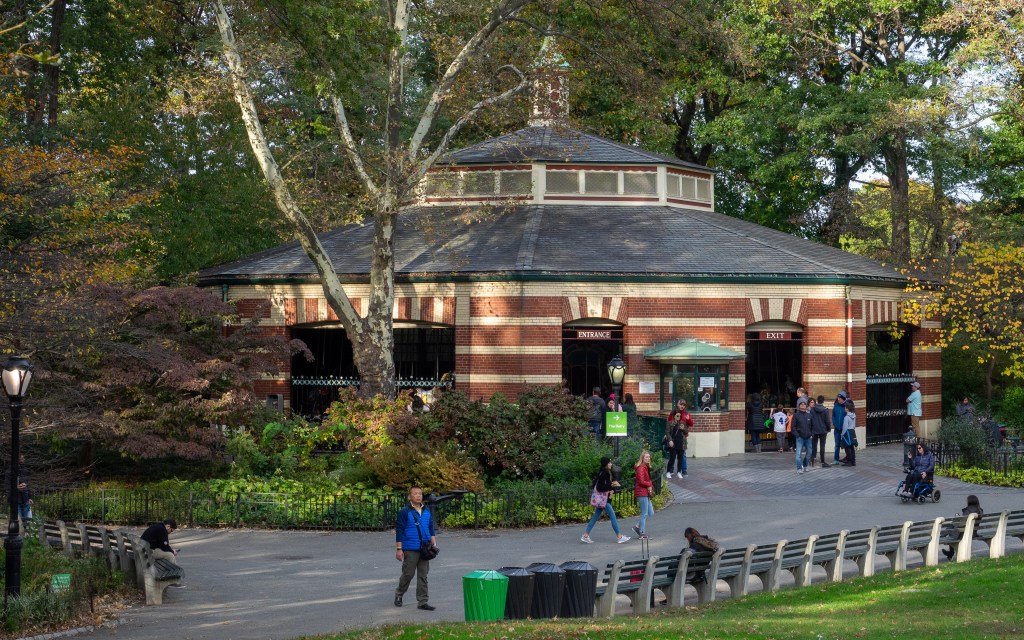
Continue along the Mall until you reach Center Drive, the main roadway that curves through the southern end of the park. Turn right (west) onto Center Drive and follow it for a short distance. You’ll soon see the Central Park Carousel tucked just off the drive. Carousels have been part of Central Park since 1871, and the current version—installed in 1951—features 57 hand-carved horses and is one of the largest merry-go-rounds in the country. Even if you don’t take a ride, the music and motion add a whimsical touch to your walk.
The Dairy
From the Carousel, walk back toward the Playmates Arch, one of the park’s most charming architectural features. Built in the early 1860s by Calvert Vaux and Jacob Wrey Mould, the arch was designed to separate pedestrian paths from carriage traffic above. Its interior is lined with colorful stripes of red and white brick, earning it the nickname “tricolored archway.” This playful design reflects its setting in the Children’s District, once home to attractions like the Kinderberg and the original carousel.
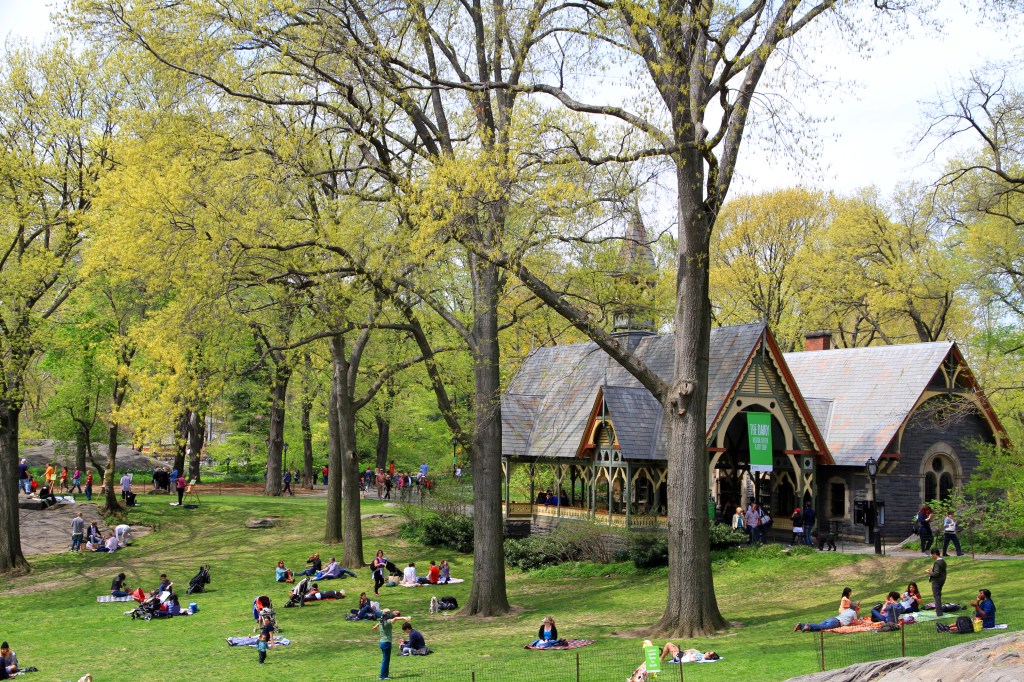
Just beyond the arch, you’ll arrive at The Dairy, a charming Victorian-style building with gingerbread trim that looks like something out of a storybook. Originally built in the late 1800s as a refreshment spot for children, it now serves as a visitor center and gift shop. Here you can pick up maps, park information, and souvenirs. It’s a great place to pause before continuing toward the park’s southeastern edge.
Optional Diversion – Central Park Zoo
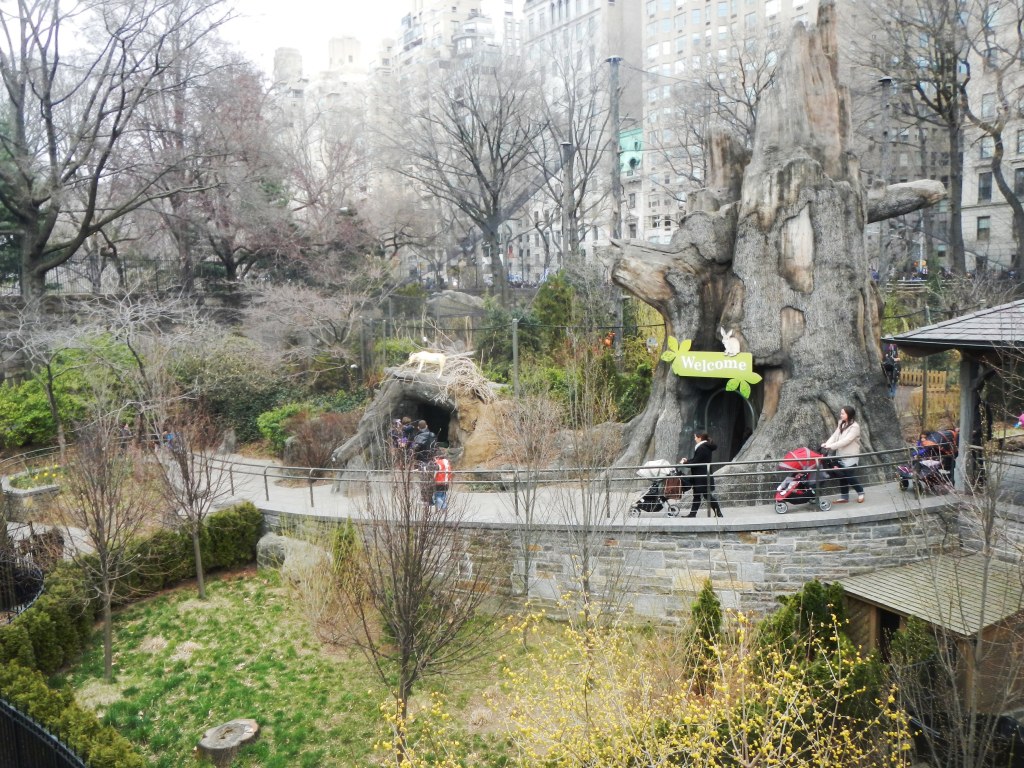
Central Park Zoo
The Central Park Zoo is a compact but fascinating wildlife experience in the heart of Manhattan. Opened in 1864 as America’s first public zoo, it now features habitats for penguins, snow leopards, red pandas, and tropical birds, along with a children’s zoo for younger visitors. It’s a great stop if you want to mix nature with a bit of animal adventure.
From The Dairy, head east along the path toward the park’s southeast corner. Follow signs for the zoo—it’s just a short walk past the playground and near the 64th Street entrance. After your visit, retrace your steps west to The Dairy to rejoin the main walk and continue toward Wollman Rink or Grand Army Plaza.
Wollman Rink
From The Dairy, follow the path southeast turning right on East Drive. Look for some flat rocks just ahead off the path to your right. Take a short climb where you can capture a group photo framed by the Manhattan skyline. Below you is Wollman Rink. Opened in 1949, it remains a favorite spot for skating and seasonal amusements, blending city energy with park tranquility.

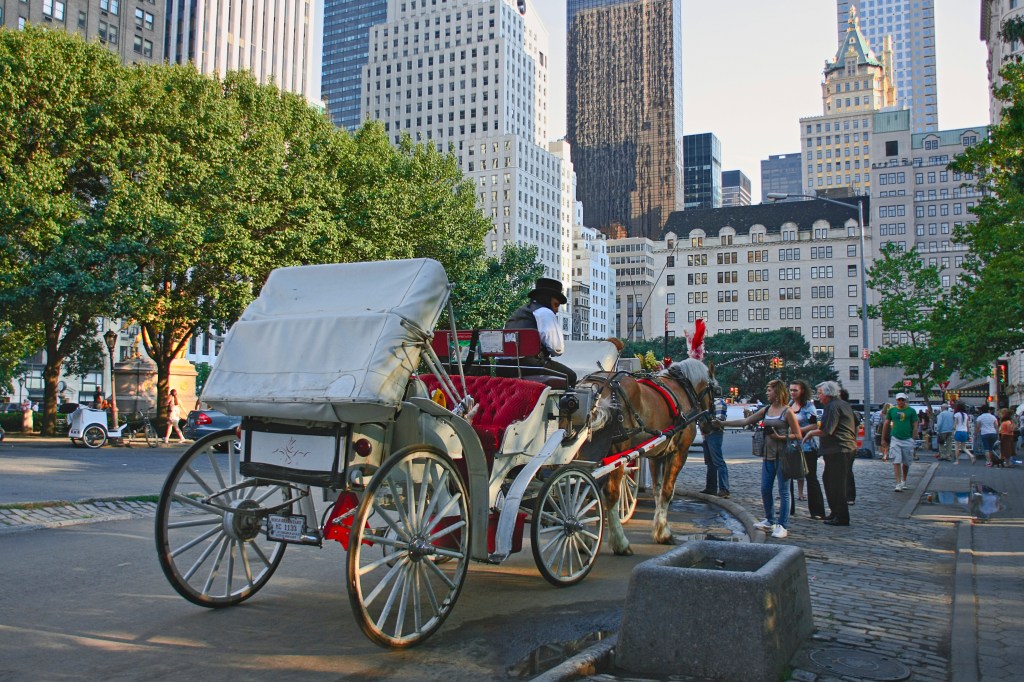
Horse Carriages
As you near the park exit near Grand Army Plaza, you’ll pass the line of horse-drawn carriages, a tradition dating back to the late 19th century. Originally, these carriages were a practical way for visitors to tour the park before automobiles became common. Today, they’re considered a romantic (though controversial) throwback to old New York, offering rides through the park for a cost of about $60 for the first 20 minutes, with $20 for each additional 10 minutes, and longer rides up to 50 minutes typically range from $150–$180.
Grand Army Plaza
Our walk ends at Grand Army Plaza, the elegant gateway to Central Park at Fifth Avenue and 59th Street. Designed in 1916, the plaza honors the Union Army of the Civil War and is divided into two sections. The northern half features the Pulitzer Fountain, topped by Pomona, the Roman goddess of abundance, while the southern half showcases the gilded-bronze statue of General William Tecumseh Sherman, created by sculptor Augustus Saint-Gaudens. Framed by the iconic Plaza Hotel and the start of Fifth Avenue’s luxury corridor, this spot blends history, art, and architecture—making it a perfect transition to your next adventure along Fifth Avenue.

Thanks for walking with me!
I hope you enjoyed exploring Central Park. If you enjoyed the route, found a hidden gem, or have ideas for improving the experience, I’d love to hear from you! Your insights help me improve future walks and inspire fellow travelers. Please rate this walk using the stars below — and feel free to leave a comment. Thank you! — and happy exploring!


Photo Credits
- Central Park – By Anthony Quintano, Licensed under CC BY 2.0, Source
- The Met – By Arad, Licensed under CC BY-SA 3.0, Source
- JK Onassis Reservoir – South Gate House – By Carsten Keßler, Licensed under CC BY 2.0, Source
- Great Lawn – By Jim Henderson, Licensed under Public Domain, Source
- Alexander Hamilton Monument – By Zeete – Public Domain, Source
- Cleopatra’s Needle – By King of Hearts, Licensed under CC BY-SA 4.0, Source
- Belvedere Castle – By Stig Nygaard, Licensed under CC BY 2.0, Source
- Turtle Pond – By Daniel Schwen, Licensed under CC BY-SA 4.0, Source
- Shakespeare Garden – By Ingfbruno, Licensed under CC BY-SA 3.0, Source
- Delacorte Theatre – By Rhododendrites, Licensed under CC BY-SA 4.0, Source
- The Ramble – By Ingfbruno, Licensed under CC BY-SA 3.0, Source
- Loeb Boathouse – By Ajay Suresh from New York, NY, USA, Licensed under CC BY 2.0, Source
- Bow Bridge – By Bryan Schorn, Licensed under CC BY-SA 3.0, Source
- Strawberry Fields – By Damzow, Licensed under CC BY-SA 4.0, Source
- Bethesda Fountain and Terrace – By Sidvics, Licensed under CC BY-SA 4.0, Source
- The Mall & Literary Walk – By Ingfbruno, Licensed under CC BY-SA 3.0, Source
- Naumburg Bandshell – By Pablo Costa Tirado, Licensed under CC BY-SA 3.0, Source
- Olmstead Flower Bed – Courtesy The Central Park Conservancy,
- Central Park Carousel – By Ajay Suresh, Licensed under CC BY 2.0, Source
- Tavern on the Green – By Jim Henderson – Public Domain, Source
- The Dairy – By Ingfbruno, Licensed under CC BY-SA 3.0, Source
- Central Park Zoo – By Jim Henderson, Licensed under CC0, Source
- Wollman Rink – By Tomás Fano, Licensed under CC BY-SA 2.0, Source
- Horse Drawn Carriages – By Tomás Fano, Licensed under CC BY-SA 2.0, Source
- Grand Army Plaza – By Paulo JC Nogueira, Licensed under CC BY-SA 3.0, Source
