Explore the Art and Architecture of the Renaissance
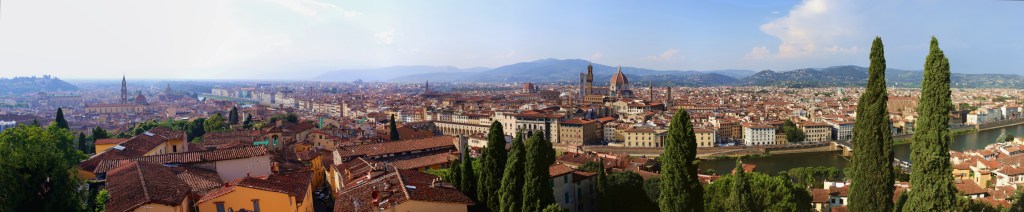
Florence’s historic center is a masterpiece in itself—where civic pride, religious devotion, and artistic genius converge in stone, marble, and open piazzas.
This walk takes us through the heart of Florence, starting at Piazza del Duomo, home to the city’s most famous landmarks: the Cathedral of Santa Maria del Fiore with Brunelleschi’s dome, Giotto’s Bell Tower, and the Baptistery of St. John. From there, we’ll make our way to Piazza della Signoria, the city’s historic center of power, and then on to the Uffizi Galleries and the Ponte Vecchio. Along the way, you’ll see where some of the most important works of art and architecture from the Renaissance are housed and learn how these spaces shaped Florence’s history.


How to navigate with your mobile device
JCVWalks are designed to be easy to follow on your mobile device. As you walk, you can tap the header or photo for each point of interest to open the location directly in Google Maps. This will help you navigate from your current location to the next point of interest. If you’d like to learn more about any stop along the way, just click the links in the description for additional details and context.
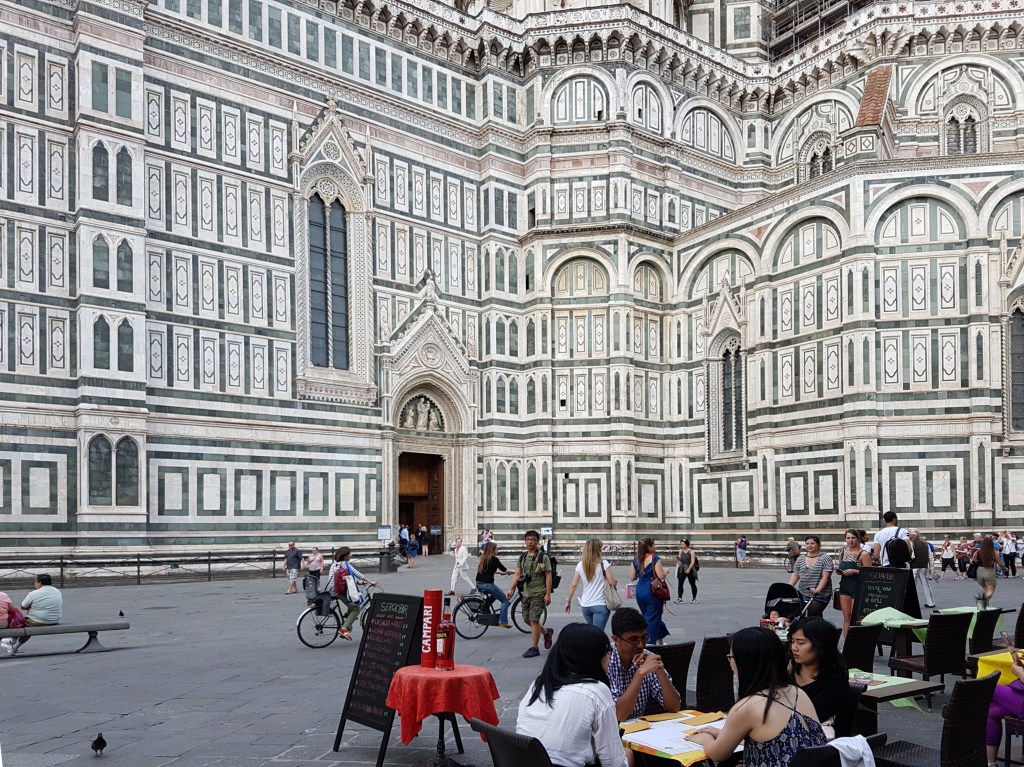
Piazza del Duomo
Piazza del Duomois the spiritual and architectural heart of Florence, home to the city’s most celebrated landmarks: including the Cathedral of Santa Maria del Fiore. Construction of the cathedral began in 1296 under Arnolfo di Cambio and was consecrated in 1436. Its crowning glory is the magnificent dome engineered by Filippo Brunelleschi—a revolutionary feat of Renaissance engineering. Rising 114.5 meters (376 feet), it remains the largest masonry dome ever built and was constructed without traditional wooden scaffolding, a method that still fascinates architects today. The cathedral’s polychrome marble façade, completed in the 19th century by Emilio De Fabris, adds to its grandeur. Inside, visitors can admire vast frescoes of the Last Judgment by Giorgio Vasari and Federico Zuccari. Together, these structures form a UNESCO World Heritage Site and a breathtaking ensemble that symbolizes Florence’s artistic and spiritual legacy. Cathedral of Santa Maria del Fiore is free to enter Monday to Saturday from 10:15 AM to 3:45 PM and does not require a pass.
Travelers should be cautious in this area, as pickpockets are known to operate in the crowds, often using distractions like staged arguments or requests for help or even asking you what time it is to divert attention.
Looking for a Wine Window?
- Osteria Belle Donne – The wine window is a delightful Florence tradition—just knock, order your drink, and enjoy your wine, spritz, or beer passed through the tiny wooden hatch right from the street. Note this spot can get crowded. A glass of wine was €7 when we visited in 2025.
- Cantina De’ Pucci & Buchetta del Vino – Located one block from the duomo. A charming wine window lets you order a glass directly from the street. The restaurant serves traditional Tuscan dishes like pappardelle al cinghiale and pappa al pomodoro.
Opera del Duomo Museum
Next, we head to the Opera del Duomo Museum, which houses original sculptures and artworks from the cathedral complex. The museum offers a close look at masterpieces by Michelangelo, Donatello, and Luca della Robbia. One highlight is Michelangelo’s unfinished “Pietà,” which he intended for his own tomb. The museum provides insight into the craftsmanship and vision behind Florence’s most iconic religious structures. Opera del Duomo Museum is open daily (except Tuesday) with hours varying by day, and is included in all Duomo passes: Brunelleschi, Giotto, and Ghiberti.

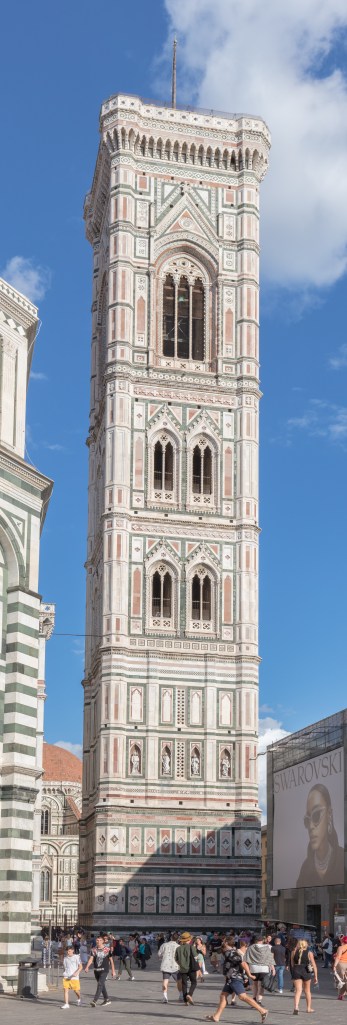
Giotto’s Bell Tower
Giotto’s Campanile, rising 84.7 meters (278 feet) beside the Florence Cathedral, is a masterpiece of Florentine Gothic architecture. Construction began in 1334 under Giotto di Bondone, who envisioned a tower harmonizing with the cathedral’s polychrome marble façade. Giotto completed only the lower level before his death in 1337, leaving Andrea Pisano and later Francesco Talenti to finish the structure by 1359. The tower’s exterior is clad in white Carrara, green Prato, and red Siena marble, arranged in geometric patterns that give it a painted appearance. Divided into five stages, the lower levels feature intricate hexagonal relief panels depicting biblical scenes, the liberal arts, and human endeavors, attributed to Giotto, Pisano, and Luca della Robbia. Above them, lozenge-shaped panels and statues of prophets and sibyls enrich the decorative program. Originally designed to include a spire, the tower was capped with a panoramic terrace instead, offering sweeping views of Florence. Giotto’s Bell Tower is open daily from 8:15 AM to 6:45 PM.
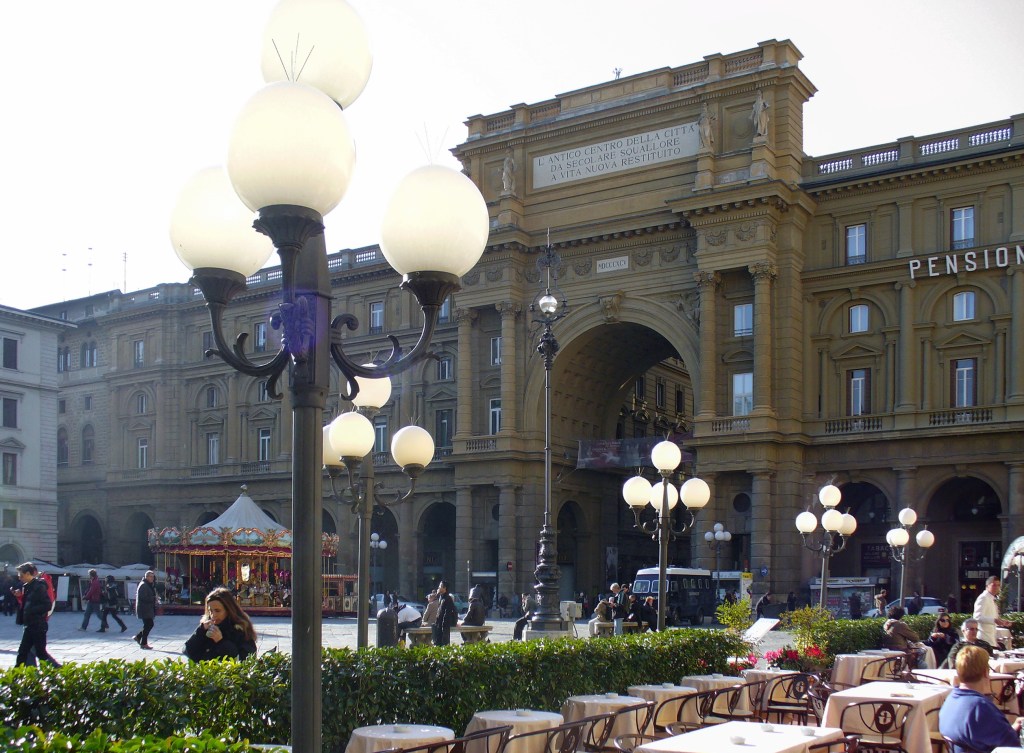
Piazza della Repubblica
The Piazza della Repubblica marks the very heart of Florence, occupying the site of the ancient Roman forum where the city’s cardo and decumanus once intersected. For centuries, this area served as a bustling marketplace and later became home to the Jewish Ghetto and the Mercato Vecchio. In the late 19th century, during Florence’s brief tenure as the capital of Italy, the square underwent a dramatic transformation known as the Risanamento. Entire medieval neighborhoods, including historic towers, churches, and artisan workshops, were demolished to create a modern piazza lined with grand palaces, luxury hotels, and elegant cafés. The most striking feature is the Arcone, a triumphal arch bearing the inscription: “The ancient center of the city, restored from age-old squalor to new life.” Today, Piazza della Repubblica is a vibrant hub filled with street performers, outdoor cafés like the historic Caffè Gilli and Giubbe Rosse, and the iconic carousel. It remains a symbol of Florence’s evolution—from Roman roots to Renaissance glory to modern cosmopolitan charm.
Church & Museum of Orsanmichele
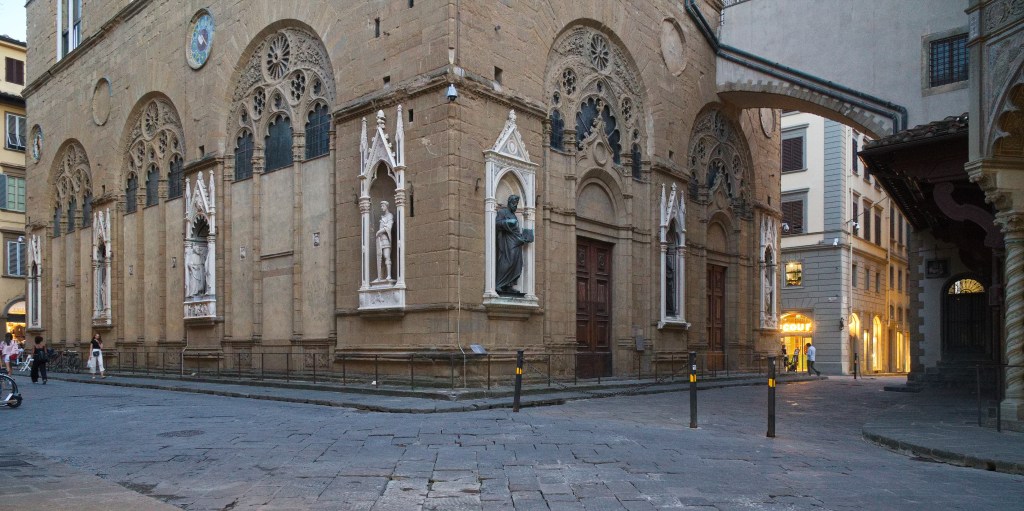
Originally constructed in 1336 as a grain market, Orsanmichele is one of Florence’s most fascinating architectural transformations. By 1380, the open loggia was converted into a church, reflecting the city’s deep intertwining of commerce and faith. Its name derives from “San Michele in Orto,” an earlier oratory dedicated to St. Michael that once stood on the site. The building became a spiritual and artistic showcase for Florence’s powerful guilds, who adorned its 14 exterior niches with statues of their patron saints. These works, created by masters such as Donatello and Ghiberti, represent a timeline of Gothic and early Renaissance sculpture. Today, the originals are preserved in the museum on the upper floors, which also offers panoramic views of the city. Inside the church, the Gothic interior remains largely intact, featuring two naves and six cross vaults. Church & Museum of Orsanmichele is open Monday and Wednesday through Saturday from 8:30 AM to 6:30 PM, Sunday until 1:30 PM, and is free to enter.
Museo Nazionale del Bargello
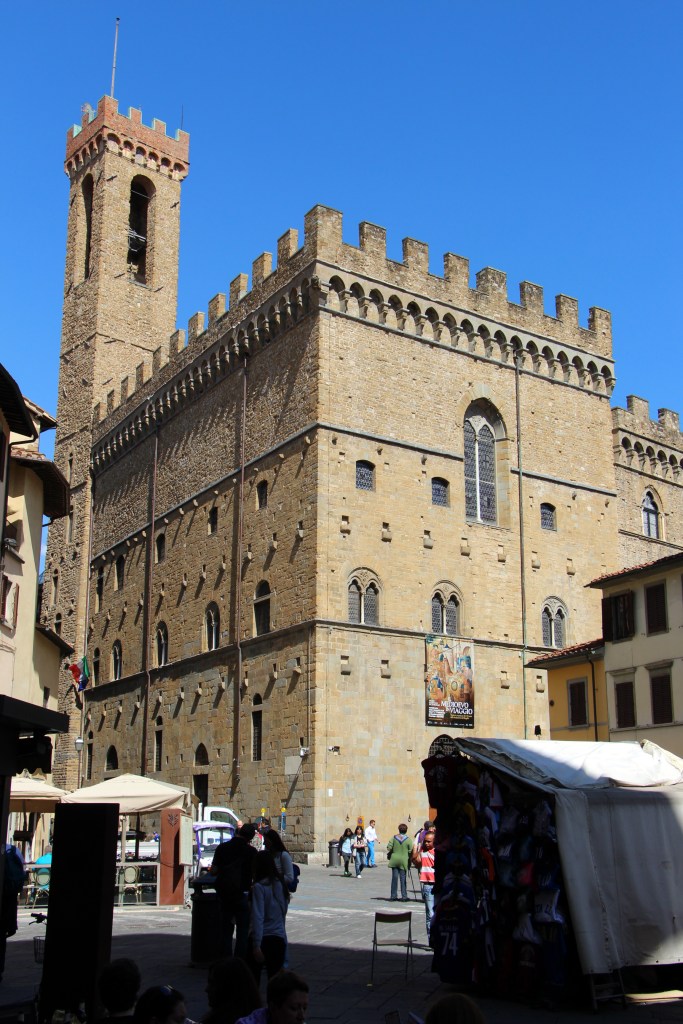
Next on our route is the Museo Nazionale del Bargello, housed in a former prison and barracks. This museum is a treasure trove of Renaissance sculpture, featuring works by Donatello, Michelangelo, and Benvenuto Cellini. The building itself, with its medieval courtyard and tower, adds to the atmosphere. It’s a quieter alternative to the Uffizi, ideal for those interested in sculpture and decorative arts. Museo Nazionale del Bargello is open Monday, Wednesday through Saturday from 8:15 AM to 6:50 PM and Sunday from 1:50 PM to 6:50 PM; adult admission is €10.
Piazza della Signoria
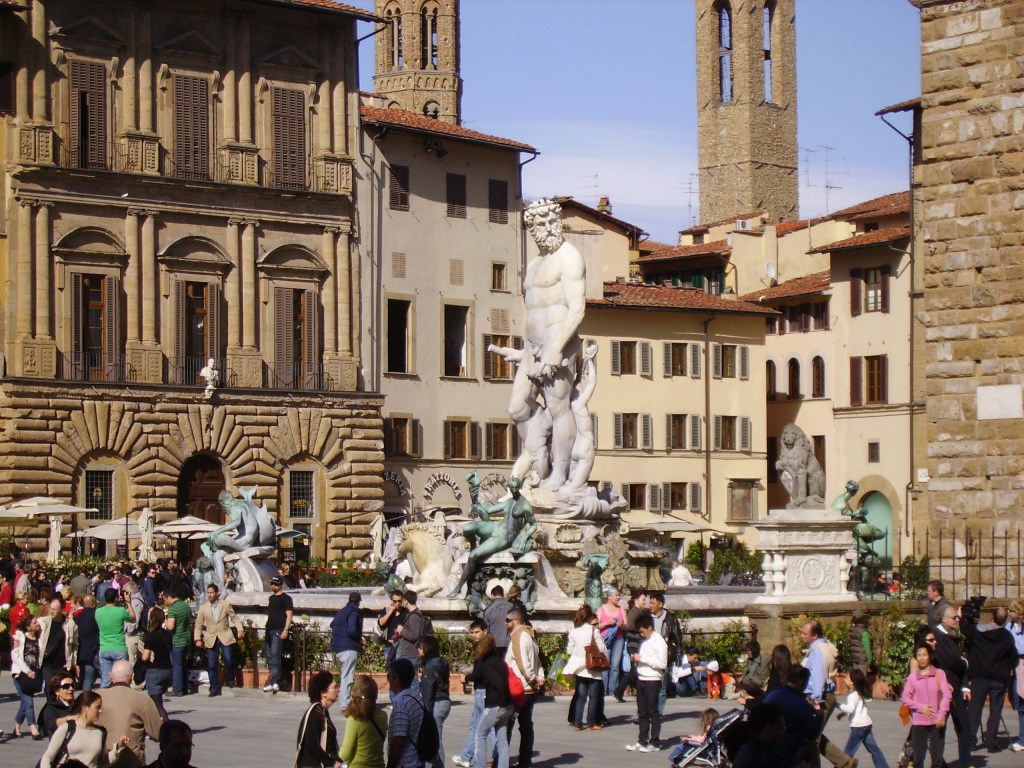
Piazza della Signoria has been Florence’s political and social heart since the 14th century, serving as the stage for civic life, celebrations, and dramatic events. Dominated by the Palazzo Vecchio, the square was the seat of the Florentine Republic and a symbol of its independence. It was here that Girolamo Savonarola held his fiery sermons and met his fate at the stake in 1498. The piazza is also an open-air gallery of Renaissance sculpture. The Loggia dei Lanzidisplays masterpieces such as Benvenuto Cellini’s Perseus with the Head of Medusa) and Giambologna’s dynamic Rape of the Sabine Women). A replica of Michelangelo’s David stands at the palace entrance, marking the site of the original. Fountains, statues, and historic plaques enrich the square, making it feel like an outdoor museum.
Palazzo Vecchio
Dominating Piazza della Signoria, the Palazzo Vecchiohas been Florence’s political heart since its construction began in 1299 under Arnolfo di Cambio. Originally called the Palazzo della Signoria, it served as the seat of the Florentine Republic’s ruling council. Its fortress-like design—with rusticated stone walls, crenellated battlements, and the 94-meter (308-foot) Torre d’Arnolfo—symbolized strength and civic pride. The tower once held prisoners, including Cosimo de’ Medici and Girolamo Savonarola. In 1540, Cosimo I de’ Medici transformed the palace into a ducal residence, commissioning Giorgio Vasarito create lavish interiors, including the monumental Salone dei Cinquecento. Today, the palace is both a museum and Florence’s city hall, housing Renaissance masterpieces and offering panoramic views from its tower. Palazzo Vecchio is open daily from 9:00 AM to 7:00 PM (Thursday until 2:00 PM); adult tickets start at €12.50.

Suggestions for Food and Drink
- All’Antico Vinaio – Florence’s most famous sandwich shop with legendary schiacciata, about a 2-minute walk from Palazzo Vecchio.
- Sergio Pollini Lampredotto – A beloved street food cart serving lampredotto, about a 3-minute walk from Sant’Ambrogio Market.
- Pino’s Sandwiches – A friendly deli offering Tuscan panini and pasta, about a 2-minute walk from Basilica di Santa Croce.
- Le Volpi e l’Uva – A cozy wine bar with crostinis, in Oltrarno, about a 5-minute walk from Ponte Vecchio.
- Melaleuca Florence Bakery and Bistrot – A riverside brunch café known for cinnamon rolls and specialty coffee, about a 3-minute walk from the Uffizi Gallery.
- Trattoria Zà Zà – A lively and reasonably priced trattoria known for its truffle gnocchi and Tuscan pasta dishes, located right next to Mercato Centrale, just a 1-minute walk from the market entrance.
Uffizi Galleries
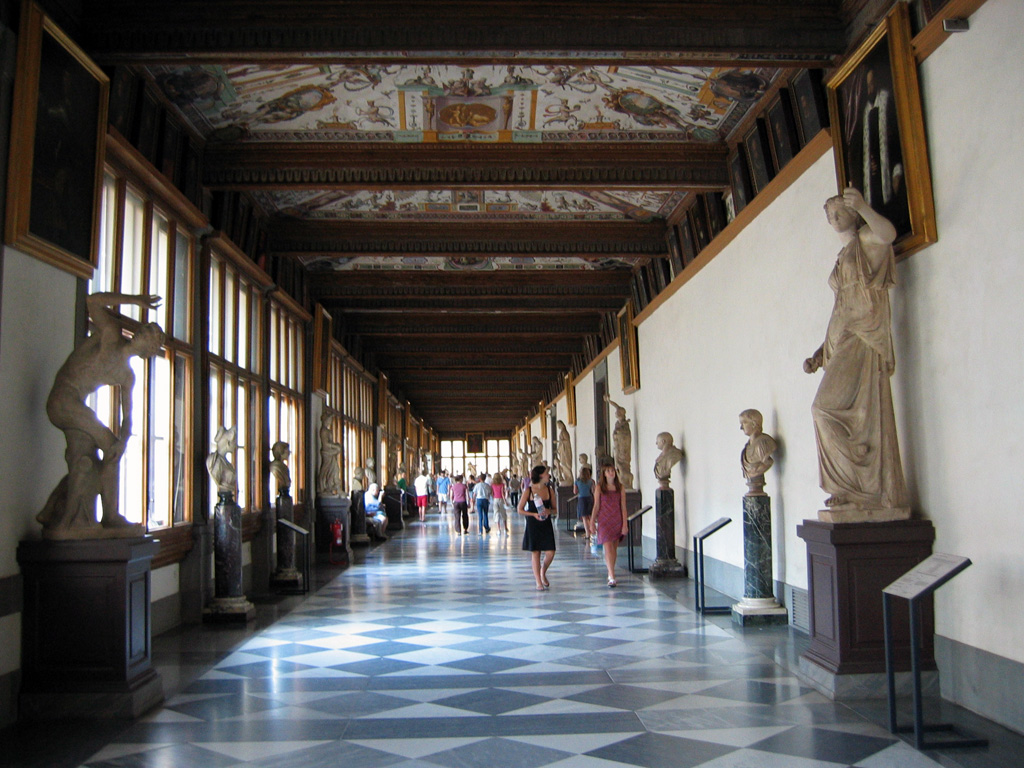
Commissioned in 1560 by Cosimo I de’ Medici, the Uffizi Gallerieswere originally designed by Giorgio Vasari as government offices (uffizi). Its elegant U-shaped structure, completed by Bernardo Buontalenti, became an art gallery in 1581 when Francesco I de’ Medici installed the family’s private collection on the top floor. The iconic Tribuna, an octagonal chamber adorned with marble and shells, showcased the Medici treasures. Over centuries, the collection expanded to include masterpieces by Botticelli, Leonardo da Vinci, Raphael, and Caravaggio. Highlights include Botticelli’s “Birth of Venus” and da Vinci’s “Annunciation.”—cornerstones of Renaissance art. Opened to the public in 1769, the Uffizi remains one of the world’s most visited museums, preserving Florence’s artistic legacy for future generations. Uffizi Galleries are open Tuesday to Sunday from 8:15 AM to 6:30 PM; adult admission is €25.

Museo Galileo
Just a short stroll from the Uffizi and the Arno, the Museo Galileo offers a fascinating detour into the world of scientific discovery. Housed in the historic Palazzo Castellani, this museum celebrates the life and legacy of Galileo Galilei and showcases centuries of scientific instruments—from astrolabes and globes to early telescopes and anatomical models. The collection is surprisingly engaging even for non-scientists, with beautifully crafted devices that reveal how Renaissance thinkers explored the heavens, measured time, and mapped the world. Admission is around €10, and the museum is compact enough to enjoy in under an hour.
Ponte Vecchio

Commissioned in 1560 by Cosimo I de’ Medici, the Uffizi Galleries were originally designed by Giorgio Vasari as government offices (uffizi). Its elegant U-shaped structure, completed by Bernardo Buontalenti, became an art gallery in 1581 when Francesco I de’ Medici installed the family’s private collection on the top floor. The iconic Tribuna, an octagonal chamber adorned with marble and shells, showcased the Medici treasures. Over centuries, the collection expanded to include masterpieces by Botticelli, Leonardo da Vinci, Raphael, and Caravaggio. Highlights include Botticelli’s “Birth of Venus” and da Vinci’s “Annunciation.”—cornerstones of Renaissance art. Opened to the public in 1769, the Uffizi remains one of the world’s most visited museums, preserving Florence’s artistic legacy for future generations. Uffizi Galleries are open Tuesday to Sunday from 8:15 AM to 6:30 PM; adult admission is €25.

Giunti Odeon – Libreria e Cinema
Step inside one of Florence’s most atmospheric cultural spaces, where books and films share the spotlight beneath a stunning Art Nouveau dome. Housed in the historic Odeon Cinema, this hybrid bookstore-cinema offers a uniquely Florentine experience: browse Italian and international titles in a grand hall once reserved for moviegoers, then settle in for a screening of a classic or contemporary film—often in English with Italian subtitles. The building itself is a marvel, with its gilded ceiling, velvet curtains, and elegant chandeliers evoking the glamour of early 20th-century cinema. You are welcome to sit in the seats during the day. There is may be a charge for entry after 8 pm for the cost of the movie.
Basilica of Santa Maria Novella
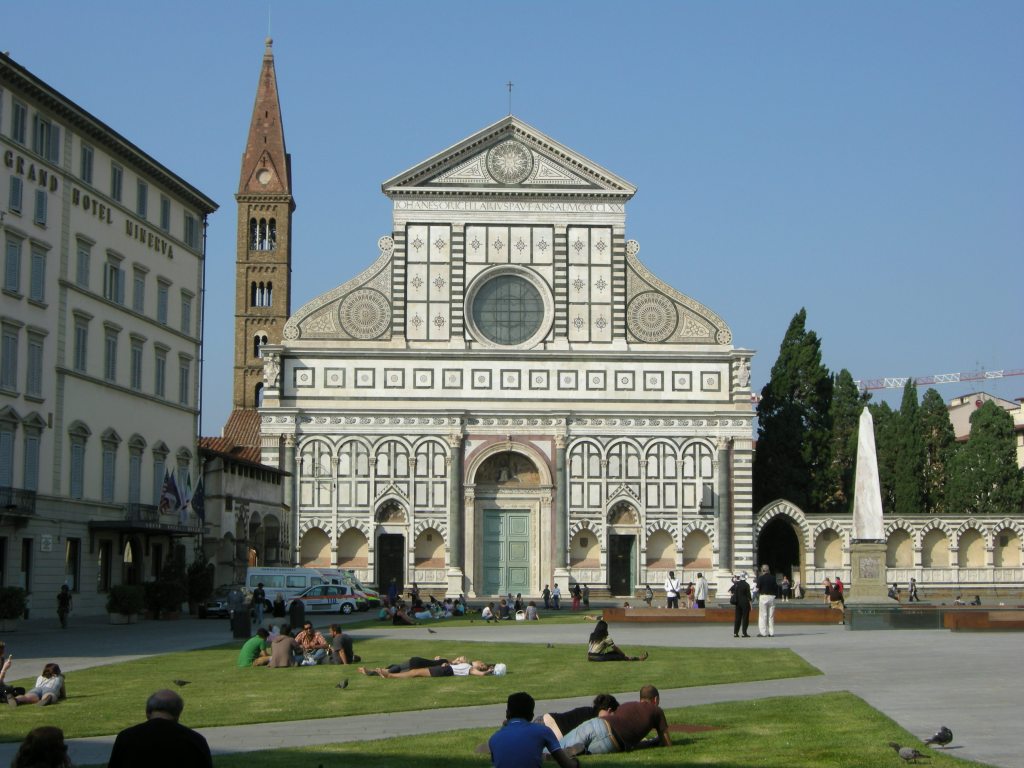
The Basilica of Santa Maria Novella, Florence’s first great basilica and principal Dominican church, is a masterpiece blending Gothic and early Renaissance architecture. Construction began in 1279 under Dominican friars Fra Sisto Fiorentino and Fra Ristoro da Campi, replacing a 9th-century oratory. The church was consecrated in 1420, but its crowning glory—the harmonious marble façade—was completed between 1456 and 1470 by Leon Battista Alberti, commissioned by the wealthy Rucellai family. Alberti’s design introduced classical proportions and elegant volutes, creating one of Florence’s most iconic façades. Inside, you’ll find frescoes by Masaccio, Ghirlandaio, and Filippino Lippi, offering insight into early Renaissance art and religious devotion. Basilica of Santa Maria Novella is open Monday to Saturday from 9:00 AM to 5:30 PM and Sunday from 11:00 AM to 5:30 PM; adult tickets are €7.50.

Farmaceutica di Santa Maria Novella
We end our tour at the Farmaceutica di Santa Maria Novella, one of the oldest pharmacies in the world. Founded by Dominican monks in the 13th century, it still produces herbal remedies, perfumes, and skincare products using centuries-old recipes. The interior feels like a museum, with frescoed ceilings and antique apothecary jars—a fragrant and fitting end to our walk. Farmaceutica di Santa Maria Novella is open Monday to Saturday from 9:30 AM to 7:00 PM and Sunday from 10:30 AM to 6:30 PM; entry is free, though there may be a short que.
Thanks for walking with me!
I hope you have enjoyed this walk through Florence’s most iconic squares and landmarks. Take time to enjoy a coffee or gelato nearby and soak in the atmosphere—Florence rewards those who slow down.
If you enjoyed the route, found a hidden gem, or have ideas for improving the experience, I’d love to hear from you! Your insights help me improve future walks and inspire fellow travelers. Please rate this walk using the stars below — and feel free to leave a comment. Thank you! — and happy exploring!


Click here for more JCV Walks in Florence
Your journey doesn’t have to end here. Choose another walk and let’s keep exploring together—one step at a time.
JCV Walks in Florence – David
Explore Michelangelo’s David and the city he helped shape—through markets, museums, and courtyards that reveal Florence’s artistic, civic, and everyday life.
JCV Walks in Oltrarno
Escape the crowds and explore Florence’s artisan-rich south side, where gardens, viewpoints, and elegant streets reveal a quieter, handcrafted Renaissance legacy.
JCV Walks in Pisa
A one hour train ride from Florence, Pisa is more thanits famous leaning tower. Explore Pisa’s lively squares, arcaded shopping streets, and hidden gems
Photo Credits
- Firenze panorama from the Giardino Bardini – Photo by Gunther Vermeulen, licensed under CC BY-SA 4.0, source
- Baptistery of St. John – Photo by Fczarnowski – Licensed under CC BY-SA 4.0, Source
- Catedral, Florencia – Photo by Diego Delso, licensed under CC BY-SA 4.0, source
- Opera del Duomo Museum – Photo by Sailko – Licensed under CC BY-SA 3.0, Source
- Giotto’s Bell Tower – Photo by Diego Delso -Licensed under CC BY-SA 4.0, Source
- Piazza della Repubblica – Photo by Freepenguin, licensed under CC BY-SA 3.0, source
- Church & Museum of Orsanmichele – Photo by Armin Kleiner -Licensed under CC BY-SA 4.0, Source
- Museo Nazionale del Bargello – Photo by Sailko – Licensed under CC BY 3.0, Source
- Palazzo della Signoria (Palazzo Vecchio) – Photo by JoJan, licensed under CC BY-SA 3.0, source
- Palazzo Vecchio – Photo by Francesco Bini – Licensed under CC BY-SA 4.0, Source
- Uffizi Hallway – Photo by Unknown, licensed under CC BY-SA 3.0, source
- Museo Galileo – Photo by Ebonaiuti – Licensed under CC BY-SA 4.0 Source
- Panorama of the Ponte Vecchio – Photo by Jan Drewes, licensed under CC BY-SA 4.0, source
- Basilica of Santa Maria Novella – Photo by I, Sailko – Licensed under CC BY-SA 3.0, Source
- Farmaceutica di Santa Maria Novella – Photo by I, Sailko Licensed under CC BY-SA 3.0, Source
