Exploring Sacred Towers and Historic Streets
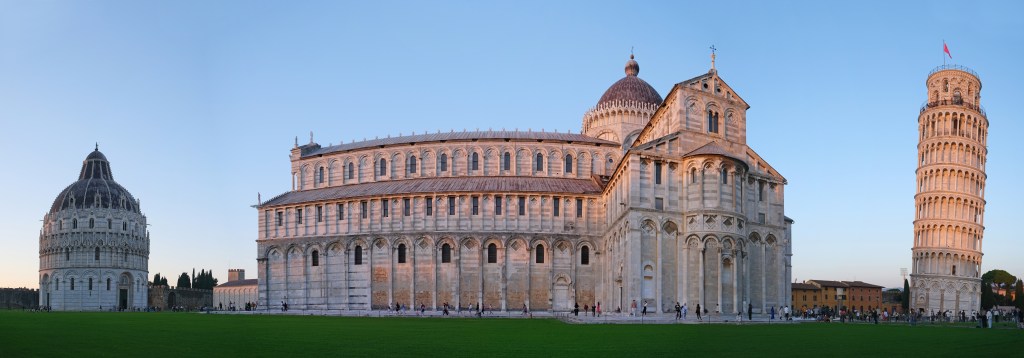
Pisa is more than its famous Leaning Tower. Once a powerful maritime republic, the city boasts a rich history, elegant architecture, and a vibrant university culture. Its streets reveal layers of Roman, medieval, and Renaissance heritage, while the Arno River adds scenic charm. Beyond the iconic Piazza dei Miracoli, Pisa offers lively squares, arcaded shopping streets, and hidden gems that reflect its artistic and intellectual legacy.
Our walk begins at the world-renowned Piazza dei Miracoli, a UNESCO World Heritage site home to the Leaning Tower, Cathedral (Duomo), Baptistery, and Camposanto Monumentale.
After exploring these masterpieces of Romanesque art, we will make our way south through the historic center, where we will discover elegant squares, Gothic churches, and lively streets that reveal the city’s layered history—from medieval trade routes to Renaissance civic pride.
Crossing the Arno River, we enter a quieter, more local side of Pisa, where modern art installations and everyday life offer a fresh perspective. Walking here connects you not just to the city’s past, but to its present pulse—making Pisa feel lived-in, not just looked at.

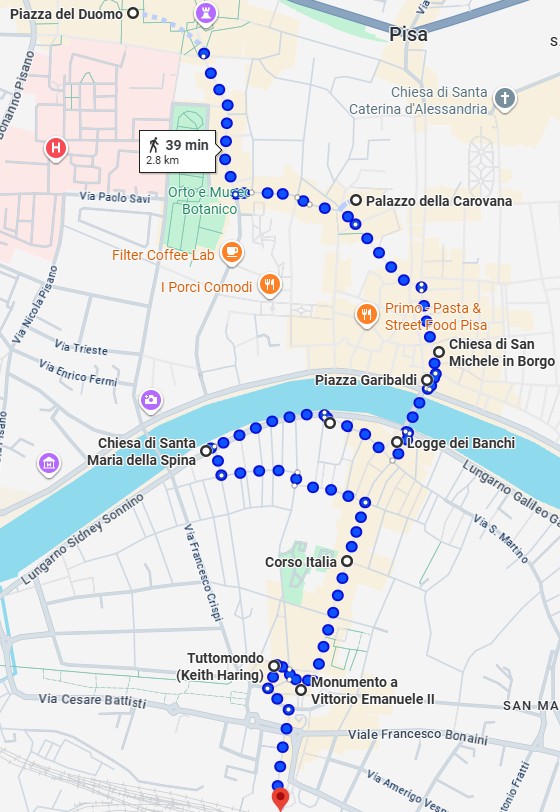
How to navigate with your mobile device
JCVWalks are designed to be easy to follow on your mobile device. As you walk, you can tap the header or photo for each point of interest to open the location directly in Google Maps. This will help you navigate from your current location to the next point of interest. If you’d like to learn more about any stop along the way, just click the links in the description for additional details and context.
Leaning Tower of Pisa
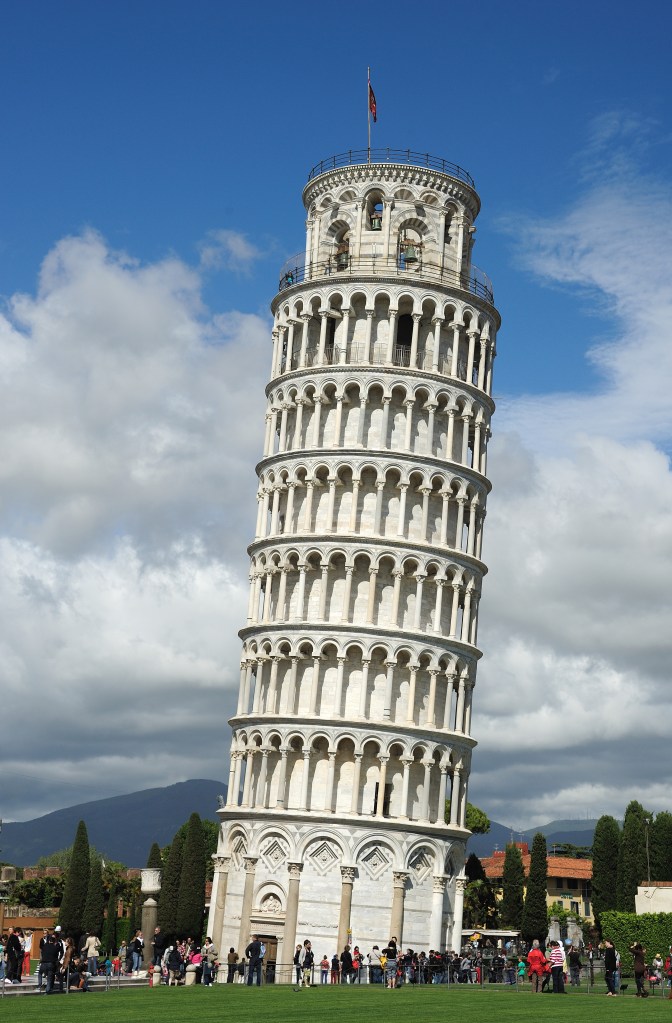
The Leaning Tower of Pisa, or Torre Pendente di Pisa, is the iconic freestanding bell tower of the city’s cathedral. Construction began in 1173 during Pisa’s golden age as a powerful maritime republic. The tower was designed to stand vertically, but by the time the third story was completed, the soft, unstable subsoil caused it to lean. Work was halted for nearly a century, which ironically allowed the soil to settle and prevented its collapse. Construction resumed in the 14th century, and the tower was finally completed in 1372, standing about 186 feet (57 meters) tall.
The tilt, now stabilized at about 4 degrees, became both a structural challenge and a symbol of resilience. Over the centuries, numerous engineering efforts have been made to prevent its fall, including soil extraction and counterweights. Today, the tower is one of the most photographed landmarks in the world and a UNESCO World Heritage site. Visitors can climb its 294 spiral steps to enjoy sweeping views of Pisa and the surrounding Tuscan countryside—a truly unforgettable experience.
Pisa Cathedral (Duomo di Pisa)
Begun in 1064, the Cathedral of Santa Maria Assunta is a masterpiece of Pisan Romanesque architecture, reflecting the city’s wealth during its era as a dominant maritime republic. Designed by architect Buscheto, the cathedral’s style blends classical, Byzantine, and Islamic influences, a testament to Pisa’s extensive trade networks across the Mediterranean. Its striking marble façade, adorned with blind arches and columns, set a precedent for Romanesque architecture in Tuscany. The bronze doors, added in the 17th century, depict biblical scenes, while the interior dazzles with black-and-white marble, gilded ceilings, and a mosaic of Christ in Majesty in the apse. One of its greatest treasures is the pulpit by Giovanni Pisano (1302–1310), celebrated for its dynamic Gothic sculptures. The cathedral once housed Galileo Galilei as a student, and legend holds that his observations of a swinging lamp here inspired his studies on pendulums.

Baptistery of St. John (Battistero di San Giovanni)
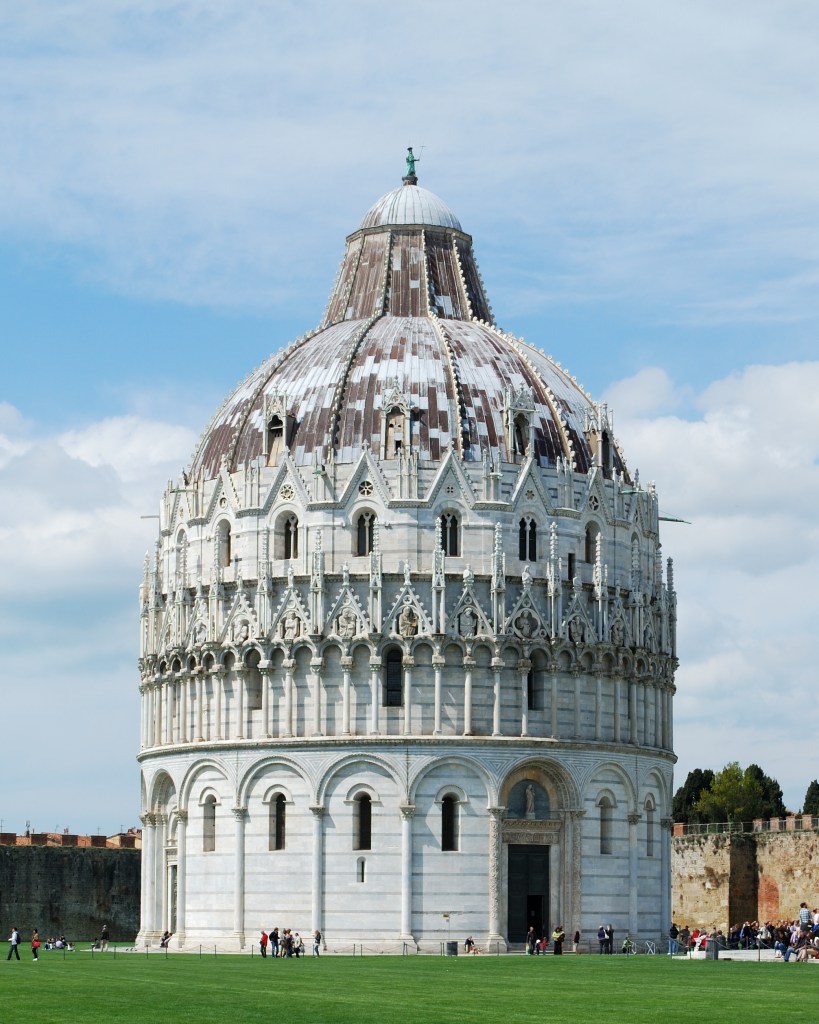
Standing opposite the cathedral, Pisa’s Baptistery of St. John is the largest in Italy, begun in 1152 by architect Diotisalvi and completed in 1363. Its design reflects a fascinating transition from Romanesque to Gothic architecture: the lower level features rounded Romanesque arches, while the upper galleries display pointed Gothic arches and elaborate tracery. The dome, covered in red tiles on one side and lead sheets on the other, creates its distinctive two-tone appearance. Inside, the acoustics are legendary—guides often demonstrate the building’s perfect resonance with a single note echoing like a choir. At the center stands the octagonal baptismal font, used for centuries of baptisms, and the pulpit by Nicola Pisano (1260), a masterpiece that marks the birth of Italian Renaissance sculpture with its classical-inspired reliefs. The Baptistery’s blend of styles and artistry reflects Pisa’s cultural connections and ambition during its medieval peak.
Camposanto Monumentale
The Camposanto Monumentale, or “Sacred Field,” is a monumental cemetery that completes the Piazza dei Miracoli ensemble. Construction began in 1278 under architect Giovanni di Simone and continued for centuries, with the cloister completed in the 15th century. According to tradition, the site was filled with soil brought from Golgotha during the Crusades, giving it profound spiritual significance. The rectangular cloister surrounds a central lawn and is lined with elegant Gothic arcades. Inside, visitors find Roman sarcophagi, medieval tombs, and remnants of fresco cycles that once covered the walls, including the famous Triumph of Death by Buonamico Buffalmacco. Though many frescoes were damaged during World War II, painstaking restoration has revived much of their beauty. The Camposanto served as Pisa’s burial ground for centuries and remains a serene, contemplative space that reflects the city’s artistic and religious heritage.


Via Santa Maria
Via Santa Maria is one of Pisa’s most historic streets, connecting the Piazza dei Miracoli with the Arno River. In Roman and medieval times, it was a key route linking the city center to the river, and by the 12th century, it served as a bustling market street. The street is famous for its medieval tower houses, once symbols of wealth and power—Pisa reportedly had nearly 10,000 tower houses in the 1100s. Many of these structures were later transformed into aristocratic palaces during the Renaissance, and today several house university faculties.
As you walk south, you’ll pass notable landmarks such as the San Nicola Church with its leaning bell tower, Palazzo Quaratesi (seat of the Accademia delle Belle Arti), and the Domus Galileiana, a research center honoring Galileo Galilei. The street’s mix of Romanesque churches, Renaissance palaces, and lively cafés makes it a perfect blend of history and local life.
Piazza dei Cavalieri
Turn left into Piazza dei Cavalieri, Pisa’s second most important square and once the political heart of the medieval city. Originally known as Piazza delle Sette Vie (Square of the Seven Streets), it served as a civic hub where assemblies were held and victories celebrated. After Pisa’s fall to Florence in 1406, the square became a symbol of Medici power. In 1558, Grand Duke Cosimo I de’ Medici commissioned Giorgio Vasari to redesign it in Renaissance style as the headquarters of the Order of the Knights of St. Stephen. The centerpiece of this transformation is the Palazzo della Carovana, a striking palace adorned with allegorical sgraffiti and marble busts, now home to the Scuola Normale Superiore.

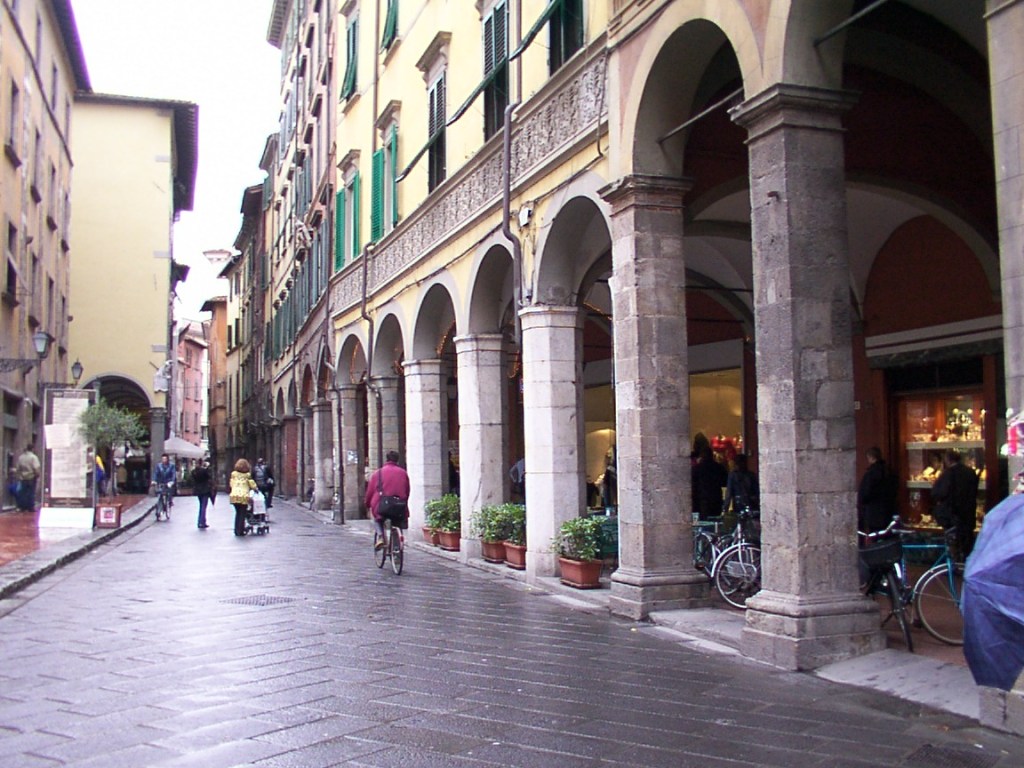
Borgo Stretto
One of Pisa’s most picturesque streets, Borgo Stretto dates back to the medieval period and was once a bustling commercial hub. Its name means “narrow borough,” and the street is lined with elegant 14th- and 15th-century palaces, many featuring arcades that now shelter boutiques, cafés, and artisan shops. Notable sights include the Church of San Michele in Borgo and the charming Via delle Sette Volte, a vaulted alleyway. Today, Borgo Stretto remains a lively pedestrian zone, blending historic architecture with vibrant local life.
Chiesa di San Michele in Borgo
One of Pisa’s oldest churches, Chiesa di San Michele in Borgo stands on the site of a former Roman temple and was first mentioned in 1016. Its striking 14th-century marble façade, with Gothic arches and loggias, is among the city’s finest. Inside, Romanesque columns frame a solemn nave housing a 14th-century crucifix by Nino Pisano and frescoes spanning centuries. Beneath the altar lies a medieval crypt, and nearby excavations have revealed traces of Pisa’s layered past—from monastic silos to ancient streets.

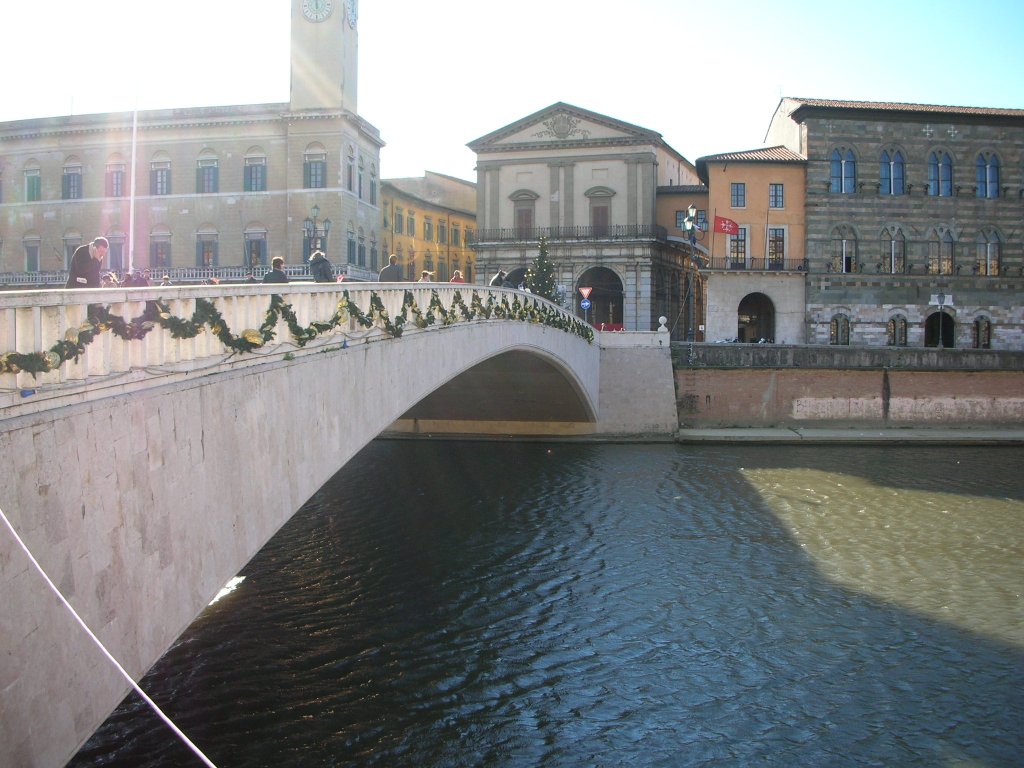
Ponte di Mezzo
Ponte di Mezzo, Pisa’s central bridge has connected the city’s two halves since Roman times, serving as a vital link for trade and daily life. Over the centuries, it has been rebuilt repeatedly after floods and wars. The current elegant single-arch design dates to 1950, replacing a Renaissance bridge destroyed during World War II. Today, Ponte di Mezzo is more than a crossing—it’s a cultural stage. Every June, it hosts the Gioco del Ponte, a historic contest where teams from Pisa’s neighborhoods battle to push a heavy cart across the bridge, reviving centuries-old traditions. From here, enjoy sweeping views of the Arno River and the colorful palazzi lining its banks.
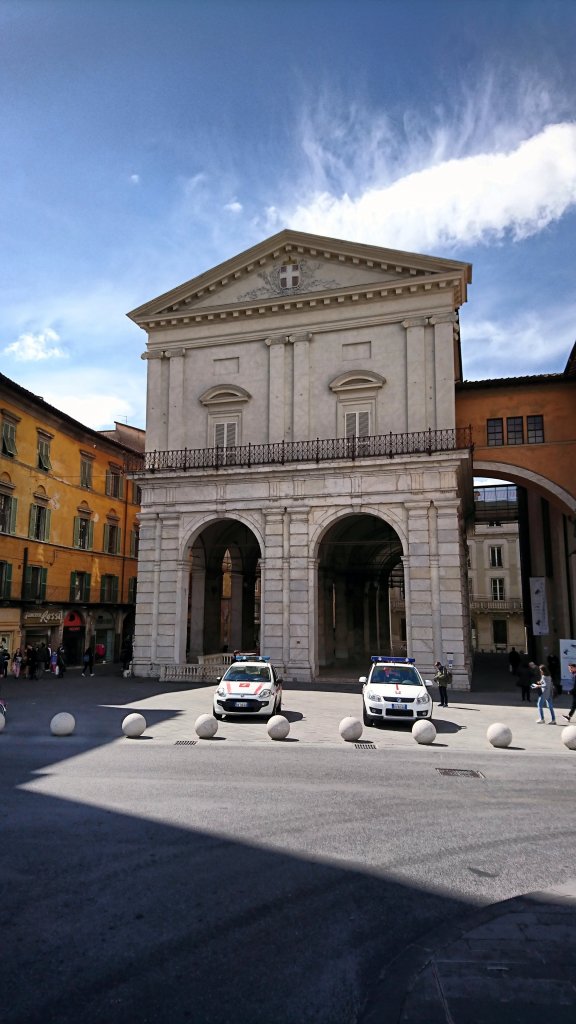
Loggi dei Banchi
Built in the early 1600s by order of Grand Duke Ferdinando I de’ Medici, the Logge dei Banchi was designed by Bernardo Buontalenti as a covered marketplace for wool, silk, and grain. Its elegant marble arcades once anchored Pisa’s commercial life and now mark the southern entrance to the historic center. Located beside the Arno at Piazza XX Settembre, the loggia still hosts occasional markets and offers a glimpse into the city’s mercantile past.
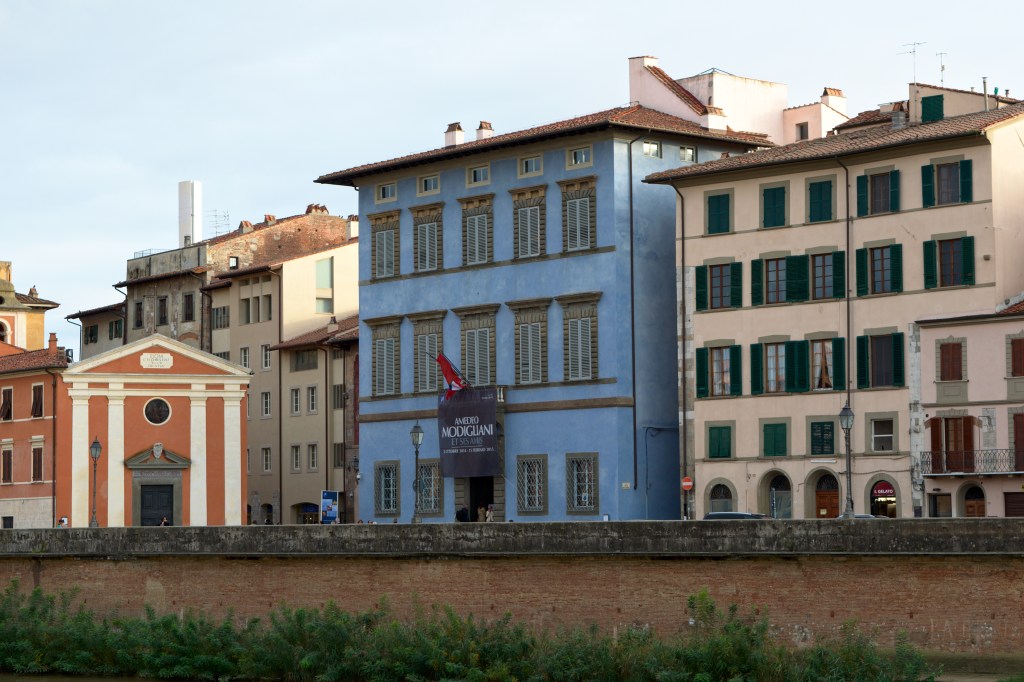
Palazzo Blu
A short walk from Ponte di Mezzo brings you to Palazzo Blu, a cultural landmark with roots in the 11th century. Once an aristocratic residence, it gained its distinctive blue façade during an 18th-century renovation. Today, Palazzo Blu is a vibrant art and cultural center, hosting major exhibitions featuring Italian and international masters, from Renaissance icons to modern artists. Inside, you’ll also find permanent collections of Pisan art and historical artifacts. Its location along the Arno makes it a perfect stop for art lovers and anyone seeking a deeper connection to Pisa’s cultural life.
Chiesa di Santa Maria della Spina
This tiny Gothic church, perched on the Arno’s south bank, was built in 1230 to house a sacred relic—a thorn from Christ’s crown. Despite its modest size, Santa Maria della Spina is one of Pisa’s most ornate treasures. Its marble façade brims with pinnacles, spires, and statues of saints, showcasing the skill of medieval Pisan sculptors. Originally located closer to the river, the church was dismantled and rebuilt in the 19th century to protect it from flooding. Though small, its intricate details and riverside setting make it a must-see for lovers of Gothic architecture and hidden gems.

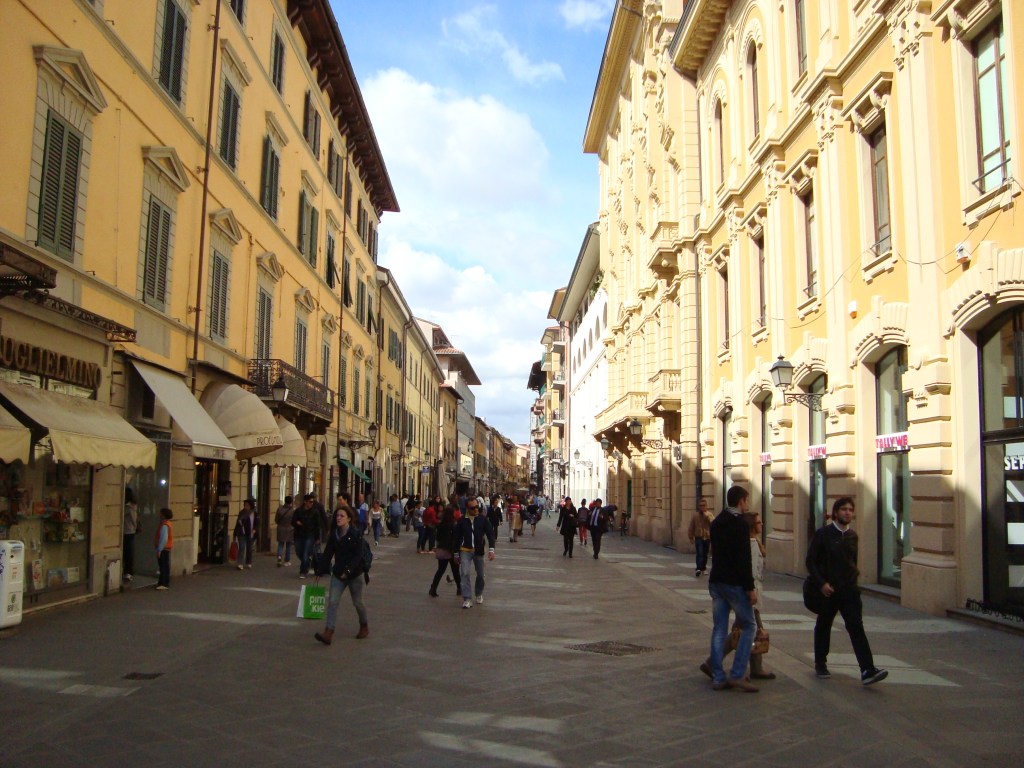
Corso Italia
Corso Italia is Pisa’s main commercial promenade and a vital artery connecting the train station to the historic center. With medieval origins, it evolved from a trade route into a lively pedestrian street lined with shops, cafés, and elegant buildings. Often called the “High Street of Pisa,” it blends local life with tourist energy, offering everything from designer boutiques to gelaterias. Even for non-shoppers, it’s a scenic and culturally rich stretch that reflects Pisa’s modern rhythm within its historic frame.
Piazza Vittorio Emanuele II
This prominent square marks the southern gateway to Pisa’s historic center and reflects the city’s 19th-century urban renewal. At its heart stands a commanding bronze statue of King Vittorio Emanuele II, Italy’s first monarch, sculpted by Cesare Zocchi in 1892. The statue symbolizes national unity and Pisa’s role in the Risorgimento. Beneath the square, archaeological finds—including remnants of the medieval Porta San Gilio and a drawbridge—reveal layers of the city’s past hidden beneath its modern surface.


Tuttomondo Mural
Before reaching Pisa Centrale, stop to admire Tuttomondo, a vibrant mural created by American artist Keith Haring in 1989. Covering an entire wall of the Sant’Antonio Abate convent, this 180-square-meter artwork was one of Haring’s last public projects before his death in 1990. The mural features 30 interlocking figures, each symbolizing themes of peace, harmony, and coexistence—values Haring hoped to promote globally. Bright colors and bold lines make it instantly recognizable, and its joyful energy contrasts with the city’s medieval architecture. Today, Tuttomondo is a cultural landmark and a testament to Pisa’s embrace of contemporary art alongside its historic treasures.
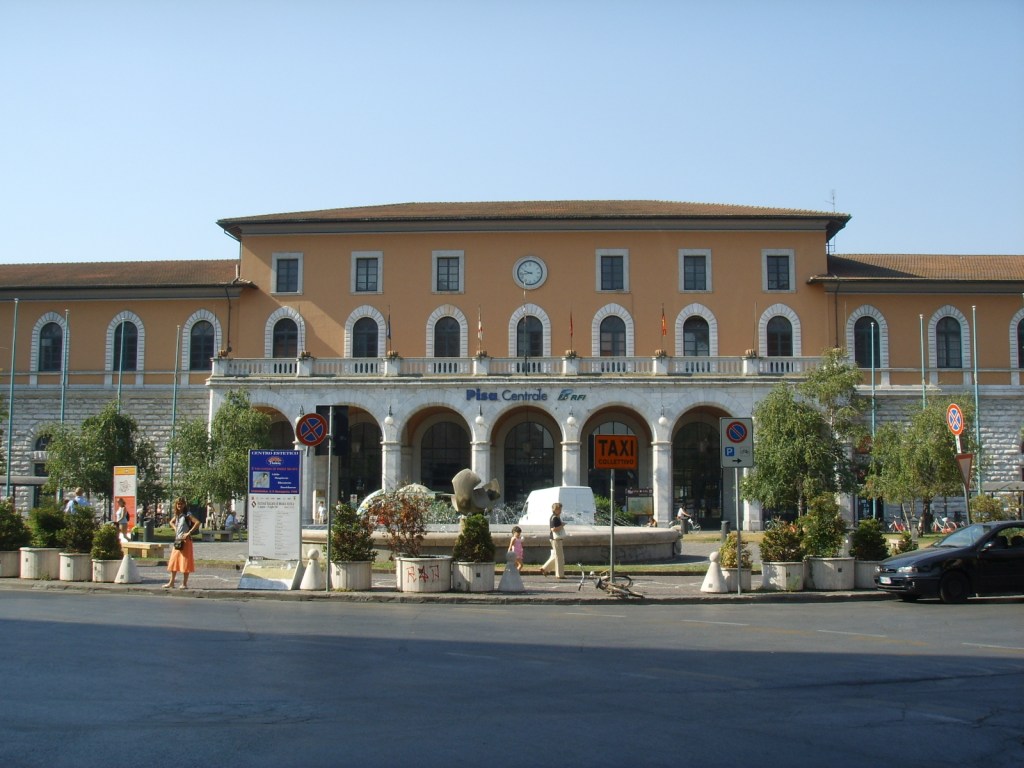
Pisa Centrale Train Station
Near Pisa Centrale, you’ll find a modern fountain and sculpture by Silvano Puccinelli (1916–1999), a celebrated Pisan artist known for his figurative works and public monuments. Installed in the mid-20th century, the fountain reflects postwar optimism and the integration of art into everyday urban spaces. Puccinelli’s style combines classical influences with modern sensibilities, creating a piece that feels both timeless and contemporary. Its location in the station square offers a striking contrast to Pisa’s historic core, serving as a symbolic gateway between tradition and progress. This final stop provides a quiet moment to reflect before continuing your journey.
Thanks for walking with me!
We started with the city’s most famous landmarks and ended in the heart of local life. Along the way, we saw how history, architecture, and everyday moments come together to make Pisa more than just a quick stop. Hope you enjoyed the walk!
If you enjoyed the route, found a hidden gem, or have ideas for improving the experience, I’d love to hear from you! Your insights help me improve future walks and inspire fellow travelers. Please rate this walk using the stars below — and feel free to leave a comment. Grazie! — and happy exploring!


Click here for more JCV Walks in Italy
Your journey doesn’t have to end here. Choose another walk and let’s keep exploring together—one step at a time.
JCV Walks in Venice
Explore each of Venice’s six sestieri, blending iconic sites with everyday Venetian life.
JCV Walks in Florence
Explore historic neighborhoods, Renaissance masterpieces and rich history.
Photo Credits
- Piazza dei Miracoli – – Photo by kallerna – Licensed under CC BY-SA 4.0, source
- Pisa Tower– Photo by Saffron Blaze – Licensed under CC BY-SA 3.0, source
- Pisa Duomo – Photo by Georges Jansoone, licensed under CC BY-SA 3.0, source
- Pisa Baptistry – Photo by NotFromUtrecht, licensed under CC BY-SA 3.0, source
- Camposanto Monumentale – By Bernd Thaller from Graz, Austria – Licensed under CC BY 2.0, Source
- Pisa Via Santa Maria – Photo by Jordiferrer – Licensed under CC BY-SA 4.0, Source
- Piazza dei Cavalieri – Photo by Lucarelli – Licensed under CC BY-SA 3.0, Source
- Pisa Borgo Stretto – Photo by Daniel Ventura – Licensed under CC BY-SA 4.0, Source
- Chiesa di San Michele in Borgo – Photo by Lucarelli – Licensed under CC BY-SA 3.0, Source
- Pisa Ponte di Mezzo – Photo by Intruder1319, Public Domain, Source
- Loggi dei Banchi – Photo by Deizenov – Licensed under CC BY-SA 3.0, Source
- Palazzo Blu – Photo by Japs 88 – Licensed under CC BY-SA 4.0, Source
- Santa Maria della Spina – Photo by Armin Kleiner, – Licensed under CC BY-SA 4.0, Source
- Pisa Corso Italia – Photo by Martin Stiburek – Licensed under CC BY-SA 4.0, Source
- Piazza Vittorio Emanuele II Pisa – Photo by Illustratedjc – Licensed under CC BY-SA 4.0, Source
- Tuttomondo Mural Pisa – By Guglielmo Giambartolomei – Licensed under CC BY-SA 4.0, Source
- Pisa Central Station – Photo by I, Sailko – Licensed under CC BY 2.5, Source
