Naval Power, Quiet Canals, and International Gardens
Castello is Venice’s largest and most varied district, known for its deep naval history, quiet gardens, and vibrant local life. From grand basilicas and Renaissance façades to whimsical bookstores and peaceful green spaces, Castello offers a rich and authentic experience of the city—where centuries of maritime power meet everyday Venetian rhythms.
These two curated walks begin in different parts of Castello and explore the district in two distinct directions—each offering a unique blend of history, architecture, and local life.
Note. I have prepared this walk for our first trip to Venice at the end of September, 2025. I will update it once we complete the walk.
JCV Walks in Castello

Castello West
The Castello West walk begins near the heart of Venice at Campo Santa Maria Formosa and winds through quiet squares, whimsical corners, and historic landmarks before arriving at Via Garibaldi, the city’s widest and most vibrant street. Along the way, you’ll explore Venice’s naval legacy, civic architecture, and local life—making this a rich and varied journey.

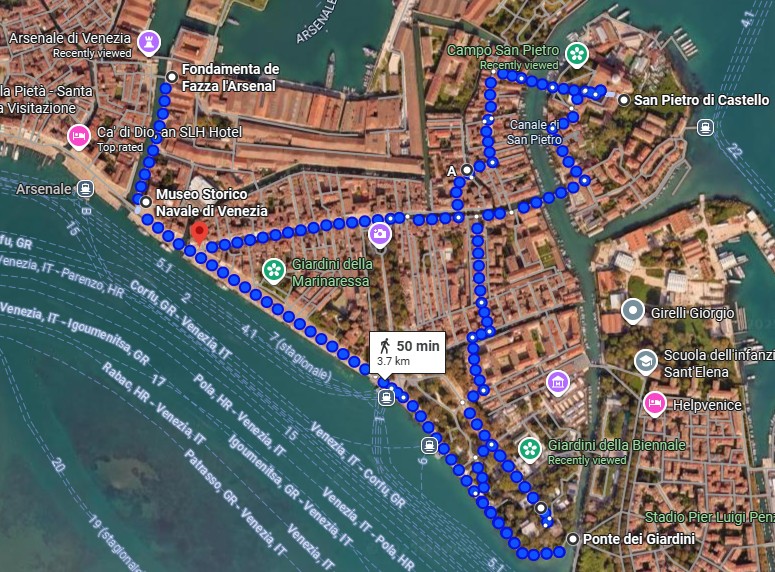
Castello East
The Castello East walk begins at the Arsenale di Venezia and explores the quieter eastern reaches of Castello, including peaceful gardens, a hidden cathedral island, and the vibrant local scene along Via Garibaldi. It’s a walk that reveals Venice’s maritime legacy, international cultural presence, and lived-in charm—offering a tranquil and authentic experience.

Want to combine the walks? The navigation points below are designed so you can take each walk on its own or combine them into a single, immersive experience. To do so, start with the West Walk and continue into the East Walk. The full route begins near Campo Santa Maria Formosa and winds through Castello’s historic shipyards, grand basilicas, whimsical bookstores, tranquil gardens, and cathedral island—offering a complete experience of Venice’s largest and most diverse district. Covering approximately 3.7 miles / 6 kilometers / 8,000 steps, it’s a relaxed yet culturally rich journey through one of Venice’s most historic and authentic neighborhoods.
How to navigate with your mobile device
JCVWalks are designed to be easy to follow on your mobile device. As you walk, you can tap the header or photo for each point of interest to open the location directly in Google Maps. This will help you navigate from your current location to the next point of interest. If you’d like to learn more about any stop along the way, just click the links in the description for additional details and context.
Castello West
Hidden legends, grand basilicas, and Venice’s naval gateway
The Castello West walk begins near the heart of Venice at Campo Santa Maria Formosa and winds through quiet squares, whimsical corners, and historic landmarks before arriving at Via Garibaldi, the city’s widest and most vibrant street. Along the way, you’ll explore Venice’s naval legacy, civic architecture, and local life—making this a rich and varied journey through the western half of Castello.
This walk covers approximately 1.25 miles / 2 kilometers / 3,000–3,500 steps, making it a relaxed 60-90 minute stroll with time for stops and exploration.
Chiesa Santa Maria Formosa
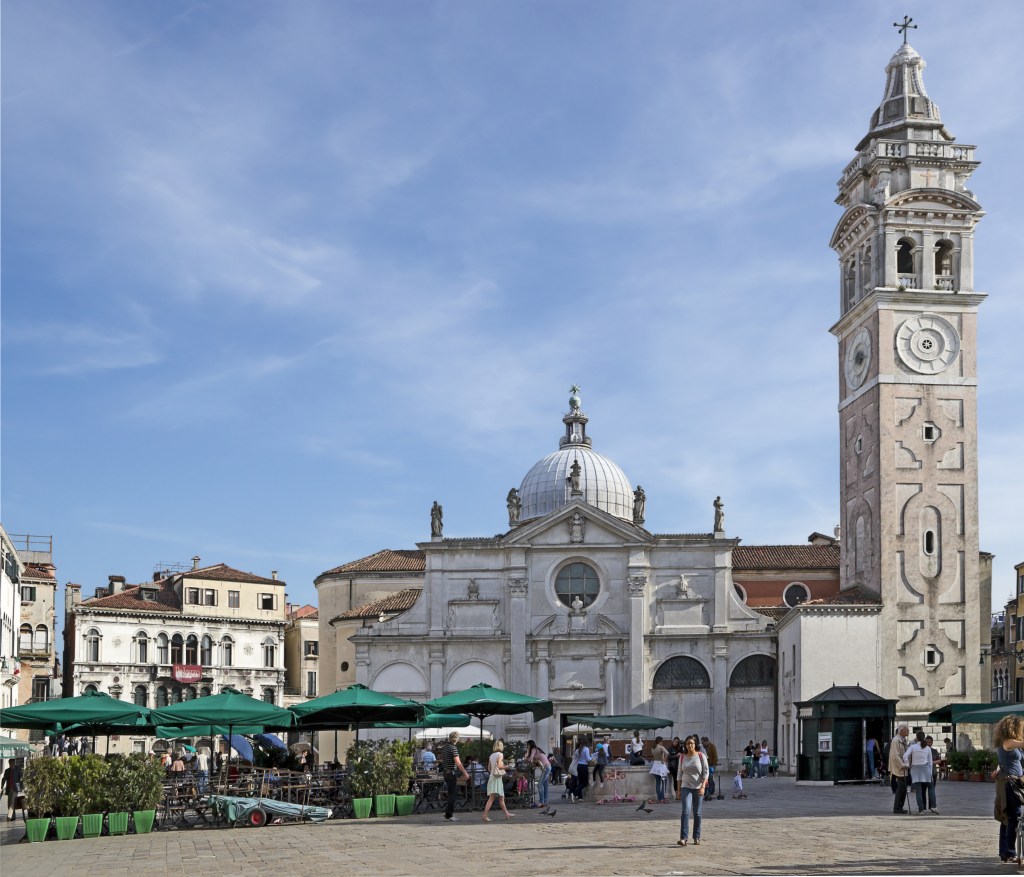
Begin your walk at Campo Santa Maria Formosa one of Venice’s largest and most scenic squares. Anchored by the 15th-century Church of Santa Maria Formosa designed by Mauro Codussi, the campo is steeped in legend—its name derives from a vision of the Virgin Mary appearing in “formosa” or voluptuous form. Surrounding palazzi include Palazzo Grimani and Palazzo Vitturi, the latter known for its “whispering window.” Look fotr a small, barred opening with a stone shelf beneath it, believed to have enabled discreet exchanges between residents and passersby. Venetian lore suggests it was used for romantic or secretive messages, taking advantage of the acoustics of the narrow alleys and adding a touch of mystery to the square’s architectural charm. The church is open Monday to Saturday from 10:30 am to 1:30 pm and 2:30 pm to 5:00 pm, with last admission at 4:20 pm. Adult admission is €3, with reduced tickets at €1.50. Entry is included in the Venice City Pass.
Note, if you are interested in a sweet treat before you start your walk, consider a detour to I Tre Mercanti. Located about 300 meters off the square, you can experience what some describe as the the best tiramisu ever made! Available in cups to go and good for sharing. Made hourly in Classic, Coffee, and Pistachio.
Chiesa Santi Giovanni e Paolo
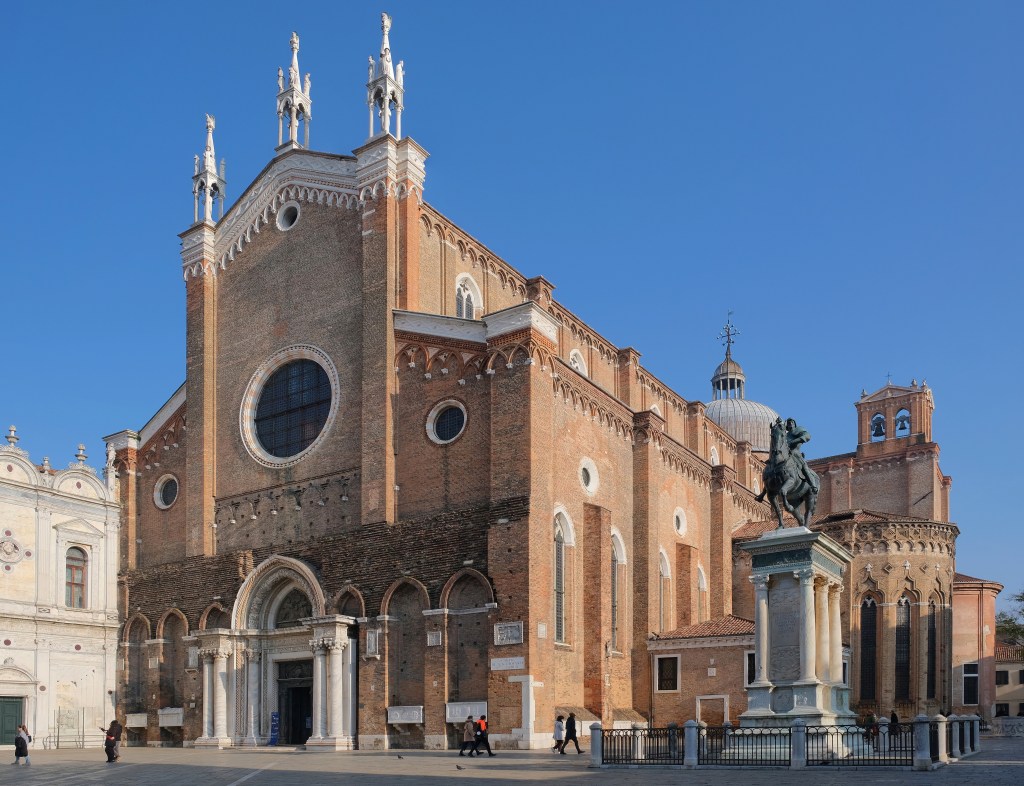
Continue northeast to Campo Santi Giovanni e Paolo one of Venice’s grandest squares and home to the Basilica dei Santi Giovanni e Paolo. This vast Gothic church, known locally as San Zanipolo, served as the burial site for 25 Venetian doges and features works by artists like Giovanni Bellini and Pietro Lombardo. The square also hosts the Equestrian Statue of Bartolomeo Colleoni by Andrea del Verrocchio. The basilica is open Monday to Saturday from 9:00 am to 6:00 pm, and Sundays and holidays from 12:00 pm to 6:00 pm. Adult admission is €3.50, with reduced tickets at €1.50 for children under 12. Entry is included in the Venice City Pass
Ospedale Civile SS Giovanni e Paolo
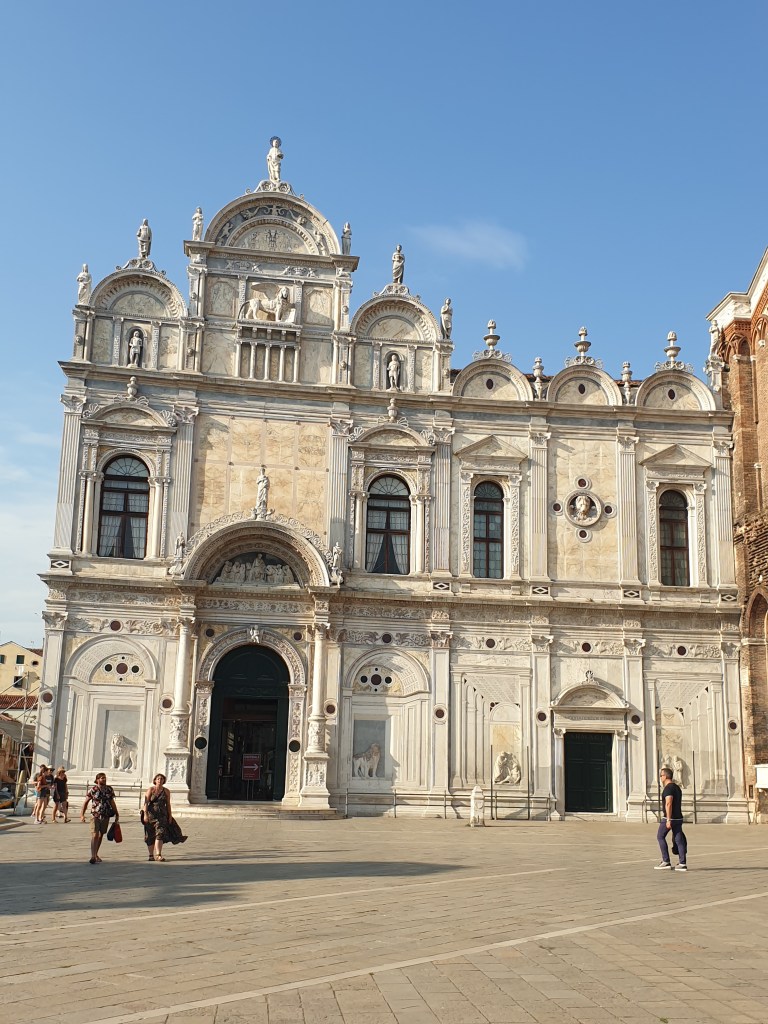
Facing the basilica is the Ospedale Civile SS Giovanni e Paolo. whose entrance is through the Scuola Grande di San Marco, a Renaissance masterpiece that resembles a palace more than a hospital. Originally a religious confraternity, the building was repurposed by Napoleon in 1807 and now houses a medical museum and historic library. It’s a striking example of Venice’s layered civic and architectural history. The Scuola is open Tuesday to Saturday and the first Sunday of each month from 9:30 am to 5:30 pm. Adult admission is €8, with reduced tickets at €6 for students under 26 and €3 for school groups. Entry is included in the Venice City Pass
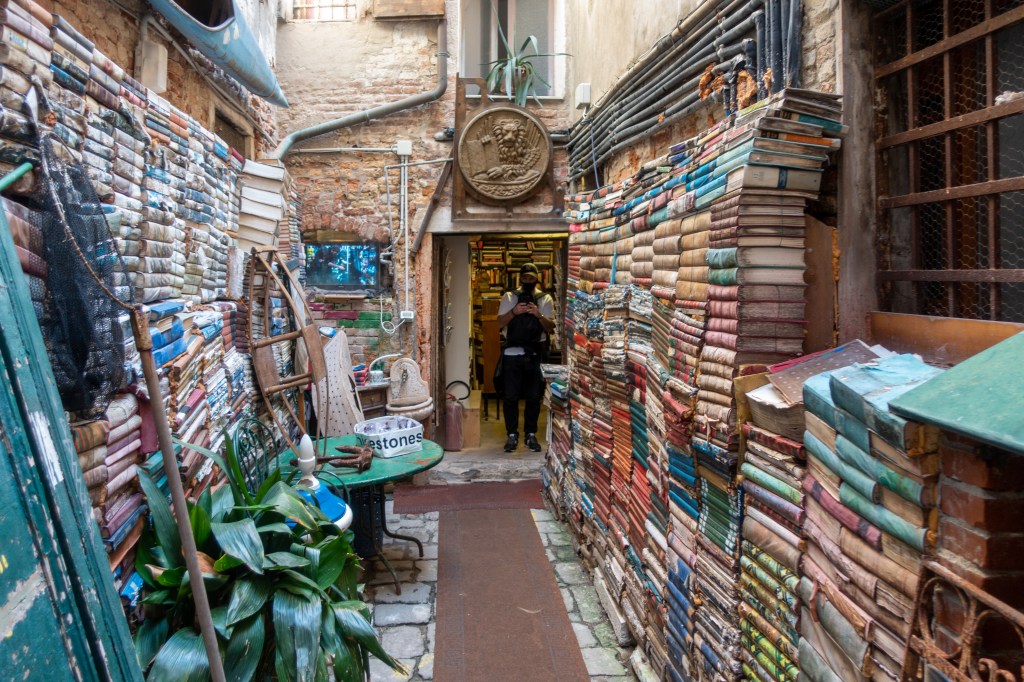
Libreria Acqua Alta
Head east toward Libreria Acqua Alta, a whimsical bookstore tucked along a canal. Books are stacked in gondolas, bathtubs, and boats to protect them from Venice’s seasonal flooding. Cats roam freely, and a staircase made of encyclopedias leads to a canal-view terrace. It’s a quirky, photogenic stop that captures the city’s charm and resilience—but be aware, its popularity has grown in recent years, so you may encounter a crowd.
Arsenale di Venezia
Continue southeast to the Arsenale di Venezia, the historic shipyard that powered the Venetian Republic’s naval dominance. Founded in 1104, the Arsenale was one of Europe’s earliest industrial complexes, capable of producing a warship a day. Its Porta Magna, flanked by marble lions looted from Athens, marks the entrance to this fortress-like compound. The Northern Arsenale is open Monday to Friday from 8:00 am to 3:00 pm, and the Southern Arsenale is accessible during Biennale exhibitions (May–November) with a paid ticket.

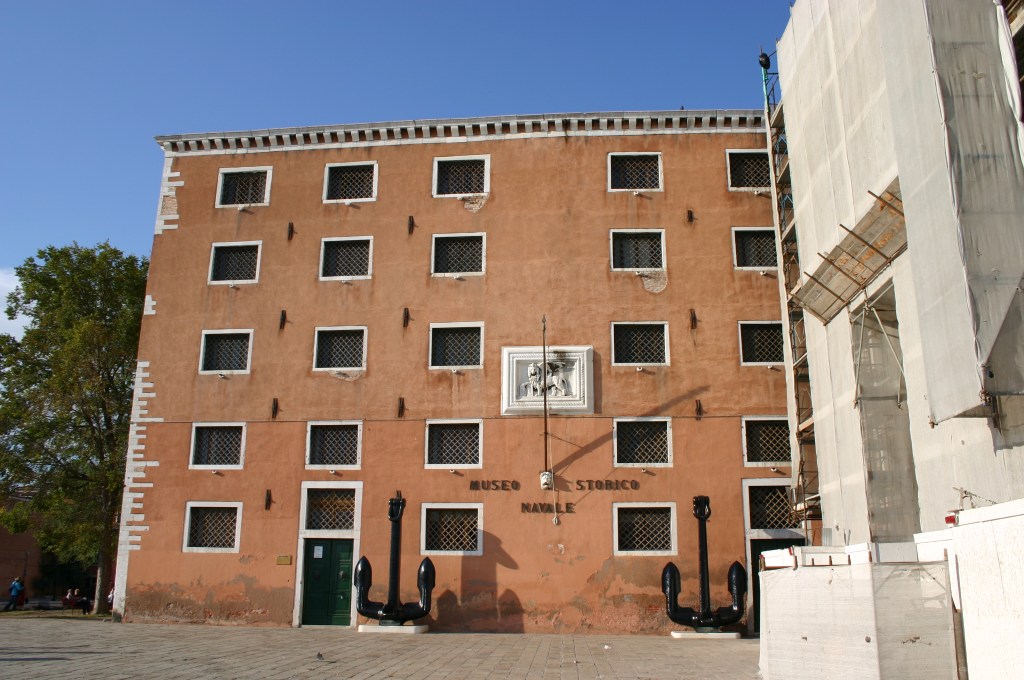
Museo Storico Navale
Just steps from the Arsenale, the Museo Storico Navale offers a deep dive into Venice’s maritime legacy. Established in 1919, the museum showcases ship models, naval weapons, and full-sized vessels in the adjacent Padiglione delle Navi. It’s an essential stop for understanding how the sea shaped Venice’s fortunes. The museum is open daily (except Tuesdays) from 10:00 am to 6:00 pm from March 21 to November 4, and from 10:00 am to 4:00 pm from November 5 to March 20. Adult admission is €16 and includes an audio guide. Entry is included in the Venice City Pass.
Via Garibaldi
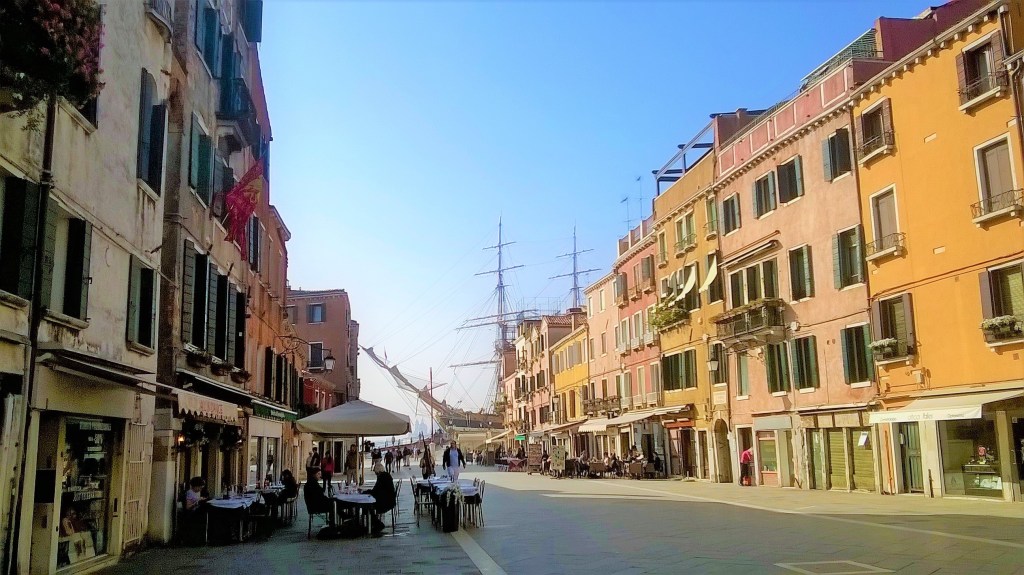
End your walk along Via Garibaldi, Venice’s widest and most vibrant street. Originally a canal, it was transformed in 1807 and named after Giuseppe Garibaldi, the hero of Italian unification. Today, it’s a lively promenade lined with cafés, shops, and local life—perfect for a spritz or cicchetti at the end of your walk.
To return toward San Marco, follow Via Garibaldi west and cross the Ponte de la Veneta Marina, which leads you back toward the Riva degli Schiavoni waterfront and the heart of Venice

Thanks for walking with me!
You’ve just explored the western half of Castello—an area where Venice’s layered history meets everyday life. From the quiet charm of Campo Santa Maria Formosa to the grandeur of Santi Giovanni e Paolo, from hidden courtyards and historic hospitals to quirky bookstores and artisan shops, Castello West offers a rich and varied slice of the city. Along the way, you’ve wandered peaceful canals, admired centuries-old architecture, and maybe paused for a spritz or gelato with a view.
If you enjoyed the walk, found a hidden gem, or have ideas to improve the experience, I’d love to hear from you! Your feedback helps shape future walks and inspires fellow travelers. Grazie—and happy exploring!
Click the button below to continue the navigation for the Castello East walk which resumes continues along the Riva dei Sette Martiri.
Castello East
Gardens, cathedrals, and local life at Venice’s edge
The Castello East walk begins at the Arsenale di Venezia and explores the quieter eastern reaches of Castello, including peaceful gardens, a hidden cathedral island, and the vibrant local scene along Via Garibaldi. It’s a walk that reveals Venice’s maritime legacy, international cultural presence, and lived-in charm—offering a tranquil and authentic experience of the city’s eastern edge.
Arsenale di Venezia
The Castello East walk begins atthe Arsenale di Venezia, the historic shipyard that powered the Venetian Republic’s naval dominance. Founded in 1104, the Arsenale was one of Europe’s earliest industrial complexes, capable of producing a warship a day. Its Porta Magna, flanked by marble lions looted from Athens, marks the entrance to this fortress-like compound. The Northern Arsenale is open Monday to Friday from 8:00 am to 3:00 pm, and the Southern Arsenale is accessible during Biennale exhibitions (May–November) with a paid ticket.
Museo Storico Navale
Just steps from the Arsenale, the Museo Storico Navale offers a deep dive into Venice’s maritime legacy. Established in 1919, the museum showcases ship models, naval weapons, and full-sized vessels in the adjacent Padiglione delle Navi. It’s an essential stop for understanding how the sea shaped Venice’s fortunes. The museum is open daily (except Tuesdays) from 10:00 am to 6:00 pm from March 21 to November 4, and from 10:00 am to 4:00 pm from November 5 to March 20. Adult admission is €16 and includes an audio guide. Entry is included in the Venice City Pass.
Continue to Castello East
Giardini della Biennale
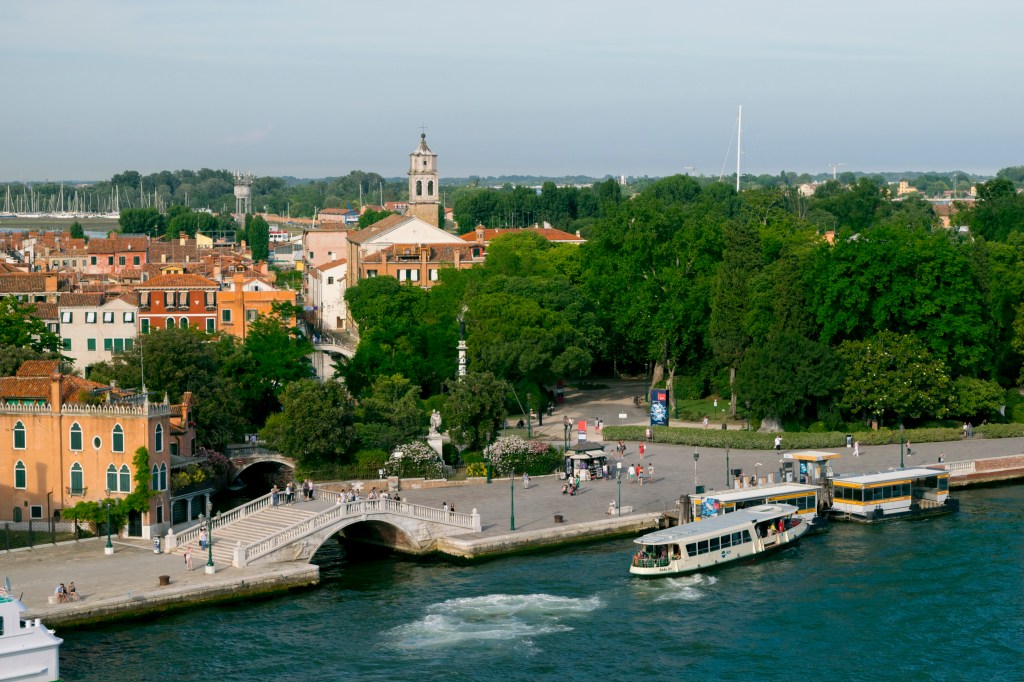
To continue on the Castello East, Walk along the Riva dei Sette Martiri. With the water on your right, head southeast to the Giardini della Biennale, a tranquil park created by Napoleon Bonaparte in the early 19th century by draining marshland to form Venice’s first public garden. Since 1895, the Giardini has served as the traditional venue for the Venice Biennale, one of the world’s most prestigious contemporary art exhibitions. The gardens host 30 permanent national pavilions, each representing a country’s artistic contributions. Many were designed by renowned 20th-century architects such as Carlo Scarpa, Josef Hoffmann, and Alvar Aalto, making the site a showcase of architectural innovation as well as artistic expression. The Biennale exhibitions typically run from late April to late November in odd-numbered years for Art, and even-numbered years for Architecture, with additional events in Dance, Music, Cinema, and Theatre throughout the year. You may also spot one or two of the resident cats in the park.
San Pietro di Castello
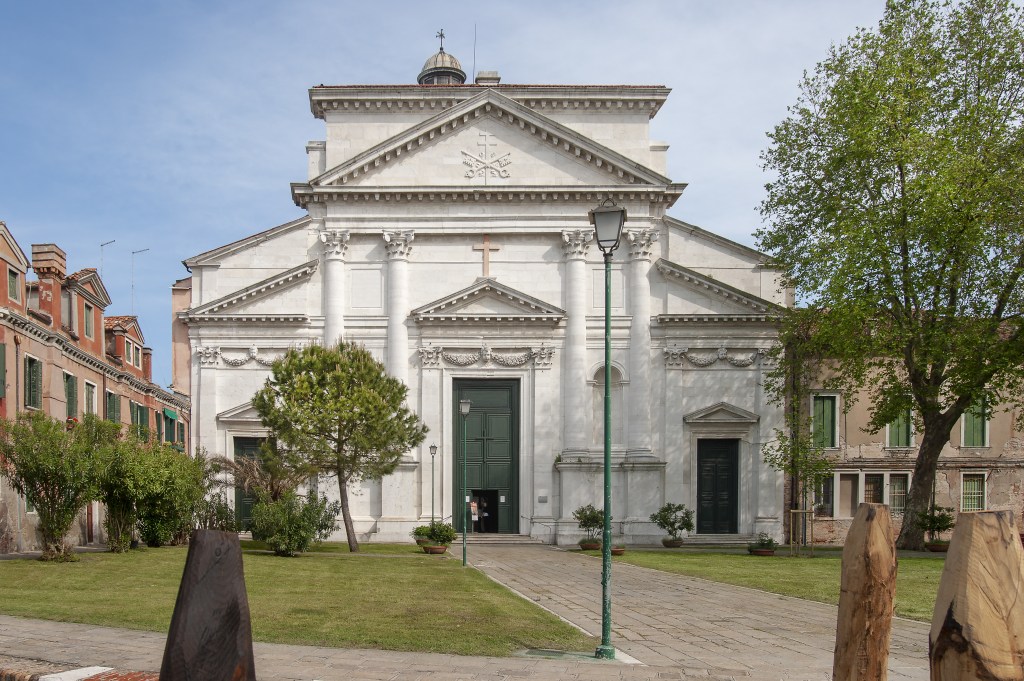
After exploring the park, navigate north cross the Ponte de Quintavale to the island of San Pietro di Castello, once the seat of Venice’s patriarch and cathedral until 1807. The Basilica di San Pietro di Castello, completed in the 16th century, features designs by Andrea Palladio and Vincenzo Smeraldi, and contains artworks by Paolo Veronese and Luca Giordano. Its remote location and serene atmosphere make it a contemplative stop. The basilica is open Monday to Saturday from 10:30 am to 1:30 pm and 2:30 pm to 5:00 pm, with last admission at 4:15 pm. Adult admission is €3.50, and entry is included in the Venice City Pass
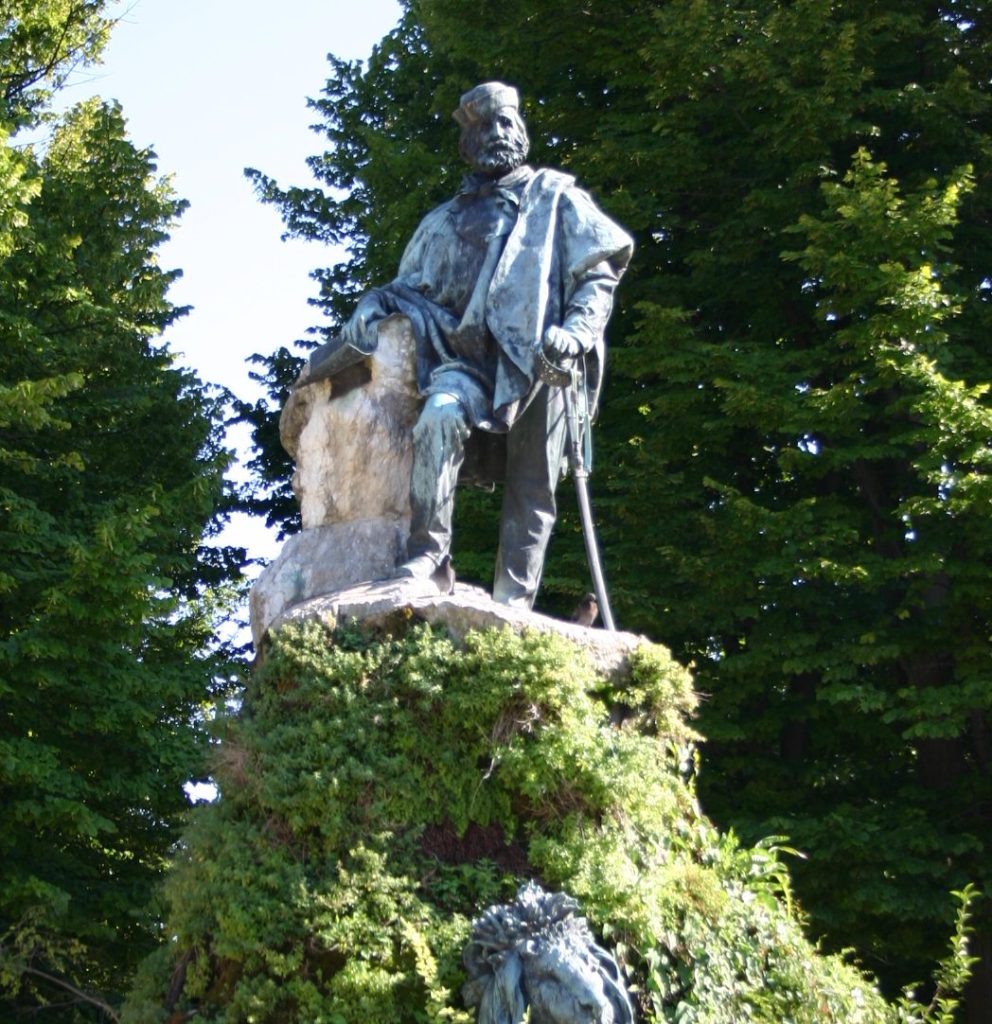
Giuseppe Garibaldi Monument
After leaving the island of San Pietro di Castello, cross the Ponte San Pietro and follow the quiet residential streets westward toward the northern entrance of Giardini della Biennale. Just before reaching Via Garibaldi, you’ll encounter the Giuseppe Garibaldi Monument, a striking equestrian statue honoring the Italian patriot who played a pivotal role in the country’s unification. Erected in 1921, the monument depicts Garibaldi in a commanding stance atop a rocky pedestal, with a lion at his feet symbolizing strength and courage
Via Garibaldi & Ponte de la Veneta Marina
We will complete our walk along Via Garibaldi, Venice’s widest and most vibrant street. Originally a canal, it was transformed in 1807 and named after Giuseppe Garibaldi, the hero of Italian unification. Today, it’s a lively promenade lined with cafés, shops, and local life. At the far end, you’ll find the Ponte de la Veneta Marina, which leads you back toward the Riva degli Schiavoni waterfront and the heart of Venice.
Thanks for walking with me!
Whether you’ve followed the full Castello walk or explored just a portion, you’ve journeyed through one of Venice’s most authentic and varied districts. From the quiet elegance of Campo Santa Maria Formosa to the grandeur of the Arsenale, from hidden bookstores and historic hospitals to leafy gardens and local cafés, Castello offers a rich tapestry of Venetian life beyond the tourist trail.
If you enjoyed the route, found a hidden gem, or have ideas for improving the experience, I’d love to hear from you! Your insights help me improve future walks and inspire fellow travelers. Please rate this walk using the stars below — and feel free to leave a comment. Grazie! — and happy exploring!


Click here for more JCV Walks in Venice
Your journey doesn’t have to end here. Choose another walk and let’s keep exploring together—one step at a time.
JCV Walks in San Polo
Return to the Rialto Bridge to discover the rich history of Venice’s oldest sestiere in San Polo, home to Gothic churches, quiet campos, and the city’s vibrant food markets.
JCV Walks in Cannaregio
Cannaregio offers a quieter, more authentic side of Venice, where local life unfolds along peaceful canals, historic churches, and the storied lanes of the Jewish Ghetto.
JCV Walks in Giudecca
Giudecca sits just across the lagoon from central Venice, offering stunning skyline views and a slower pace. Once home to palaces and factories, it’s now a quiet residential island with leafy promenades, local cafés, and a lived-in feel. It’s Venice from a distance—calm, reflective, and authentic.
JCV Walks in Murano & Burano
Take a scenic boat ride to Murano and Burano, where glassblowing traditions and colorful fishermen’s houses offer a vivid contrast to the main islands.
Photo Credits
- Chiesa Santa Maria Formosa – Photo by By Didier Descouens – Licensed under CC BY-SA 4.0, Source
- Basilica dei Santi Giovanni e Paolo – Photo by kallerna – licensed under CC BY-SA 4.0, Source
- Ospedale Civile SS Giovanni e Paolo – Photo byMaxmarwiki – Licensed under CC BY-SA 4.0, Source
Statue of Bartolomo Colleoni – Photo by Didier Descouens – Licensed under CC BY-SA 4.0, source - Libreria Acqua Alta – Photo byKent Wang from Barcelona, Spain – Licensed under CC BY-SA 2.0, Source
- The Venetian Arsenal – Photo by nikola_pu – licensed under CC BY-SA 3.0, source
- Museo Storico Navale – Photo by G.dallorto – Licensed under CC BY-SA 2.5 it, Source
- Giardini della Biennale – Photo by Ekaterina Valinakova – Licensed under DSC_0220, CC0, Source
- Basilica di San Pietro di Castello – Photo by Didier Descouens – Licensed under CC BY-SA 4.0, Source
- Giuseppe Garibaldi Monument – Photo by G.dallorto – Licensed under CC BY-SA 2.5 it, Source
- Via Garibaldi – Photo by Doge e Patriarca – Licensed under CC BY-SA 4.0, Source
- Via Garabaldi – Looking East – Photo by trolvag – Licensed under CC BY-SA 3.0, Source
