A Walk Through Venice’s Grand Piazza
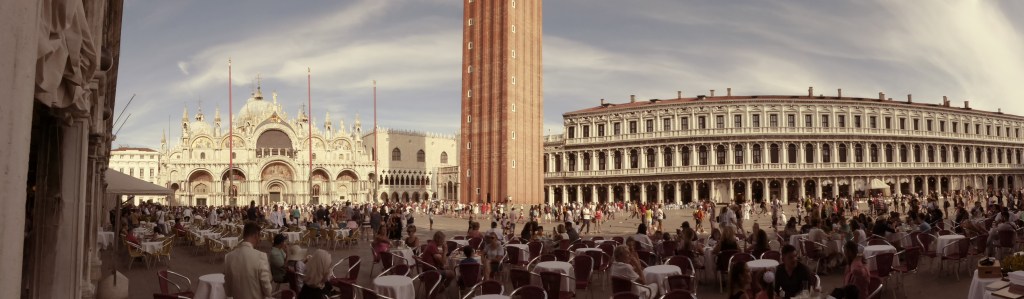
This walk is a deep dive into one of the great piazzas of Italy—Piazza San Marco, the ceremonial and cultural heart of Venice. Unlike our other walks that wind through neighborhoods and across bridges, this route stays centered around a single, extraordinary square. Here, centuries of history, religion, politics, and art converge in a space that has witnessed everything from grand processions to quiet reflection. As we move from basilica to bell tower, palace to promenade, we’ll uncover the stories behind the architecture and monuments that make St. Mark’s Square not just the center of Venice, but one of the most celebrated public spaces in all of Europe.
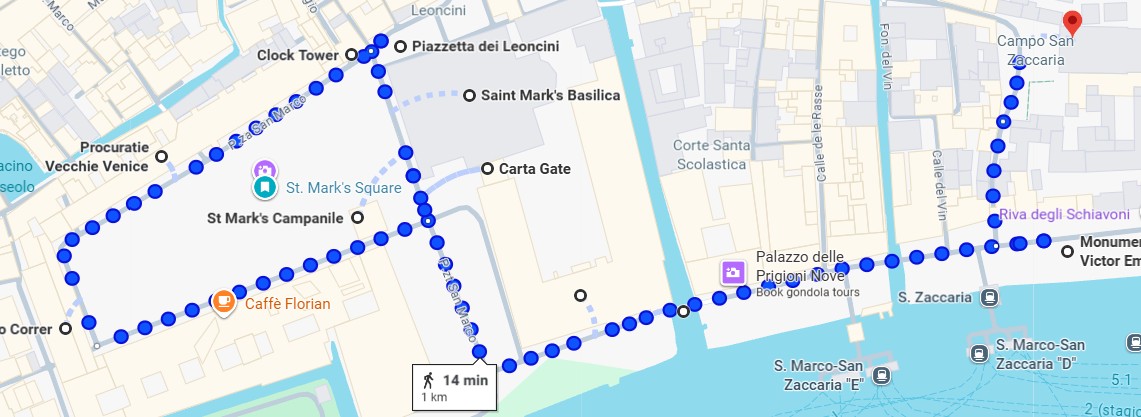

How to navigate with your mobile device
JCVWalks are designed to be easy to follow on your mobile device. As you walk, you can tap the header or photo for each point of interest to open the location directly in Google Maps. This will help you navigate from your current location to the next point of interest. If you’d like to learn more about any stop along the way, just click the links in the description for additional details and context.
St. Mark’s Basilica
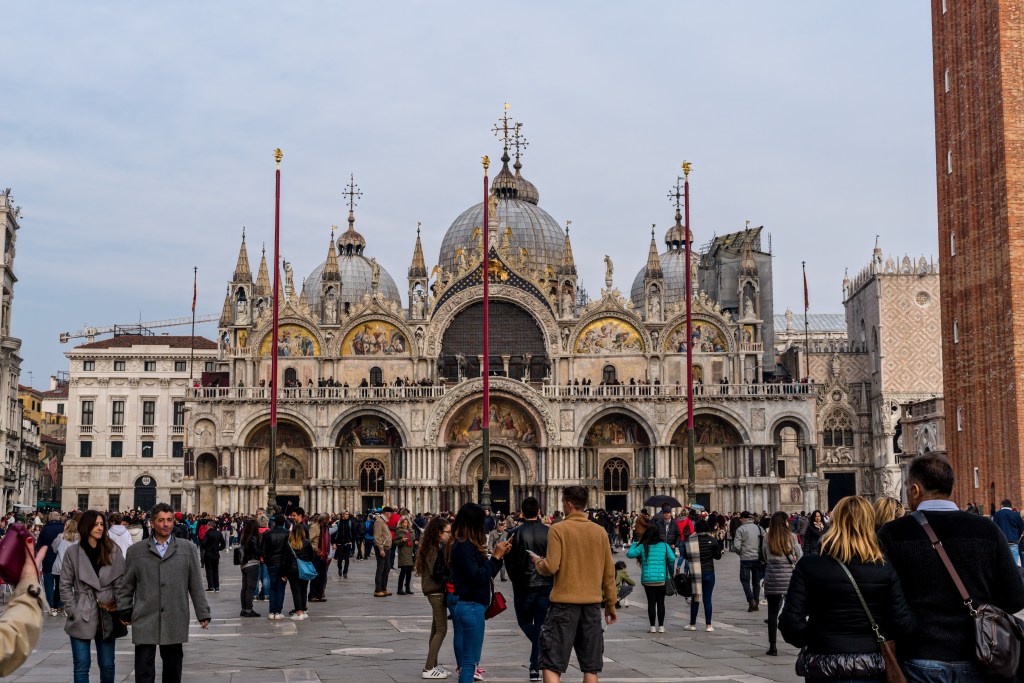
We’ll begin our walk at St. Mark’s Basilica, the spiritual and artistic centerpiece of Venice. This iconic church blends Byzantine, Gothic, and Renaissance styles, with its shimmering mosaics, domed architecture, and the jewel-encrusted Pala d’Oro altarpiece. Built to house the relics of St. Mark, the basilica reflects Venice’s role as a crossroads of East and West. The interior is dimly lit and atmospheric, with golden light bouncing off centuries-old glass tiles. Entry is free to the main area, but access to the museum, altar, and rooftop terrace requires a small fee. The basilica is open Monday to Saturday from 9:30 am to 5:15 pm, and Sundays from 2:00 pm to 5:15 pm, with last admission at 4:45 pm. Entry to the museum, Pala d’Oro, and terrace costs €5–€10 depending on the section. These areas are not included in the Venice City Pass.
Piazzetta dei Leoncini
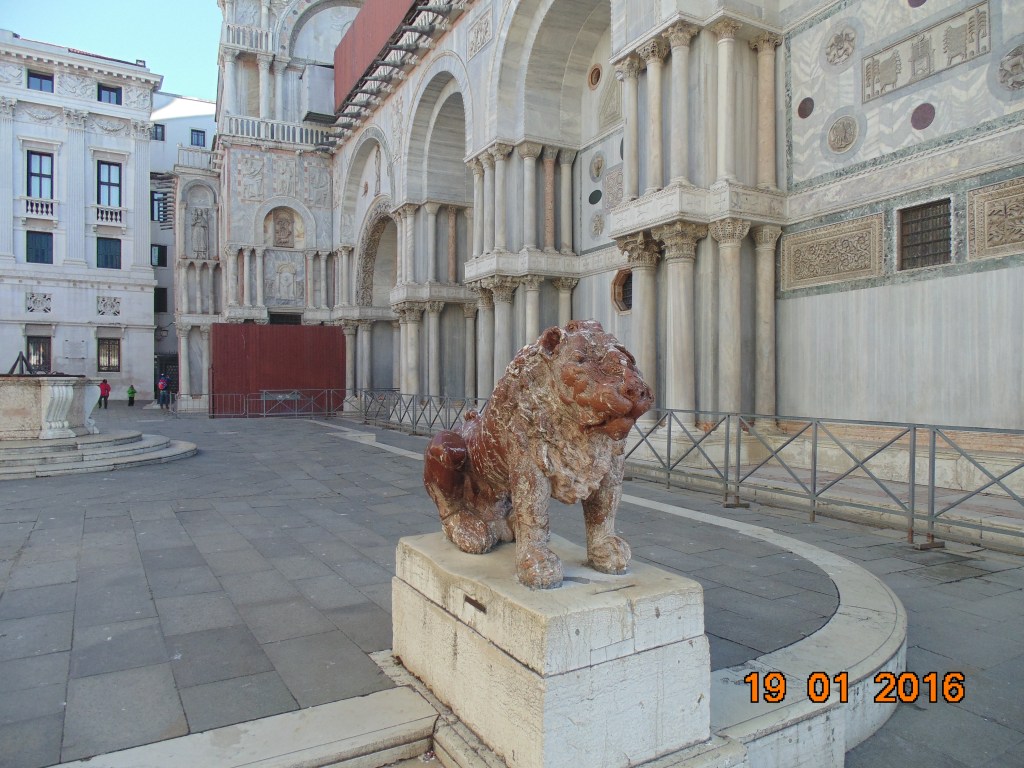
Next, we’ll step just to the left of the basilica into the Piazzetta dei Leoncini, a small square named for its two marble lion statues. This quiet corner is often overlooked, but it offers a peaceful spot to pause and admire the side façade of the basilica. The lions are popular with children and have become informal symbols of Venetian pride. The piazzetta also borders the Patriarchal Palace, the residence of Venice’s archbishop, adding a layer of ecclesiastical significance to this tucked-away space.
Clock Tower (Torre dell’Orologio)
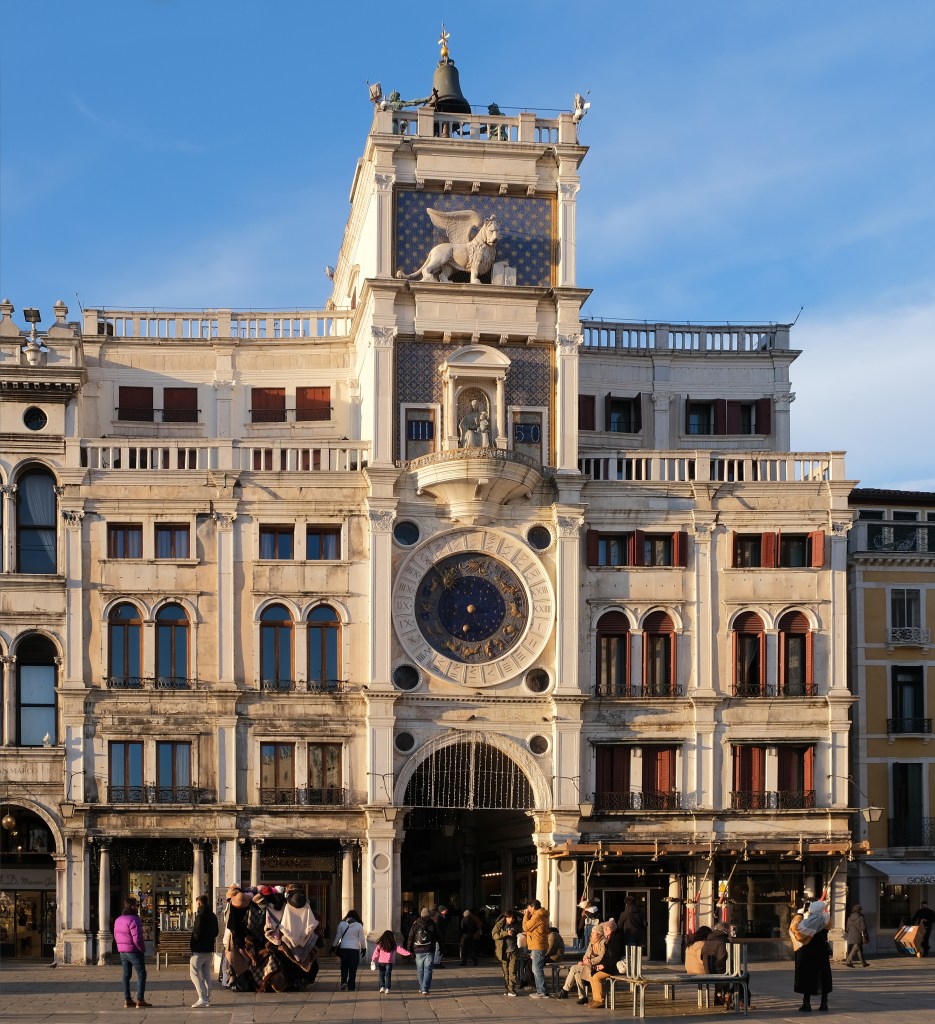
From here, we’ll look up to the Clock Tower, a 15th-century marvel of engineering and symbolism. The tower’s blue and gold face displays the time, moon phases, and zodiac signs, while two bronze figures known as the Moors strike the bell hourly. Built during Venice’s golden age of maritime power, the clock was designed to impress visitors arriving from the sea. It also served as a public timekeeper for the city’s merchants and officials. The tower is still operational and can be visited by guided tour.
Procuratie Vecchie and Procuratie Nuove
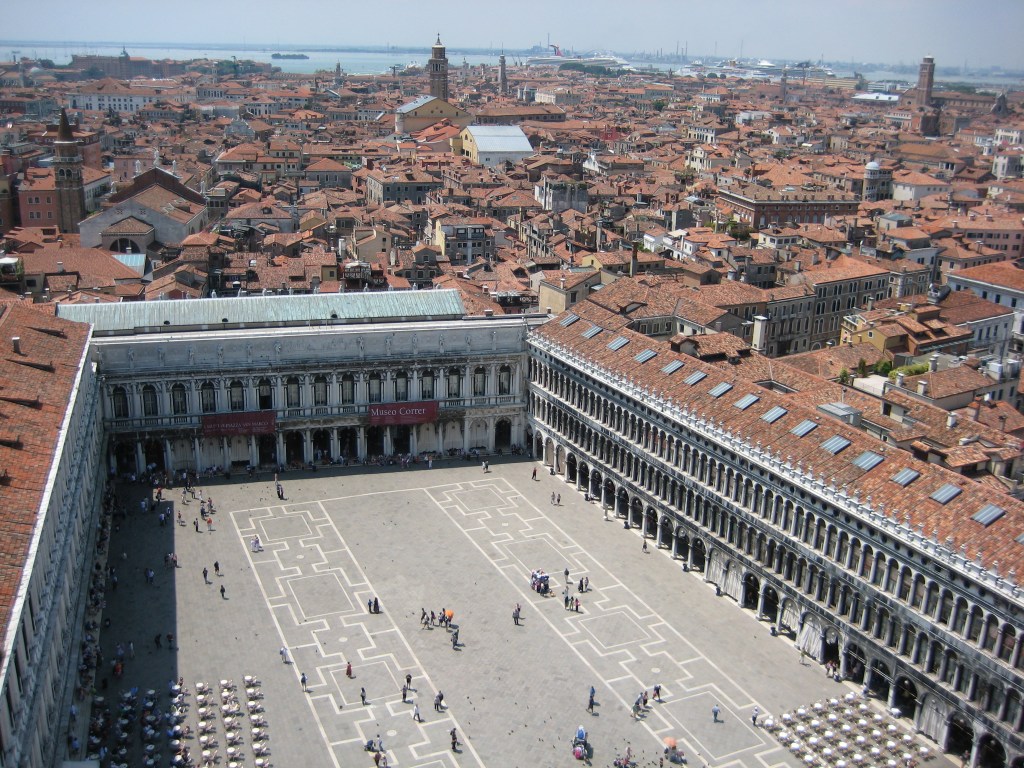
We’ll now walk along the arcaded buildings flanking the square—the Procuratie Vecchie on the north side and the Procuratie Nuove on the south. These elegant structures once housed the offices and residences of the Procurators of St. Mark, second only to the Doge in authority. Today, they host shops, cafés, and cultural spaces. Their symmetry and scale give the square its formal grandeur, and their shaded walkways offer a welcome break from the sun.
Historic Cafés
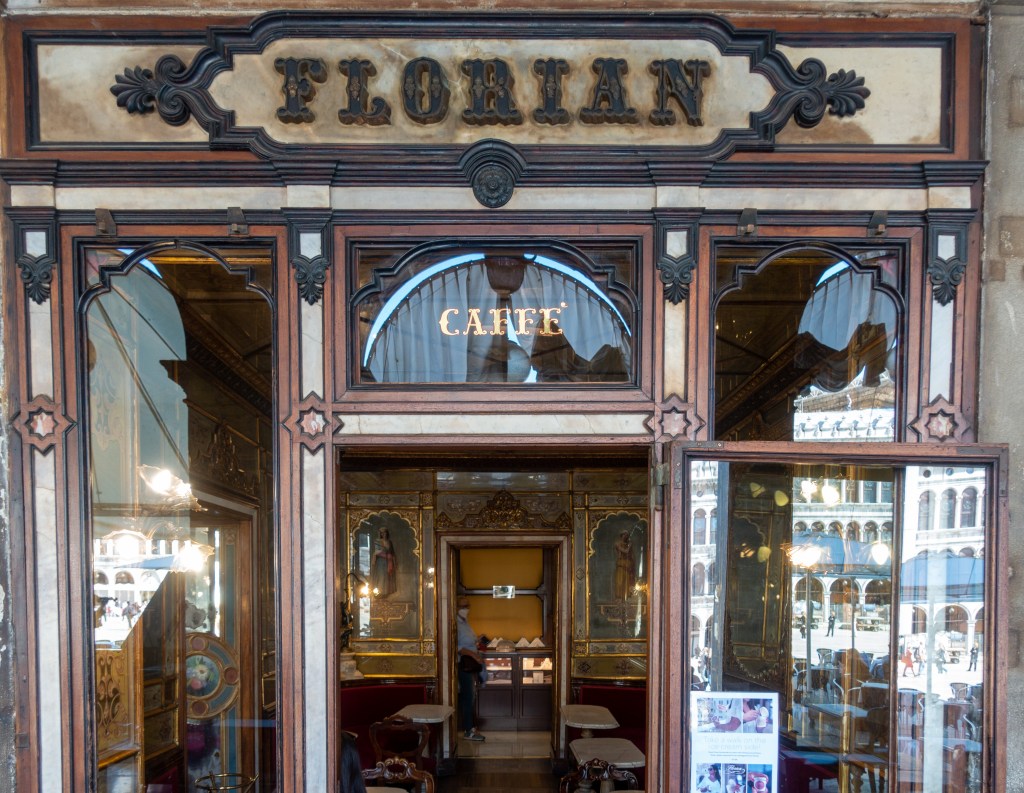
As we continue, we’ll pass two of Venice’s most storied cafés—Caffè Florian and Caffè Quadri. Established in the 18th century, these cafés have hosted writers, artists, and royalty. Austrian nobility once favored Caffè Quadri, while Caffè Florian is known for its ornate interiors and live classical music. While prices are high, even a quick espresso at the bar connects you to centuries of Venetian café culture.

Museo Correr
At the far end of the square, we’ll reach the Museo Correr, housed in the Napoleonic Wing of the Procuratie. This museum offers a deep dive into Venetian art, history, and daily life, with exhibits ranging from Renaissance paintings to antique maps and coins. It’s part of a larger complex that includes the Marciana Library and the National Archaeological Museum. The museum is open daily from 10:00 am to 6:00 pm (April–October) and from 10:00 am to 5:00 pm (November–March), with last admission one hour before closing. Adult admission is €25 as part of a combined ticket that includes the Doge’s Palace and other museums around St. Mark’s Square. Entry is included in the Venice City Pass—no advance reservation required.
Caravalli di San Marco
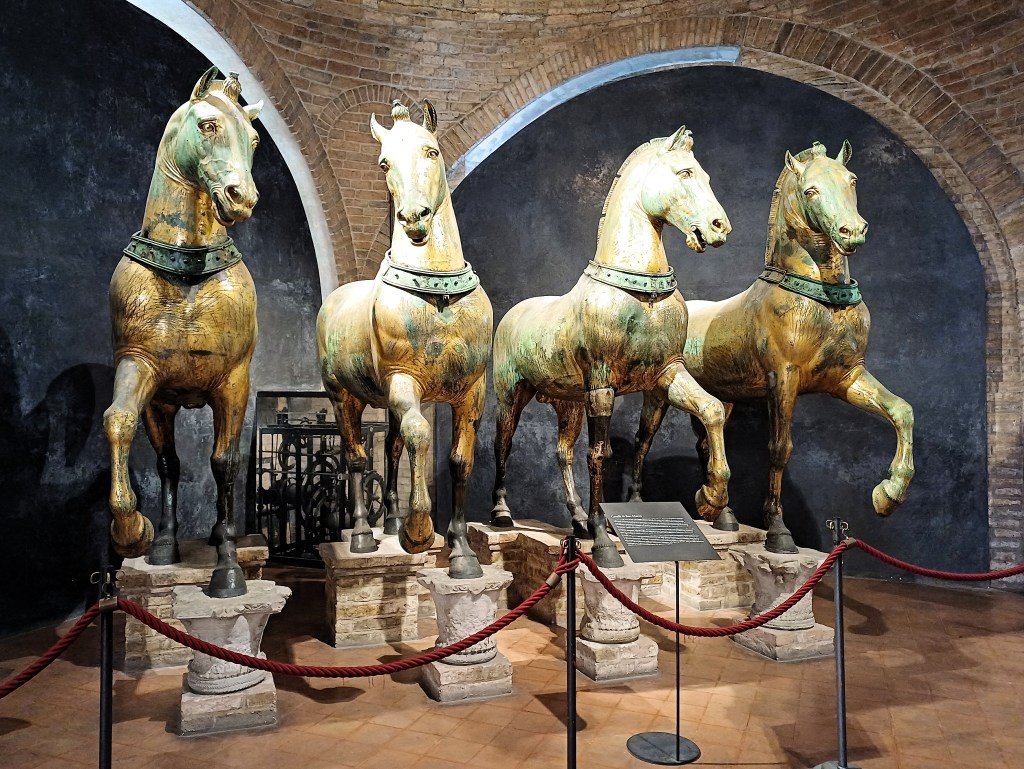
Returning toward the basilica, we’ll pause to admire the Caravalli di San Marco, the bronze horses that once adorned its façade. These are replicas of ancient sculptures believed to have originated in Constantinople, brought to Venice during the Fourth Crusade. The originals are now housed inside the basilica’s museum to protect them from the elements. Their dynamic posture and muscular detail reflect the artistic ambition of Venice during its imperial peak.

Porta della Carta
Before entering the Doge’s Palace, we’ll pause at the Porta della Carta, the ornate Gothic gateway that once served as the ceremonial entrance to the palace. Built in 1438–1442 by Giovanni and Bartolomeo Bon, this richly sculpted portal connects the Doge’s Palace to St. Mark’s Basilica and is considered one of the finest examples of Venetian Gothic architecture. The name “Porta della Carta” (Gate of Paper) likely refers to its historical use as a place where public notices were posted. Above the arch, you’ll see a statue of the Doge Francesco Foscari kneeling before the Lion of Saint Mark—a symbol of Venice’s power and independence. The original statue was destroyed by Napoleon and later restored in the 19th century. Take a moment to admire the intricate carvings and the way this gateway frames the transition between religious and civic life in Venice.
Doge’s Palace (Palazzo Ducale)
Next, we’ll enter the Doge’s Palace, a Gothic masterpiece that served as the seat of Venetian government for centuries. The palace includes grand council chambers, courtrooms, and apartments, all richly decorated with works by Tintoretto and Veronese. Visitors can also walk through the Bridge of Sighs into the old prison, experiencing the dramatic contrast between power and punishment. The Doge’s Palace is open daily from 9:00 am to 7:00 pm (April–October) and from 9:00 am to 6:00 pm (November–March), with last admission one hour before closing. Adult admission is €25 as part of the combined ticket for the St. Mark’s Square Museums, which includes the Museo Correr, National Archaeological Museum, and Marciana Library. Entry is included in the Venice City Pass—no advance reservation required.


St. Mark’s Campanile
We’ll end our loop at the St. Mark’s Campanile, the towering bell tower that dominates the square. Originally built as a lighthouse and watchtower, the current structure dates from 1912, after the original collapsed in 1902. Visitors can take an elevator to the top for sweeping views of Venice, the lagoon, and even the Dolomites on a clear day. It’s a fitting finale to your walk, offering a literal overview of the city you’ve just explored. Admission is €10 for adults, and the tower is open daily from 9:30 AM to 9:15 PM during spring and summer, with slightly shorter hours in autumn and winter. Admission is included with the Venice City Pass, particularly the St. Mark’s Square Pass and other comprehensive passes that cover major attractions.
Bridge of Sighs
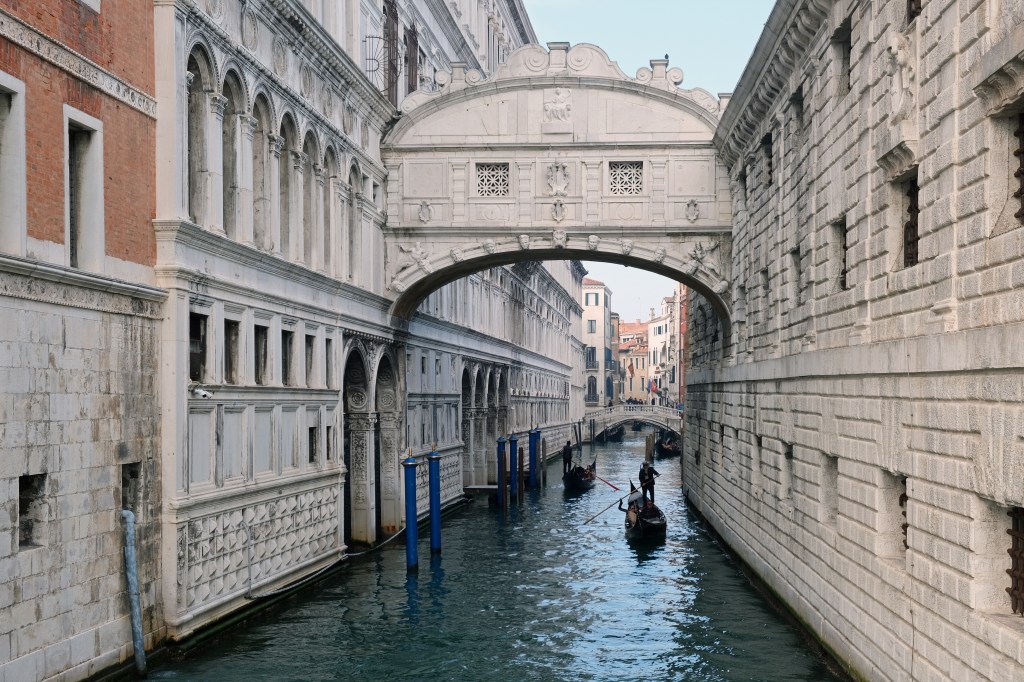
After exiting the palace, we’ll step onto the Ponte della Paglia for a ground-level view of the Bridge of Sighs, one of Venice’s most photographed landmarks. This enclosed bridge connects the Doge’s Palace to the prison and earned its name from the sighs of prisoners catching their last glimpse of Venice. Built in the early 1600s, it’s a poignant reminder of the city’s judicial history and a striking example of Baroque architecture. Access to the Bridge of Sighs is only possible through a visit to the Doge’s Palace, which is open daily from 9:00 AM to 6:00 PM, with last admission at 5:00 PM. Adult admission is €16, and entry is included with the Venice City Pass, which covers the Doge’s Palace and the Bridge of Sighs as part of its all-inclusive access.

Chiesa di San Zaccaria
Just a few quiet steps from the bustle of St. Mark’s Square, Chiesa di San Zaccaria offers a serene and art-filled escape. This elegant church blends Gothic and Renaissance styles, with a graceful façade and a luminous interior that houses works by Bellini, Tintoretto, and Palma il Giovane. The highlight is Bellini’s Madonna and Child with Saints, a masterpiece of Venetian light and color. But the real surprise lies below. Descend into the flood-prone crypt, where early Doges are buried in a hauntingly atmospheric space. The crypt is often partially submerged, its columns and tombs reflected in shallow water—a surreal and unforgettable sight that evokes Venice’s deep connection to both faith and the sea. The church is open Monday to Saturday from 10:00 AM to 12:00 PM and 4:00 PM to 6:00 PM, and Sunday from 4:00 PM to 6:00 PM. Admission to the crypt and chapels is €1.50 and included in the Venice City Pass.
Monument to Victor Emmanuel II
We will continue our walk east from the Ponte della Paglia, keeping the lagoon on our right as we stroll along the Riva degli Schiavoni. This wide promenade offers sweeping views of San Giorgio Maggiore across the water and is often lively with street performers and vendors. Ahead, you’ll reach the imposing bronze equestrian statue of Victor Emmanuel II, the first king of unified Italy. Erected in 1887, the monument commemorates his role in the Risorgimento and is flanked by dramatic allegorical figures representing Strength and Freedom. It’s a popular meeting spot and a great place to pause and take in the energy of the waterfront.

Thanks for walking with me!
This short but rich journey through Piazza San Marco offers a concentrated look at one of Italy’s most celebrated public spaces. From the spiritual grandeur of the basilica to the civic power of the Doge’s Palace and the symbolic presence of the Victor Emmanuel monument, every stop reveals a piece of Venice’s layered history.
If you enjoyed the route, found a hidden gem, or have ideas for improving the experience, I’d love to hear from you! Your insights help me improve future walks and inspire fellow travelers. Please rate this walk using the stars below — and feel free to leave a comment. Grazie! — and happy exploring!


Click here for more JCV Walks in Venice
Your journey doesn’t have to end here. Choose another walk and let’s keep exploring together—one step at a time.
JCV Walks in San Marco
Continue to explore the historic San Marco district, with this loop walk exploring the ceremonial and cultural heart of Venice.
JCV Walks in San Polo
Return to the Rialto Bridge to discover the rich history of Venice’s oldest sestiere in San Polo, home to Gothic churches, quiet campos, and the city’s vibrant food markets.
JCV Walks in Castello
Explore the quieter, more residential side of Venice in Castello, where naval history, leafy gardens, and hidden churches reveal a different rhythm of city life.
Photo Credits
- St. Mark’s Basilica – By © Jörgens.mi, Licensed under CC BY-SA 3.0, Source
- Piazzetta dei Leoncini – By Fadli Mehmed, Licensed under CC BY 3.0, Source
- St Mark’s Clocktower 2 – Photo by kallerna, licensed under CC BY-SA 4.0, source
- Procuratie Vecchie and Nuove – By Jtesla16 – Licensed under Public Domain, Source
- Caffe Florian – Photo by Kent Wang from Barcelona, Spain – Licensed under CC BY-SA 2.0, Source
- Museo Correr Ballroom – Photo by Didier Descouens – Licensed under, Public Domain, Source
- Caravalli di San Marco – Photo by Ondřej Žváček – Licensed under., CC BY 4.0, Source
- Porta della Carta – Photo by Jim Walton, Licensed under CC BY 3.0, Source
- Doge’s Palace – Photo by Matthias Süßen, licensed under CC BY-SA 4.0, source
- Campanile of St Mark’s Basilica – By Derbrauni – Licensed under, CC BY 4.0, Source
- Bridge of Sighs – Photo by kallerna, licensed under CC BY-SA 4.0, source
- Crypt di San Zaccaria – Photo by Didier Descouens – Lcensed under CC BY-SA 4.0, Source
- Monument to Victor Emanuele – By Triplec85 – Licensed under, CC BY-SA 4.0, Source
