Walking along Historic Tram 28 from Martim Moniz to Baixa
This walk climbs through Lisbon’s oldest quarters, where steep cobblestone paths lead to sweeping hilltop views and quiet courtyards tucked behind tiled facades. You’ll pass vibrant street art, centuries-old churches, and panoramic miradouros that reveal the city’s layered beauty—from castle walls to red rooftops spilling toward the river. It’s a sensory journey through Lisbon’s soul, best experienced slowly and on foot.
Why is Tram 28 Special?
Lisbon used to have a whole network of tram lines, but most were phased out as the metro system expanded. Trams stuck around mainly in places where the metro couldn’t go — like up the city’s steep hills. Today, only five tram lines remain, and Tram 28 is the most famous. It’s been running since 1914, originally connecting locals from Baixa to neighborhoods like Graça and Estrela.
These days, though, it’s mostly tourists. Long lines, crowded cars, and wait times that can stretch past an hour — sometimes even two in peak season — make it tough for locals to use. The trams come about every 10 minutes, but with only 20 seats and standing room for maybe 30 more, they fill up fast. If you’re set on riding it, early morning or late evening is your best bet. Otherwise, walking the route is a great way to skip the crowds and see more.
Starting in Martim Moniz Square, we will begin with a climb and end with a downhill stroll. walk takes us through the winding streets of Graça, Alfama, and Baixa, passing tiled facades, hidden courtyards, and sweeping viewpoints. The Points of Interest below relate to the stops along the Tram Route.
Expect steep hills, narrow alleys, and cobblestone paths—but also unforgettable views. Along the way, you’ll catch glimpses of the Tagus River, the São Jorge Castle, and the red rooftops that tumble down Lisbon’s hillsides. This route offers a slower, more immersive alternative to the tram ride, perfect for travelers who want to feel the rhythm of the city on foot.
Special thanks to Michael Turtle, founder of Time Travel Turtle
Michael is a journalist with over 20 years of experience who’s been traveling the world since 2011. This walk follows a route he originally prepared in his excellent Tram 28 walking guide, which I’ve adapted and expanded for this site. His thoughtful approach to travel and storytelling is a great resource for anyone looking to explore Lisbon, or other great travel destinations more deeply — I’m grateful for the inspiration.

How to navigate with your mobile device
JCVWalks are designed to be easy to follow on your mobile device. As you walk, you can tap the header or photo for each point of interest to open the location directly in Google Maps. This will help you navigate from your current location to the next point of interest. If you’d like to learn more about any stop along the way, just click the links in the description for additional details and context.

Martim Moniz Square
Martim Moniz Square is named after a 12th-century knight who famously threw himself into the gates of St. George’s Castle to help his army reclaim it from the Moors. The square itself is a busy, modern plaza and a practical starting point for your walk. That said, travelers might notice a few unsavory characters hanging around — nothing dangerous, but it’s worth staying aware of your surroundings. If you’re looking to avoid the crowds or the hassle, there’s a nearby escalator that takes you up to Moreira, and Escadinhas da Saúde 2 is just around the corner — a quieter spot to begin your walk if you’re skipping the tram ride.
Rua da Palma
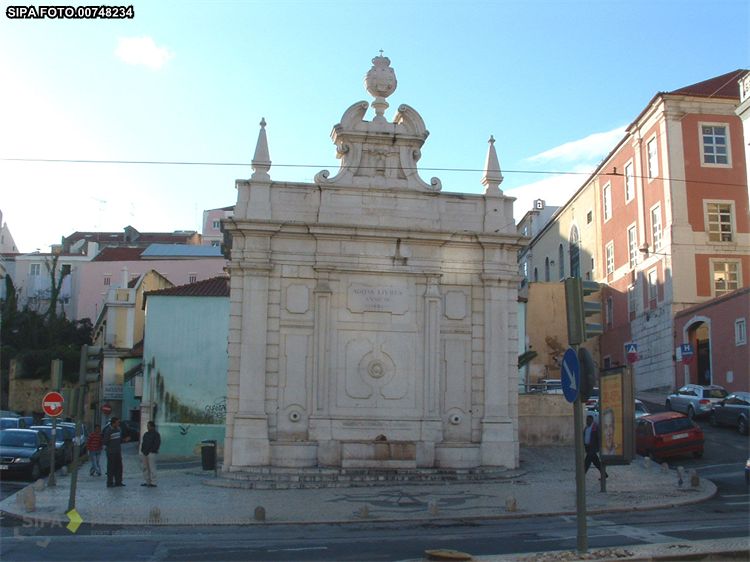
As you continue to follow the Tram 28 route, keep an eye out for the Chafariz do Intendente, a striking limestone fountain dating back to 1823. It’s a quiet little landmark that adds a touch of old-world charm to the area. Just nearby, you’ll pass Cervejaria Ramiro, one of Lisbon’s most beloved seafood spots.
Igreja Anjos
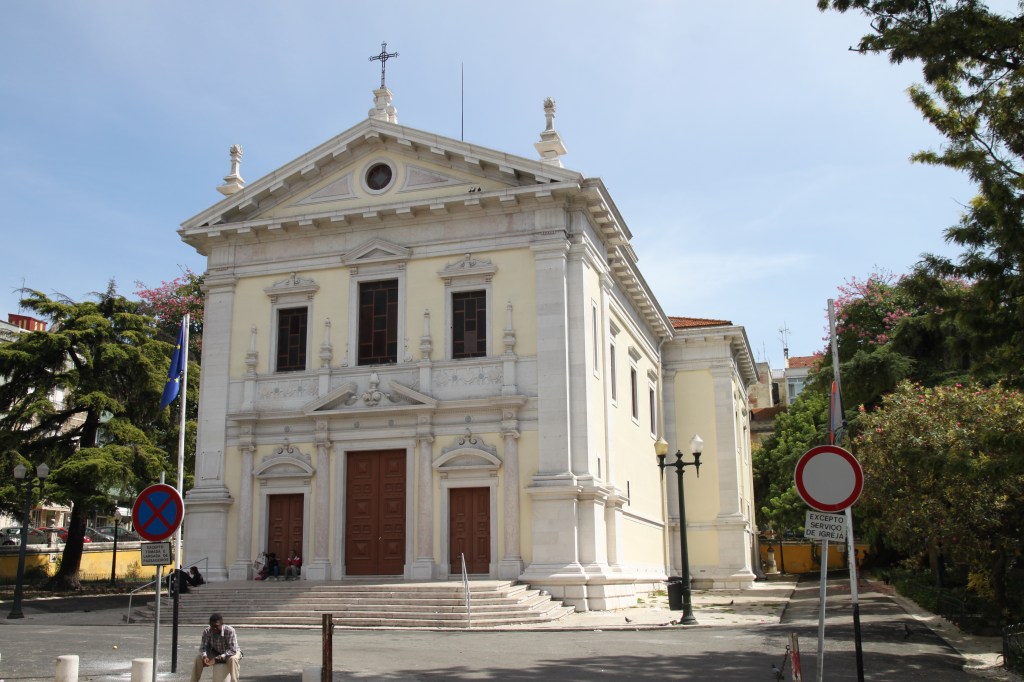
Next, you should spot Igreja dos Anjos—the Parish of Our Lady of the Angels. It’s a modest little church, but step inside if it’s open. The baroque interior dates back to the 1600s and has held up beautifully over time. It’s not grand, but there are some lovely details that make it worth a quick look.
Sapadores
At the top of the hill, you’ll come across a quiet local square — a good spot to take a break if you need one. There’s a small café with outdoor seating, and if you look around, you’ll notice three striking street art pieces. Peace Guard by Obey Street Art. One of them, a powerful image of a female soldier, is by Shepard Fairey — the same artist behind the Obama “Hope” poster. It’s a nice blend of local life and global art, tucked into a corner of the city you might not expect.
Information on other Murals in Lisbon can be found here.

Miradouro da Senhora do Monte

By now, you’ve probably noticed — this part of the walk is uphill. If you’re up for a short detour, it’s worth heading up to the Miradouro de Nossa Senhora do Monte. I think it’s one of the best viewpoints in Lisbon. From here, you get a wide, sweeping view of the city that really helps you take it all in — rooftops, hills, the river, and the layers of neighborhoods you’ve been walking through.
Graça
Before heading downhill, take a moment to swing by the Miradouro Sophia de Mello Breyner Andresen — it’s a peaceful spot with a great view over Lisbon. While you’re here, it’s also worth stepping into the Igreja e Convento da Graça. The church features beautiful gilded woodwork, and the convent has some intense — and honestly, pretty graphic — depictions of Christian martyrs from around the world. The Graça neighborhood itself has a local, lived-in feel that hasn’t been overrun by tourists yet.

Igreja da São Vicente de Fora
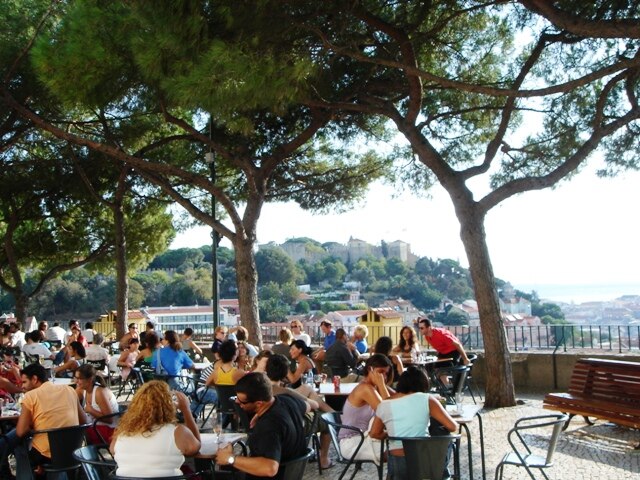
As you head downhill, you won’t miss the massive Igreja da São Vicente de Fora — it’s hard to miss. This was one of the most important religious sites in medieval Portugal, and today it houses a museum (there’s a small entry fee if you want to go inside). Just behind the church, you’ll find the Feira da Ladra flea market, open on Tuesdays and Saturdays. Some stalls have been around for years, while others feel a bit more improvised — and let’s just say, not everything looks like it came through official channels. More importantly, this area is also home to the National Pantheon. The interior is impressive, but the real highlight is climbing up to the terrace for incredible 360-degree views of Lisbon. Entry is €8.
Igreja do Menino Deus
As you turn the corner, you’ll have the option to head uphill again — this time to the Igreja do Menino Deus (Church of Baby Jesus). It’s a beautiful baroque church with paintings that somehow survived the 1755 earthquake. That said, you’ll need a bit of luck to see inside — it’s only open on Wednesdays from 10:00 to 12:30.

Castle of St. George
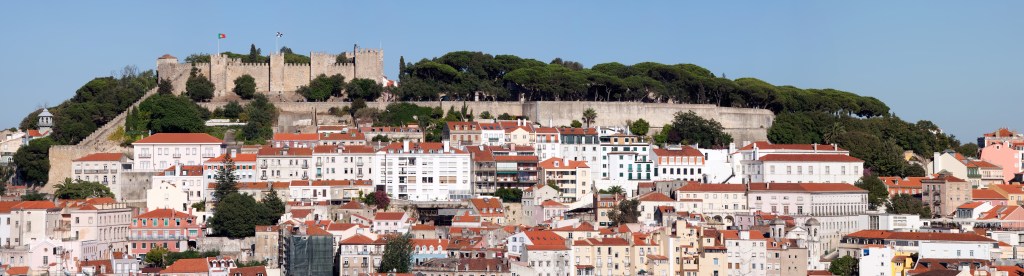
This is not a stop along the route, but rather a point of interest. Sitting high above the city in Alfama, the Castle of St. George is one of Lisbon’s oldest and most iconic landmarks. Originally a Moorish fortress, it was taken by the Portuguese in 1147 and later became a royal residence. Today, it offers panoramic views over Lisbon and the Tagus River, plus a chance to wander through centuries of history. The castle is better visited on a separate walking tour.
Miradouro das Portas do Sol
You might like to take a moment to rest at the viewpoint of Miradouro das Portas do Sol here. You get a good view back at the tops of the Igreja da Sao Vicente de Fora and National Pantheon from here. The little kiosk is a decent place to get a coffee or a cool drink.

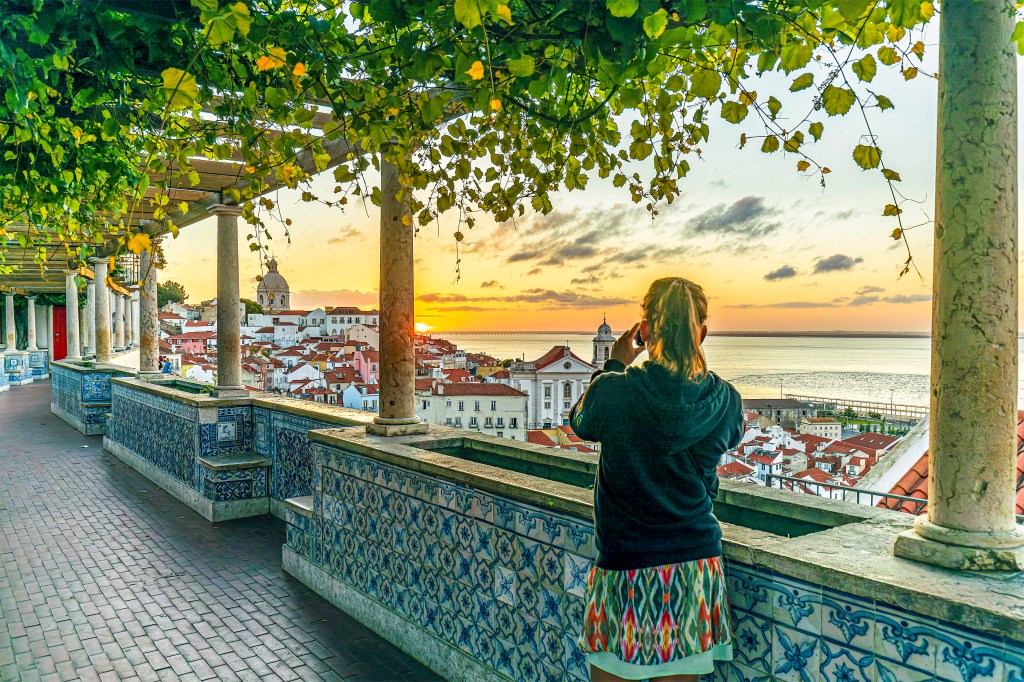
Miradouro Santa Luzia
As you come down the hill with Alfama on your left, the area starts to fill up with landmarks and little spots worth pausing for. One highlight, tucked up a side street, is the Roman Theatre, managed by the Museum of Lisbon. You can see the ruins and read a bit about them for free right from the street. If you’re curious to dive deeper or want to see the foundations, you can pay to go inside the museum. It’s a nice surprise in a part of the city that’s full of layers.
Museum of the Aljube
Along here, you’ll see the Museum of the Aljube. It takes you through the political story of the resistance to the dictatorship in Portugal in the 1900s. The building has been a prison for much of its life, including as a political prison during the period the exhibition covers. There is a fee for admission.

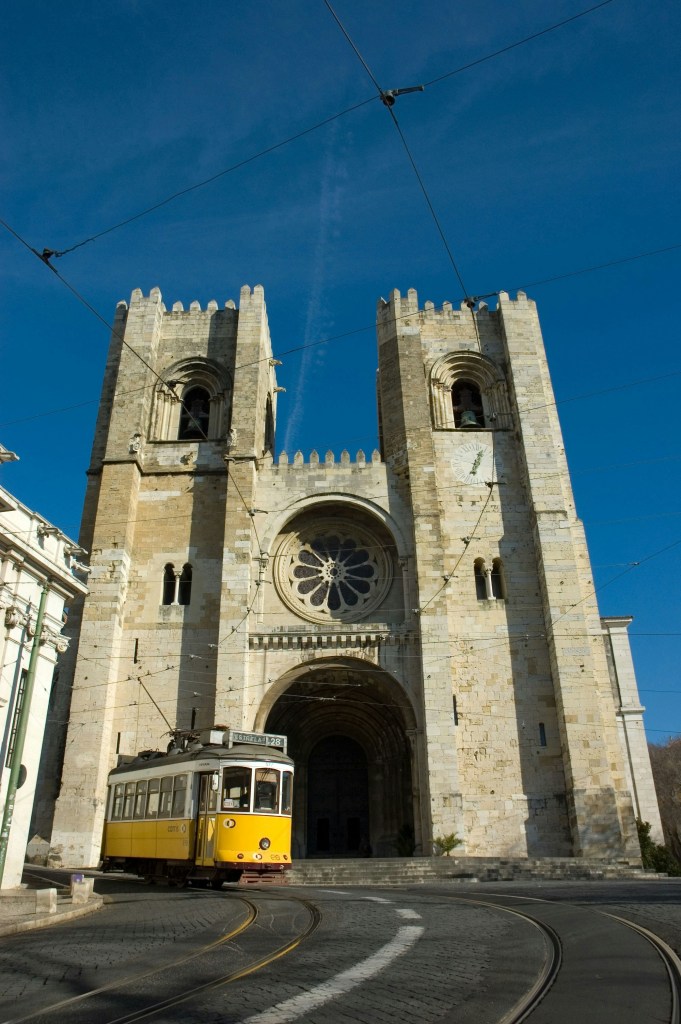
Lisbon Cathedral (Sè)
Straight ahead is the Lisbon Cathedral (Sé) — the city’s most important church. Its Romanesque façade is striking, and the scale of the interior is impressive. The original structure dates back to 1147, though it’s been rebuilt and modified many times over the centuries. You can still see the simplicity of the Romanesque design in the lack of colorful decoration. Just down the hill is the Church of St. Anthony (Igreja de Santo António), said to be built on the spot where the saint was born in 1195. You can even go down into the crypt to see the exact location. Next door is the St. Anthony Museum, which has a small exhibit on his life and how he’s been represented in religious art and culture. There’s a fee to enter, but it’s a meaningful stop if you’re interested in Lisbon’s spiritual history.
Baixa
The last stop on this phase of the walking tour brings you to the center of Lisbon.
The Rua da Conceição stop is in the heart of Baixa, Lisbon’s downtown grid. From here, you can head off in just about any direction to explore different corners of the neighborhood. You’re surrounded by wide boulevards, tiled facades, and plenty of cafés and shops.
From here, I suggest taking the Lisbon Center Walking tour which begins at the Praça do Comércio, and works its way up toward Rossio Square and includes side streets like Rua Augusta for a bit of local flavor.

Thanks for walking with me!
That brings us to the end of the first leg of the Tram 28 route. We have covered a lot — from hilltop viewpoints and historic churches to grand squares and quiet corners full of character. We’ll pick up the rest of the route in the next walk, continuing through more of Lisbon’s neighborhoods and uncovering what makes this city so special on foot.
If you enjoyed the route, found a hidden gem, or have ideas for improving the experience, I’d love to hear from you! Your insights help me improve future walks and inspire fellow travelers. Please rate this walk using the stars below — and feel free to leave a comment. Obrigado! — and happy exploring!


Click here for more JCV Walks in Lisbon
Your journey doesn’t have to end here. Choose another walk and let’s keep exploring together—one step at a time.
JCV Walks Tram 28 West
Skip the que and explore the route of historic Tram 28 west from Baixa to Campo de Ourique.
JCV Walks in Baixa
Lisbon’s Baixa City Center is a grand grid of plazas, cafés, and neoclassical charm.
JCV Walks in Belém
Explore one of Lisbon’s most storied districts, where Portugal’s Age of Exploration comes to life.
Photo Credits
- Tram 28 Lisbon – Photo by Aayush Gupta on Unsplash
- Martim Moniz – Photo by Carlos Cantero on Unsplash
- Chafariz do Intendente – Photo by SIPA SA CC BY-NC-ND-3.0, source
- Igreja dos Anjos – Photo by João Carvalho – CC BY-SA 3.0, source
- Peace Guard by Shepard Fairey (Obey Giant) – Photo by irRIT’ARTE, source
- Miradouro da Senhora do Monte – Photo by Reino Baptista, Source
- Miradouro da Graça – Photo by Shoestring at wts Wikivoyage, source
- Igreja da São Vicente de Fora = Photo by Deensel – Lisbon, licensed under CC BY 2.0, source
- Convento do Menino Deus – Photo by Vitor Oliveira from Torres Vedras, Pt. licensed under CC BY-SA 2.0, source
- Castle Saint George – Photo by Massimo Catarinella, licensed under CC BY 3.0, source
- Miradouro das Portas do Sol – Photo By Dor Shabashewitz, licensed under CC BY 4.0, source
- Miradouro Santa Luzia – Photo by Hansfotos, licensed under CC BY-SA 4.0, source
- Museum of the Aljube – Photo by PESP/ Wikimedia – licensed under CC BY-SA 4.0, source
- Lisbon Cathedral – Photo by Eduardo Goody on Unsplash
- Rua da Conceição – Photo by Diego Delso, licensed under CC BY-SA 3.0, source
