Walking along Historic Tram 28 from Baixa to Campo de Ourique
This walk winds west from Lisbon’s historic center into neighborhoods filled with charm and local life. You’ll pass grand civic buildings, bohemian streets, and tucked-away viewpoints before reaching the leafy calm of Estrela and Campo de Ourique. Along the way, discover streetcars climbing steep lanes, quiet churches, and vibrant squares where locals linger. It’s a slower, more intimate look at Lisbon’s creative spirit and residential soul.
Why is Tram 28 Special?
Lisbon used to have a whole network of tram lines, but most were phased out as the metro system expanded. Trams stuck around mainly in places where the metro couldn’t go — like up the city’s steep hills. Today, only five tram lines remain, and Tram 28 is the most famous. It’s been running since 1914, originally connecting locals from Baixa to neighborhoods like Graça and Estrela.
These days, though, it’s mostly tourists. Long lines, crowded cars, and wait times that can stretch past an hour — sometimes even two in peak season — make it tough for locals to use. The trams come about every 10 minutes, but with only 20 seats and standing room for maybe 30 more, they fill up fast. If you’re set on riding it, early morning or late evening is your best bet. Otherwise, walking the route is a great way to skip the crowds and see more.
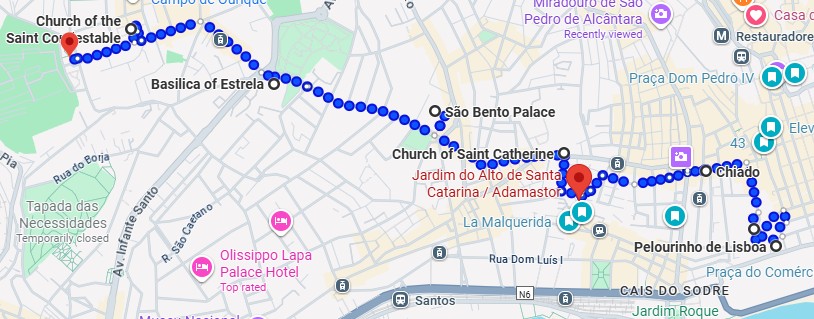
This walk begins at the historic Pelourinho de Lisboa and winds westward through neighborhoods rich in culture, charm, and local life. We will pass through elegant squares like Largo da Academia Nacional de Belas Artes and Praça Luís de Camões, explore the bohemian spirit of Chiado and Santa Catarina, and ascend toward the leafy calm of Estrela and Campo de Ourique, a vibrant residential district known for its relaxed vibe and excellent food scene.
Be advised, this walk has some uphill climbs, but it does run along the tram route, so there are options to ride through some of it. At the end, you will be rewarded with the opportunity to hop aboard the iconic Tram 28 for the ride back to the center of town. The queues here are usually shorter than in the city center, so you’ll likely get a seat and enjoy the ride without the long wait. This is your reward for making the journey! A single ride costs €3.10 if purchased onboard.
How to navigate with your mobile device
JCVWalks are designed to be easy to follow on your mobile device. As you walk, you can tap the header or photo for each point of interest to open the location directly in Google Maps. This will help you navigate from your current location to the next point of interest. If you’d like to learn more about any stop along the way, just click the links in the description for additional details and context.
Pelourinho de Lisboa
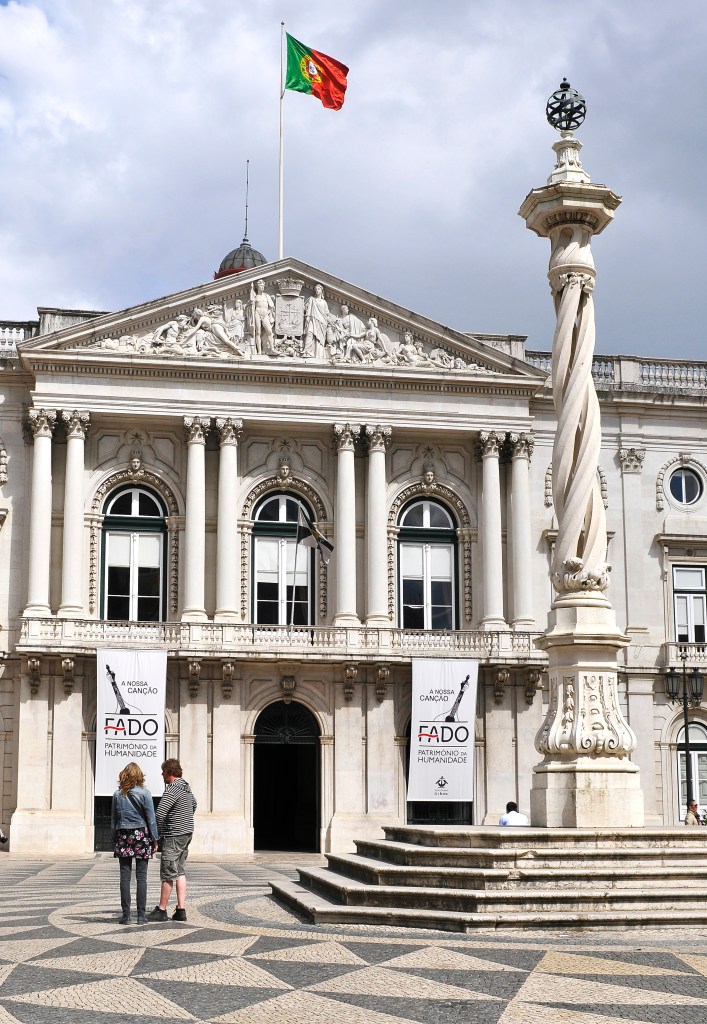
Our walk begins in Praça do Município, (Lisbon City Hall) where a modest stone column stands quietly in the center of the square—the Pelourinho de Lisboa, or Lisbon’s pillory. Though easy to overlook, this column carries a weighty past. It’s believed to be a replica of a Manueline-era original destroyed in the 1755 earthquake. The current version was installed in the late 18th century and, for a time, was mistakenly thought to be part of a gallows. In reality, pillories weren’t used for executions—they were instruments of public shaming. Criminals were chained to the column and left to face the crowd’s scorn.
Largo Academia Nacional Belas Artes
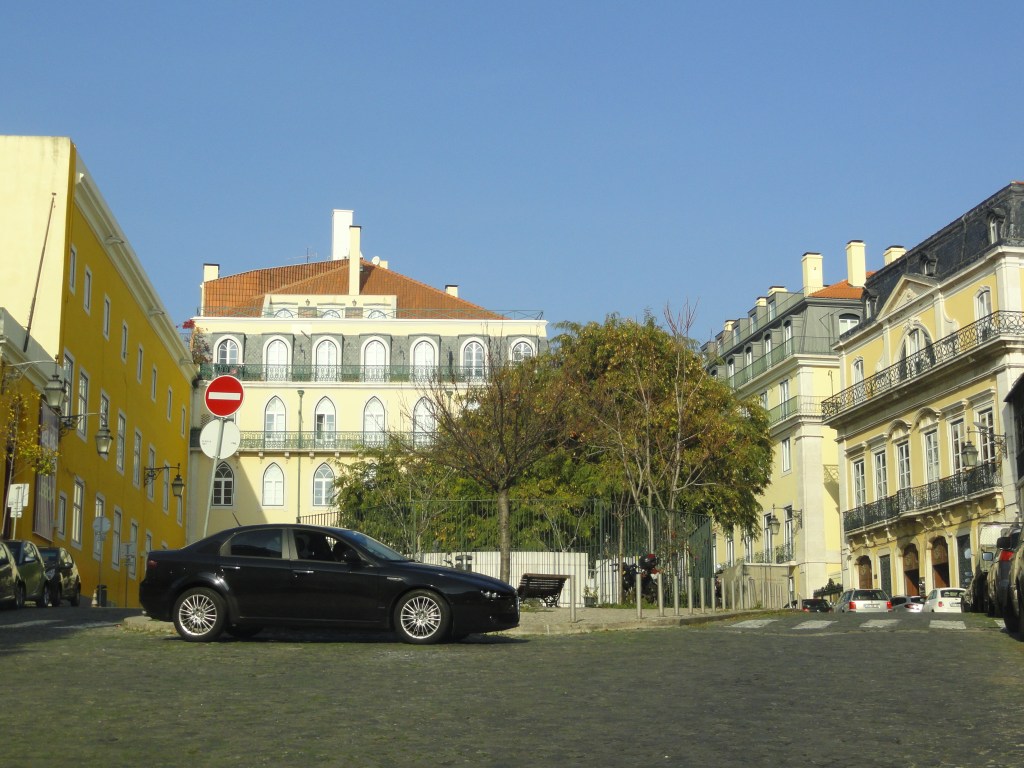
As you make your way into one of Lisbon’s more artistic corners, keep an eye out for a few small galleries tucked along the streets—perfect for a quick peek if something catches your eye. The real centerpiece here is the National Museum of Contemporary Art, which often features thought-provoking exhibitions focused on modern Portuguese artists and themes. It’s a great stop if you’re curious about how Portugal’s creative spirit is expressed today. There is an admission fee, but if you’re into contemporary art, it’s well worth the time and a nice contrast to the city’s older, more classical landmarks.
Chiado
Welcome to Chiado, one of Lisbon’s central neighborhoods known for its mix of shopping, culture, and history. Rua Garrett which is included in the central Lisbon Walk runs through the middle, lined with everything from international brands to long-standing Portuguese shops. It’s a good place to browse or grab a coffee while taking in the street life.
If you’re interested in art, there are a few smaller galleries tucked into the side streets worth checking out. One spot that stands out is A Brasileira, a historic café that’s been around since the early 1900s. It’s known for its connection to Portuguese writers and artists—especially Fernando Pessoa, whose statue sits just outside.
As you continue, you’ll pass a couple of churches, but I recommend stepping into the Church of Our Lady of the Incarnation (Igreja da Encarnação). It’s easy to miss from the outside, but inside you’ll find a striking altar, painted ceilings, and classic Portuguese tilework. It’s a quiet, worthwhile stop in the middle of a busy area.
Praça Luis Camões
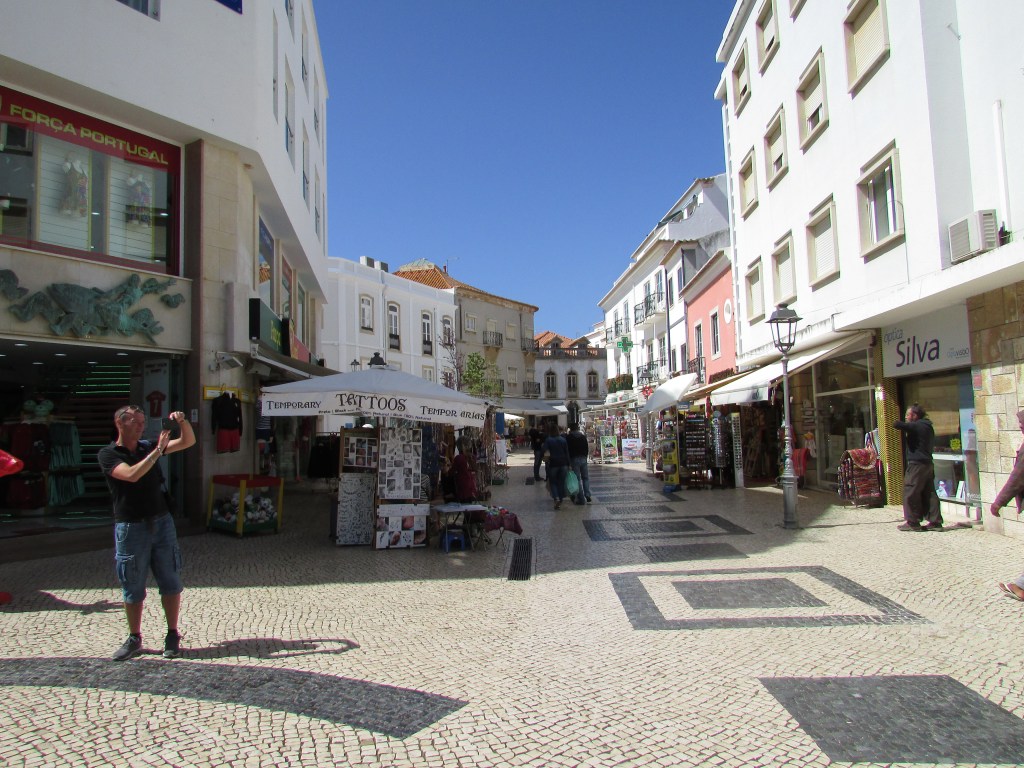
As you pass through Praça Luís de Camões, take a moment to notice how active and well-used this square is. It’s a popular meeting spot for locals—people gather here to catch up, wait for friends, or just take a break. You’ll also see groups forming for walking tours, since this is a common starting point for guides leading visitors through the city.

The square is named after Luís de Camões, Portugal’s most famous poet, known for his epic work Os Lusíadas. His statue stands in the center, surrounded by other figures from Portuguese literature. If you’re up for a detour, this is a good place to head into Bairro Alto, one of Lisbon’s older neighborhoods with a more lived-in feel. You can ride the Bica Funicular, visit the richly decorated São Roque Church, or take in the views from the Miradouro de São Pedro de Alcântara. The streets are steep and cobbled, and many of the buildings are covered in bold street art. At night, the area shifts—bars open, music spills into the streets, and the neighborhood takes on a lively, late-night energy.
Bica
This part of the walk brings you to the Bica Funicular, a short tram line that climbs one of Lisbon’s steepest streets. It’s a well-known spot, especially among photographers, thanks to its dramatic incline and the classic Lisbon backdrop of tiled buildings and laundry-draped balconies. If you’re interested, you can ride it up or down—tickets are available onboard, but you’ll pay less if you’re using a transport card like Viva Viagem.

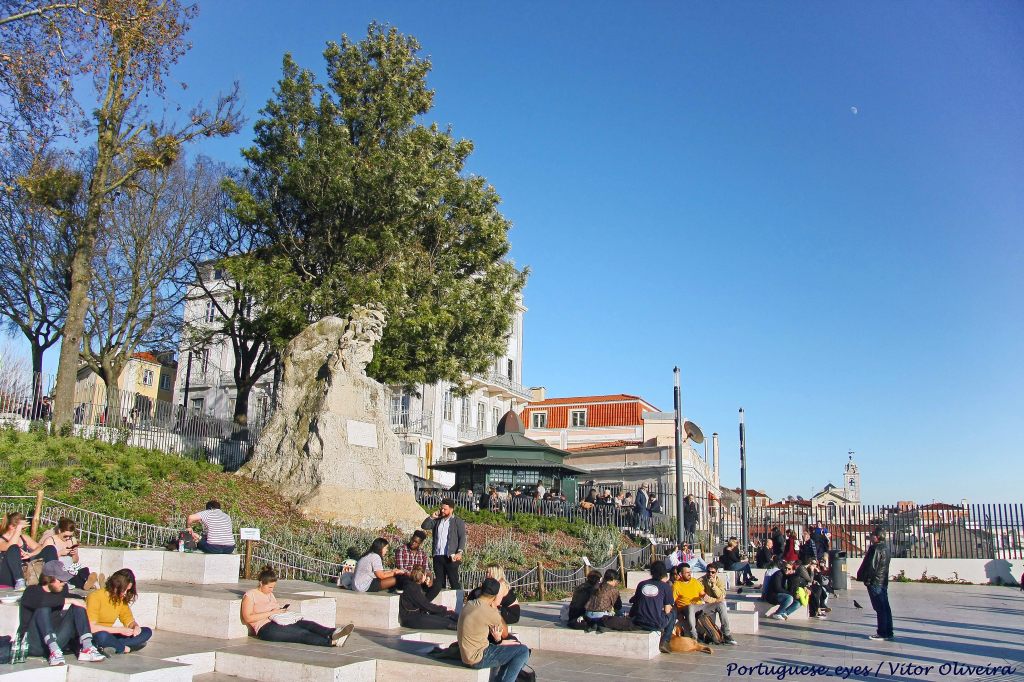
Miradouro de Santa Catarina
Rather than continuing straight, I recommend taking a quick detour to the left to check out the Miradouro de Santa Catarina. It’s not the most sweeping view in the city, but it does give you a solid vantage point over the Tagus River and the port area. It’s also a good place to take a break—there’s usually a kiosk or café nearby, and the atmosphere is relaxed, with locals and travelers alike stopping to rest or enjoy a drink.
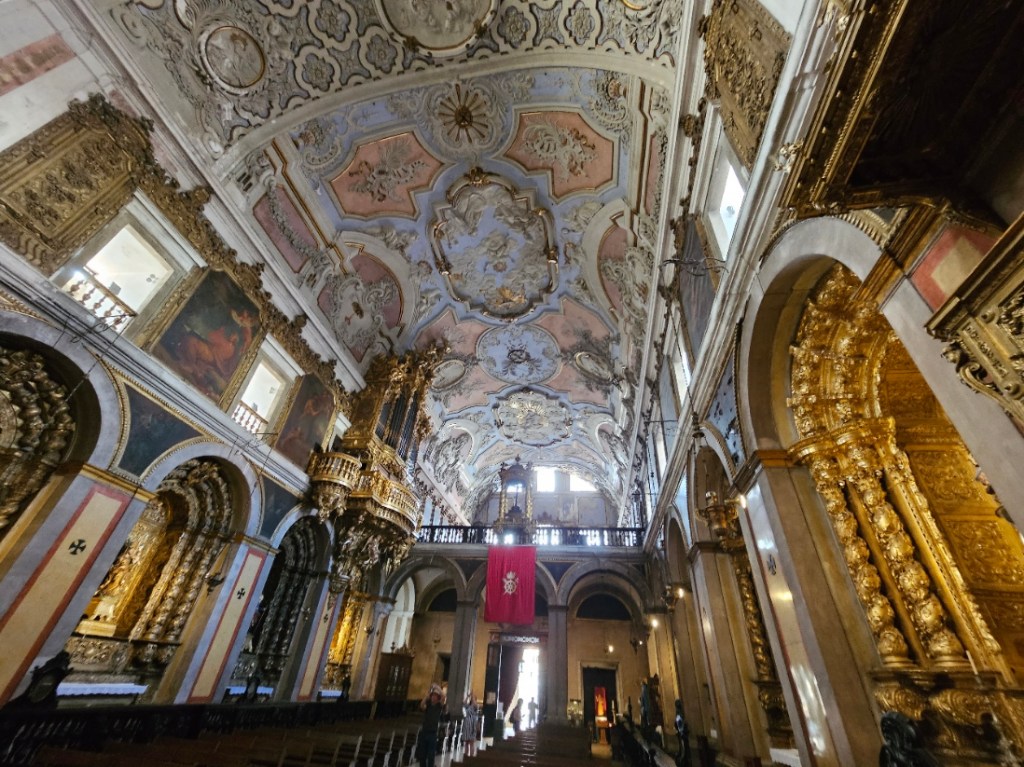
Chirch of Santa Catarina
As you continue through this stretch, you’ll come across the Church of Santa Catarina, a solid example of 16th-century baroque architecture. It’s a large, understated building from the outside, but inside you’ll find a few standout features—especially the rococo-style stucco ceiling and the gilded pipe organ, which is worth a look even if you’re not usually drawn to church interiors.
If you’re doing this walk in the afternoon and feel like taking a break, there’s a rooftop bar nearby called Park. It’s not obvious—it’s actually on top of a parking garage. Look for the elevator just inside the garage entrance and head up to the top floor. You can take the stairs to the fifth and then the lift, or just ride the elevator all the way. The views over the city and river are solid, and the drinks are reasonably priced. It’s a good spot to rest your legs and take in the skyline before continuing on.

Palace of São Bento
As you come around the corner, the Palácio de São Bento catches you off guard—it’s a massive structure that seems to appear out of nowhere. Originally built as a Benedictine monastery in the late 1500s, it’s been the seat of Portugal’s Parliament since 1834. You can’t go inside unless you’re on an official tour, but it’s worth walking along the front to take in the scale and symmetry of the building.
While you’re here, take a moment to check out the striking piece of street art nearby—a large, multicultural face painted by the artist Drawing Jesus. It’s a bold contrast to the formal architecture and adds a modern layer to the area’s visual story.
Estrela
The Estrela neighborhood isn’t always on the typical tourist route, but it’s home to one of the most impressive sights along the Tram 28 line—the Estrela Basilica. Built starting in 1779, this massive church stands out with its twin bell towers and large dome. The interior is worth a look, especially the detailed marble work and the nativity scene, which includes over 500 hand-crafted figures.
Right across the street is the Jardim da Estrela, a quiet public park that’s a good spot to take a break. It’s not flashy, but it’s well-kept and peaceful, with shaded paths and benches. There’s a small kiosk café inside the park—Banana Cafe—where you can grab a coffee, cold drink, or a light snack. It’s a solid place to rest your feet before continuing on toward Campo de Ourique.

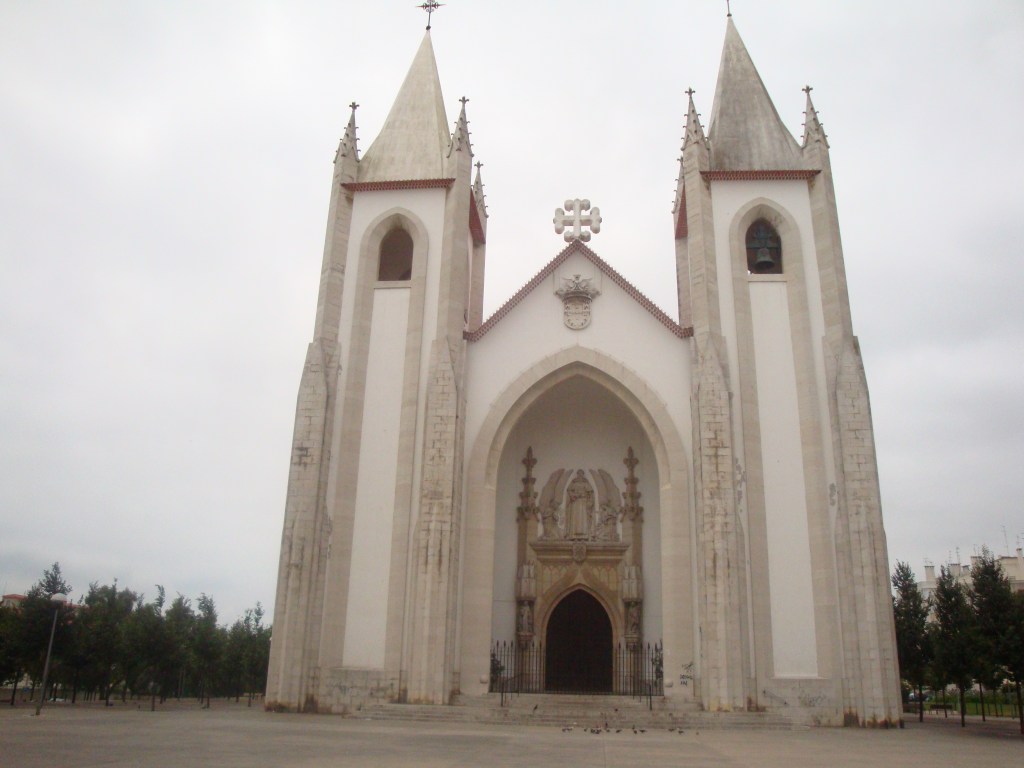
Igreja Santo Condestável
If you’re still up for one more church, take a moment to check out the Igreja de Santo Condestável. It’s a local parish church that opened in 1951, so it’s more modern than most of the others you’ve seen on this walk. The design is clean and balanced, and inside you’ll find some impressive stained-glass windows that are worth a look. It’s not a major tourist stop, but it’s a good example of mid-20th-century religious architecture in Lisbon.
If you’re ready for a break, this is a good time to grab a drink or a snack. Café do Bairro, just a few minutes away in Campo de Ourique, is a solid choice—casual, local, and usually not too crowded. It’s a good spot to sit for a bit before heading to the final stop at Prazeres Cemetery.
Prazeres Cemetery
And here you are—the final stop on the Tram 28 walking tour. The main site to check out here is the Prazeres Cemetery, the largest in Lisbon. It was established in 1833 following a cholera outbreak, but over time it’s become something of a national cemetery, with many notable Portuguese figures buried here. The entrance area includes a small chapel that sometimes hosts exhibitions, but even if that’s closed, it’s worth walking through the grounds. The cemetery is well-maintained, quiet, and surprisingly scenic. If you make it to the far end, you’ll get a great view of the 25th of April Bridge and the Tagus River—a solid way to wrap up the walk.

Thanks for walking with me!
Congratulations on completing this scenic and culturally rich walk through Lisbon! Once you’re ready to head back, this is a good spot to catch Tram 28 again. A single ride costs €3.10 if purchased onboard. The queues here are usually shorter than in the city center, so you’ll likely get a seat and enjoy the ride without the long wait. It’s a fitting end to the journey—riding a piece of Lisbon’s history back through the neighborhoods you’ve just explored.
If you enjoyed the route, found a hidden gem, or have ideas for improving the experience, I’d love to hear from you! Your insights help me improve future walks and inspire fellow travelers. Please rate this walk using the stars below — and feel free to leave a comment. Obrigado! — and happy exploring!


Click here for more JCV Walks in Lisbon
Your journey doesn’t have to end here. Choose another walk and let’s keep exploring together—one step at a time.
JCV Walks Tram 28 East
Skip the que and explore the route of historic Tram 28 east from Martim Moniz to Baixa.
JCV Walks in Baixa
Lisbon’s Baixa City Center is a grand grid of plazas, cafés, and neoclassical charm.
JCV Walks in Belém
Explore one of Lisbon’s most storied districts, where Portugal’s Age of Exploration comes to life.
Photo Credits
- Lisbon City Hall – Photo by LBM1948, licensed under CC BY-SA 4.0, source
- Largo Academia Nacional Belas Artes – Photo by Anne-Lotte O´Dwyer, licensed under CC BY-SA 2.0, source
- Rua Garrett – Photo by Kolforn – licensed under, CC BY 3.0, source
- Plaza De Camoes Monument – Photo by Rowanwindwhistler, licensed under CC BY-SA 3.0, source
- Elevador da Bica – Photo by Jorge Franganillo – licensed under CC BY 2.0, source
- Miradouro de Santa Catarina – Photo by Vitor Oliveira from Torres Vedras, Pt – licensed under BY-SA 2.0, source
- Igreja de Santa Catarina (Lisboa) – Photo by GualdimG – licensed under CC BY-SA 4.0, source
- Palácio de São Bento – Photo by Lacobrigo – licensed under CC BY-SA 4.0, source
- Estrela Basilica-Lisbon – Photo by By Scalleja – licensed under CC BY-SA 2.0, source
- Igreja Santo Condestavel – Photo by Por Lijealso – licensed under, CC BY 3.0, source
- Prazeres Cemetery – Photo by Sonse – licensed under CC BY 2.0, source
