Exploring the Historic Core of Madrid
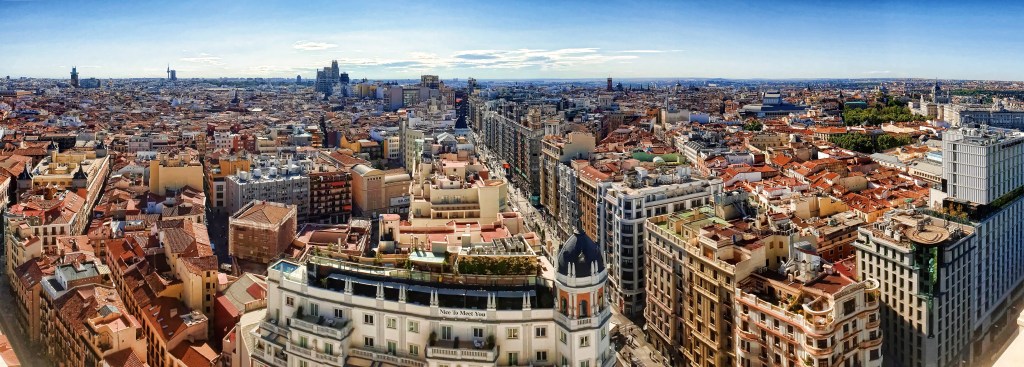
Madrid is a city that reveals itself in layers, and this walk brings together some of its most defining ones—grand plazas, royal landmarks, and the streets that connect them. This walk is designed to give you a balanced view of the city—its scale, its history, and the way people experience it today. Along the way, you’ll pass through places that reflect political power, cultural identity, and everyday life, all within a comfortable and walkable route. Take your time, look around, and let the city unfold as we move from one stop to the next.
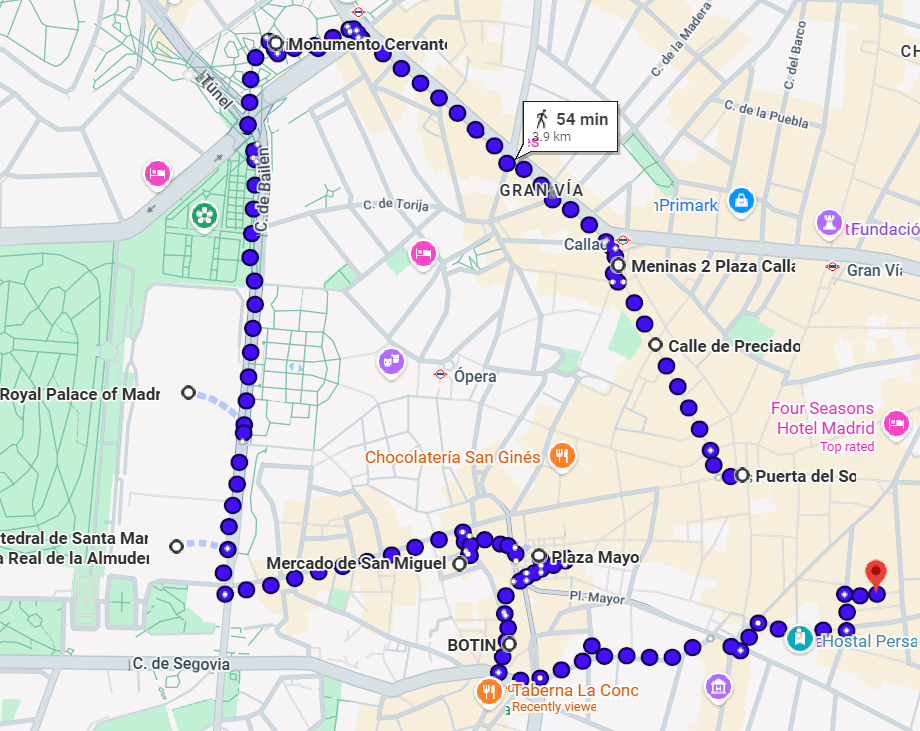
We’ll begin at the geographic center of Spain and make our way through the energy of Gran Vía, before arriving at the royal and historic core surrounding the Palacio Real. From there, we’ll move into the older neighborhoods, where medieval streets and civic spaces tell the story of Madrid before it became a capital.

How to navigate with your mobile device
JCVWalks are designed to be easy to follow on your mobile device. As you walk, you can tap the header or photo for each point of interest to open the location directly in Google Maps. This will help you navigate from your current location to the next point of interest. If you’d like to learn more about any stop along the way, just click the links in the description for additional details and context.
Puerta del Sol
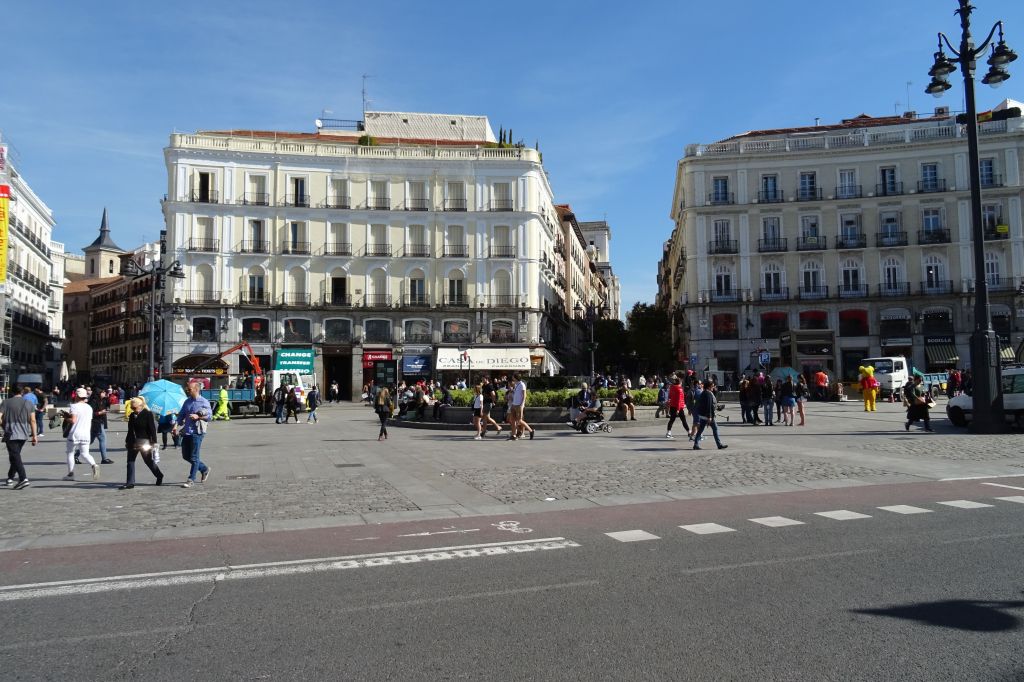
We will begin our walk at Puerta del Sol (Gate of the Sun), the symbolic center of Madrid and the point from which all roads in Spain are measured. As you stand here, you’ll find Kilometer Zero marking the starting point of Spain’s national road network. This lively square has long been a gathering place for locals, from royal proclamations to New Year’s Eve celebrations. Each year, thousands gather here—and millions more watch from home—to follow the tradition of eating twelve grapes at midnight, one with each chime of the clock, for good luck in the year ahead. The Real Casa de Correos, with its clock tower, anchors the square and hosts the annual countdown broadcast across Spain. We begin here because it represents the heart of the country—geographically and culturally—before we set off to explore how Madrid unfolds outward from this central point. From the square, we will locate the entrance to Calle de Preciados and begin heading north.
Calle de Preciados
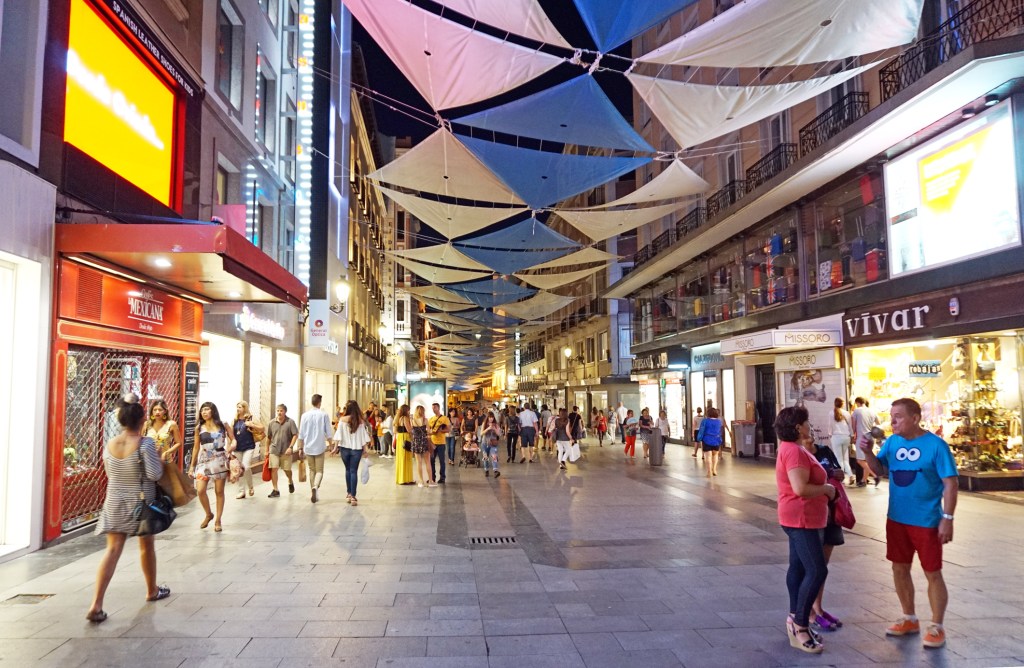
From the square, we will locate the entrance to Calle de Preciados, just to the left of the building with the Tio Pepe neon sign. This is one of Madrid’s busiest pedestrian streets filled with shops, cafés, and historic storefronts. While today it’s a commercial corridor, it also serves as a natural connection between Madrid’s historic core and its later expansion. Stay on Calle de Preciados without turning, as it leads directly to Plaza del Callao.
Plaza del Callao
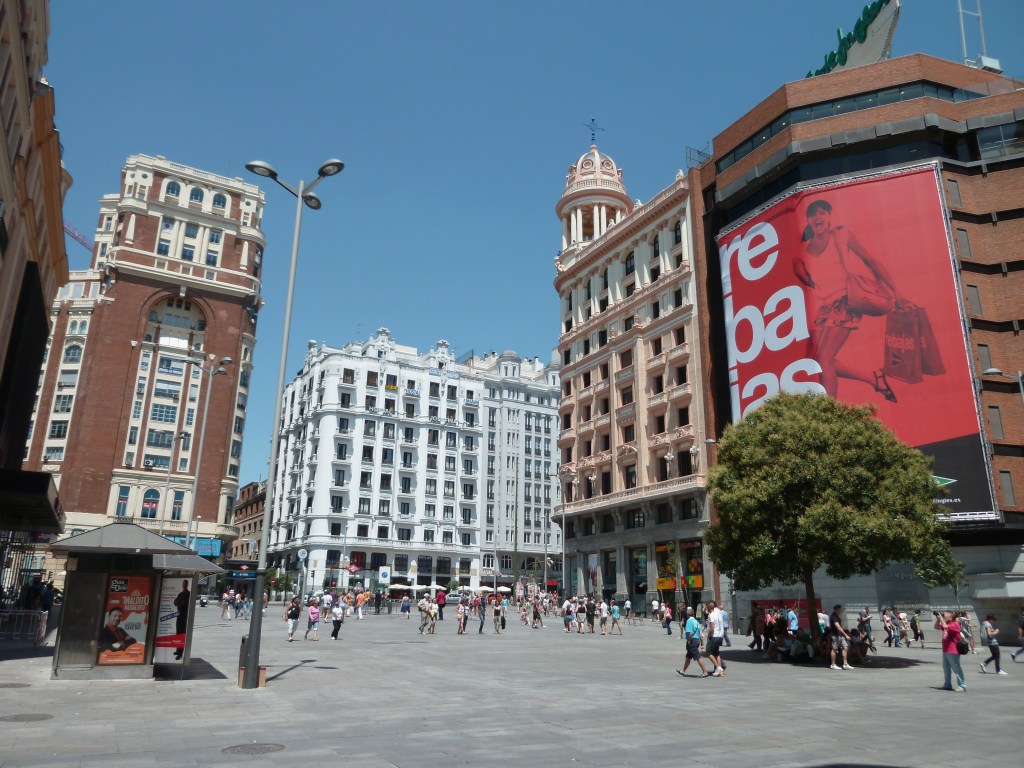
As we reach Plaza del Callao, the space opens up and Gran Vía comes fully into view. If you’re feeling hungry, thirsty, or just curious, you can step inside El Corte Inglés Callao and take the elevator up to the top floor to a rooftop market called, Gourmet Experience. Here you can choose from a range of small gourmet restaurants, order your food and drinks and bring it out to the terrace. From the rooftop you get a great view of the Capitol Building and the main shopping street Gran Via. The rooftop terrace is open all year round, and location makes it one of the most visited Madrid rooftop bars. Food and drinks ranges from Mexican and Japanese to classic Spanish and other international dishes.
Gran Vía
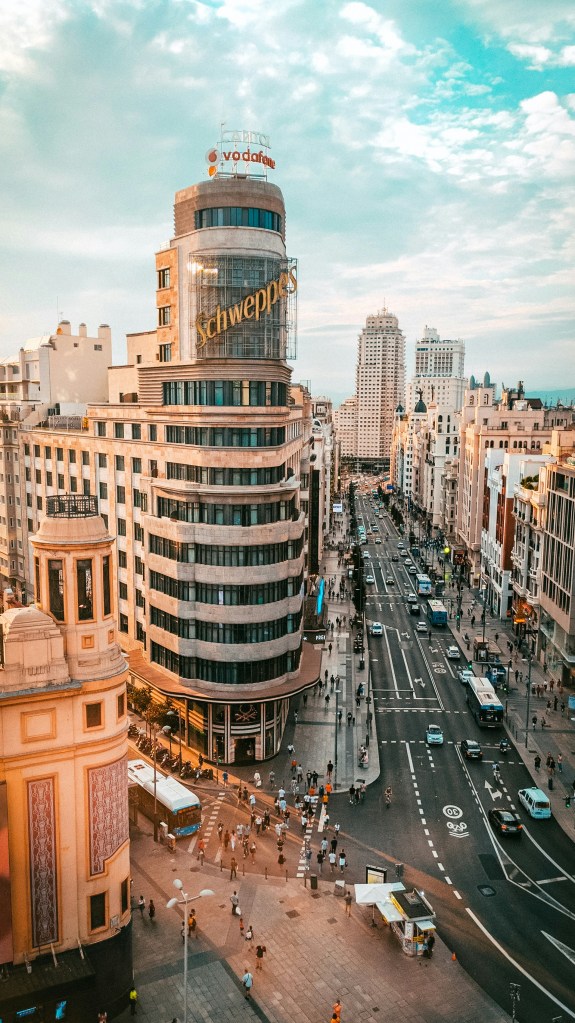
We will continue our walk by turning left onto Gran Vía and begin walking west toward Plaza de España. Directly ahead and slightly to your left, you’ll notice the iconic Schweppes building, with its curved façade and illuminated sign—one of the most recognizable landmarks in Madrid. As we continue, the scale of Madrid shifts. Built in the early 20th century, this boulevard was part of a major effort to modernize the city and create a grand urban axis. Take time to look up as we walk. The buildings ahead reflect a mix of architectural styles, from ornate early 20th-century façades to more modern high-rises, creating a dynamic skyline that evolves block by block. Along the way, you’ll spot decorative sculptures, rooftop figures, and details that add a theatrical quality to the street. Often compared to New York City’s Broadway, Gran Vía blends commerce, entertainment, and architecture, offering a clear view of Madrid’s evolution into a modern capital.
Plaza de España
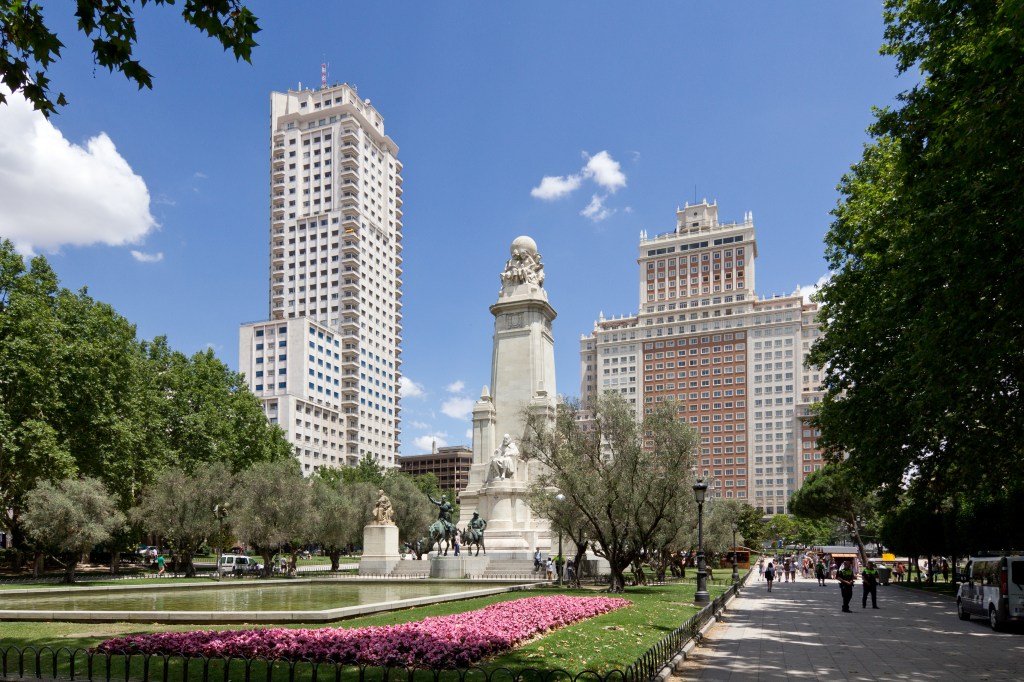
Continuing along Gran Vía, we arrive at Plaza de España (Spain Square), one of the city’s largest public spaces. At its center stands a monument to Miguel de Cervantes, accompanied by sculptures of his characters Don Quixote and Sancho Panza, figures deeply tied to Spanish identity. The open layout and surrounding towers reflect a later phase of Madrid’s development, when the city began expanding outward with larger civic spaces. This is a good place to take a moment, look around, and get your bearings before we continue. From here, we’ll head toward the Royal Palace, leaving behind the commercial energy of Gran Vía and moving into one of the most historic parts of the city.
Palacio Real de Madrid
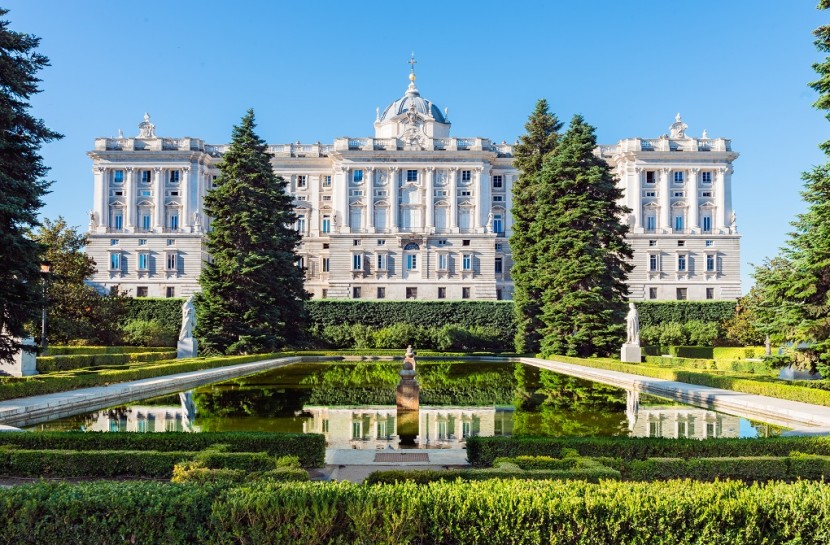
We now make our way toward the Royal Palace of Madrid, one of the largest and most impressive palaces in Europe. Built in the 18th century on the site of a former royal fortress, it was designed to reflect Spain’s power and stability during that period. While the royal family—today led by King Felipe VI, Queen Letizia, and their two daughters—no longer lives here, the palace is still used for official ceremonies and state events. Its scale is hard to miss, with more than 3,000 rooms and a broad, open setting that allows you to take in the full façade. As you approach, notice how the space opens up around it, giving the building room to stand on its own. This is a place to slow down, look around, and take in the setting before we continue. If you’re planning to go inside, I’ve linked to GetYourGuide here—it’s what I usually use for booking tours and skip-the-line tickets when I travel.
Catedral de Santa María la Real de la Almudena
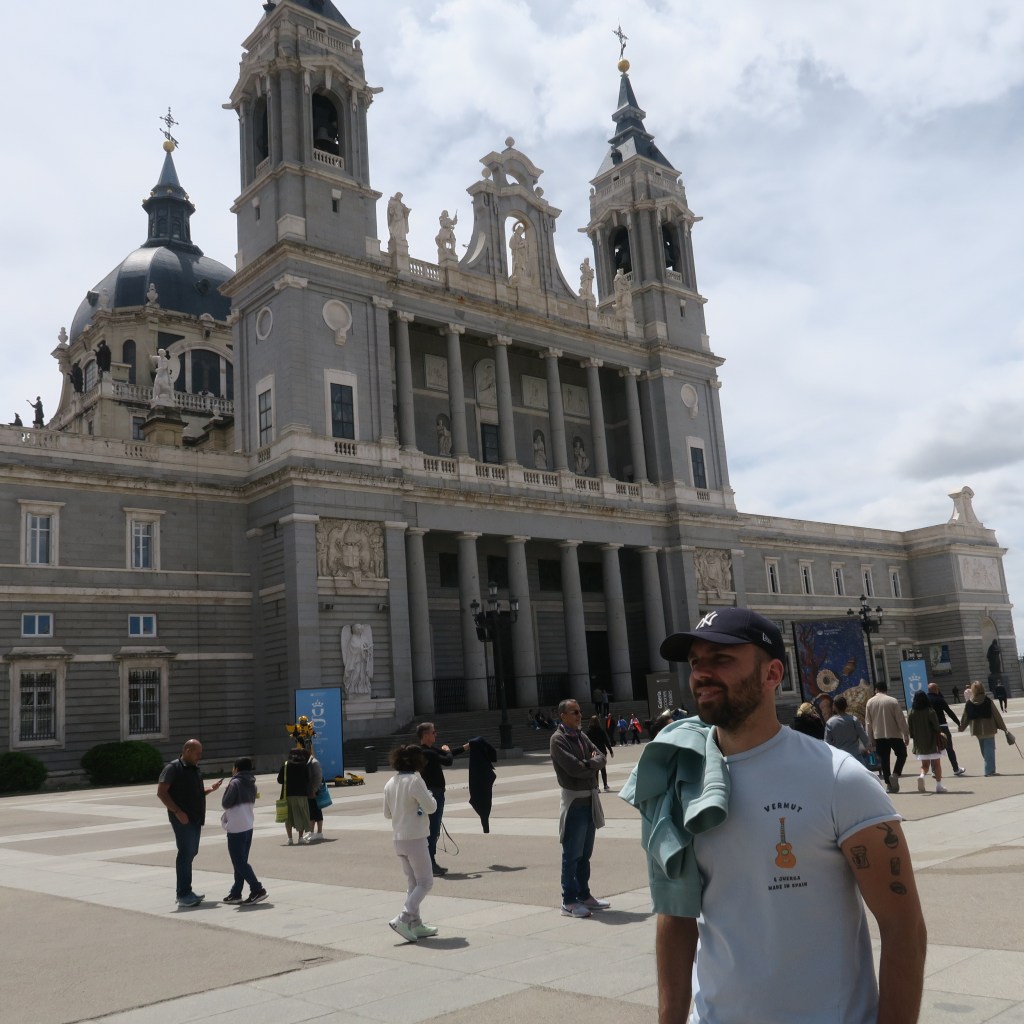
Just across from the palace, we arrive at the Almudena Cathedral. Unlike most European cathedrals, this one was only completed in 1993, combining neoclassical, Gothic, and modern elements. Its relatively recent completion highlights how Madrid continues to evolve while maintaining its traditions. The cathedral’s placement directly facing the palace reflects the historic relationship between church and state. Inside, you’ll find a brighter and more contemporary design than expected. This stop offers an interesting contrast, showing how Madrid blends its past with new expressions of identity.
Iglesia de San Nicolás
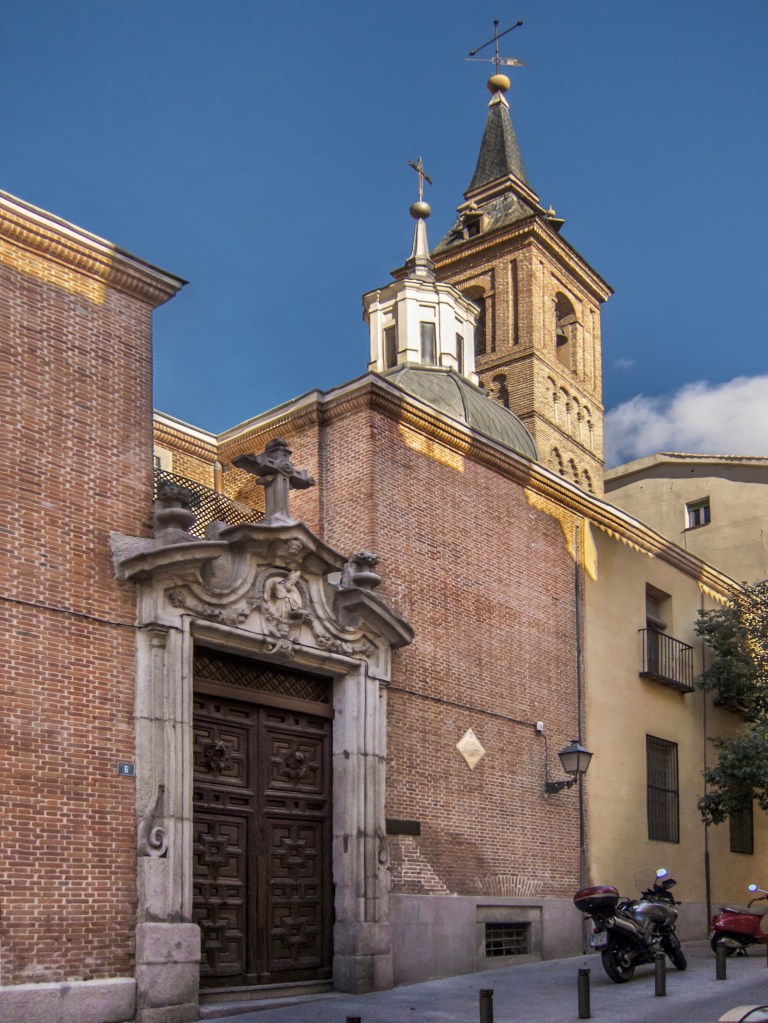
From the palace area, we will walk into the historic core to reach the Church of San Nicolás. This is one of the oldest surviving structures in Madrid, with a tower that likely dates to the 12th century and may have Moorish origins. The simplicity of the building stands in contrast to the grandeur of the palace we just visited. It reminds us that Madrid existed long before it became a royal capital. This quieter stop gives us a chance to connect with the city’s earliest layers and see a piece of history that is often overlooked by visitors.
Plaza de la Villa
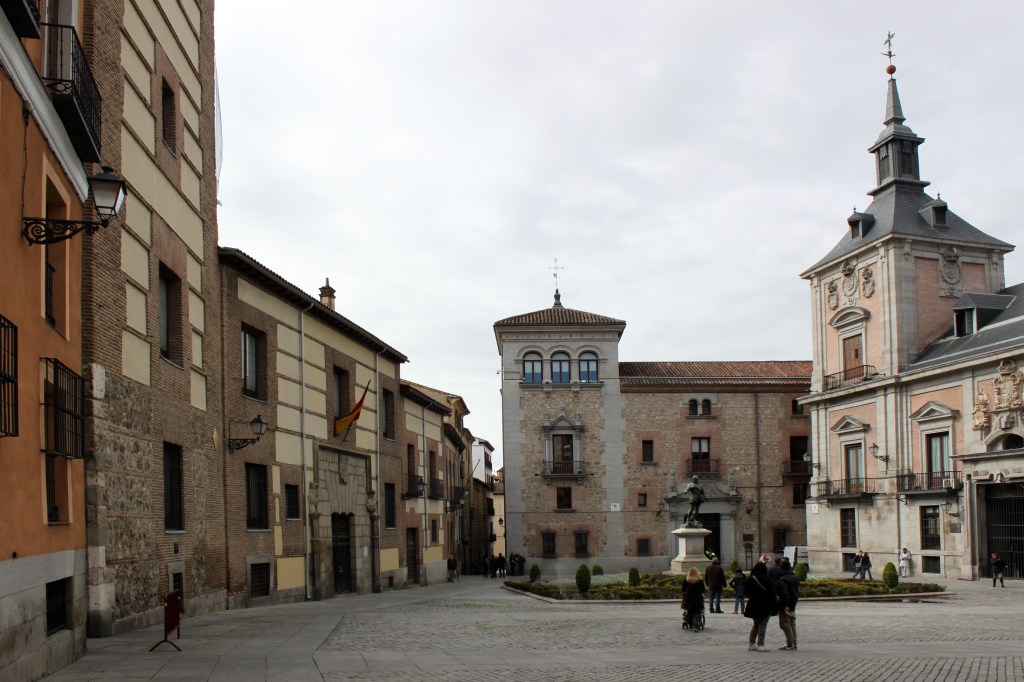
Next, we continue to Plaza de la Villa (Town Square), one of Madrid’s best-preserved historic plazas. Surrounded by buildings from different centuries, including the Casa de la Villa (Old Town Hall), this square once served as the administrative center of the city. The mix of medieval and Renaissance architecture reflects Madrid’s gradual development over time. Walking through the square, you can imagine civic life unfolding here long before the city expanded outward. We include this stop because it captures the governance and daily function of early Madrid, offering a more intimate and human-scale contrast to the palace.
Mercado de San Miguel
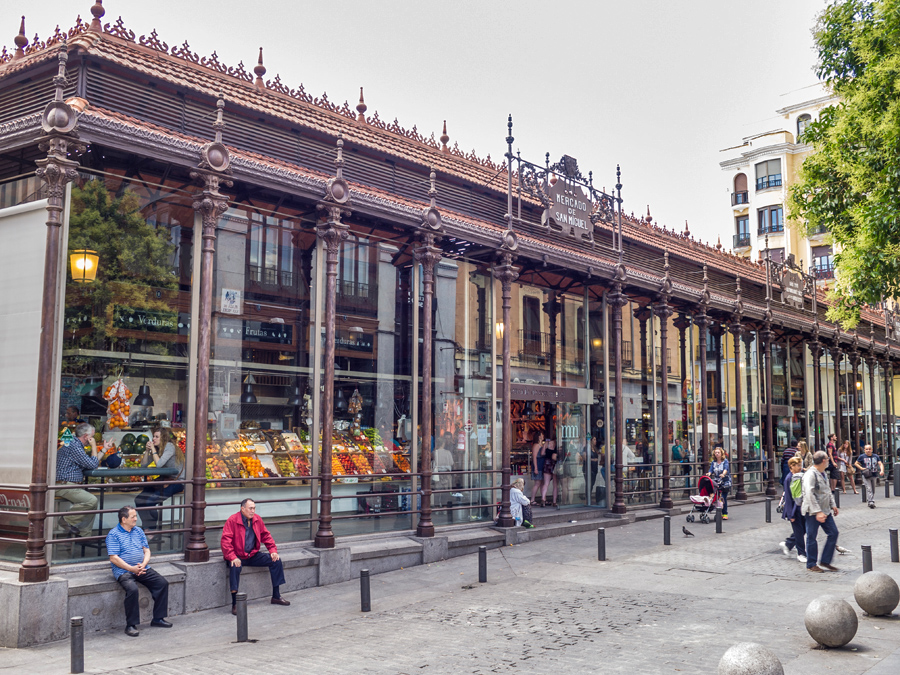
From here, we begin to move toward the edge of La Latina, one of Madrid’s oldest neighborhoods, known for its tapas bars and local feel. Our first stop will be the Market of San Miguel, a beautifully restored iron market from the early 20th century. While it once served as a traditional neighborhood market, today it operates as a food hall where you can sample tapas, seafood, and local specialties. Despite its modern feel, it reflects a long-standing tradition of markets as places for both commerce and social interaction. This stop gives you an opportunity to experience Madrid through its food and to take a break in a lively setting that blends history with contemporary culture.
Plaza Mayor
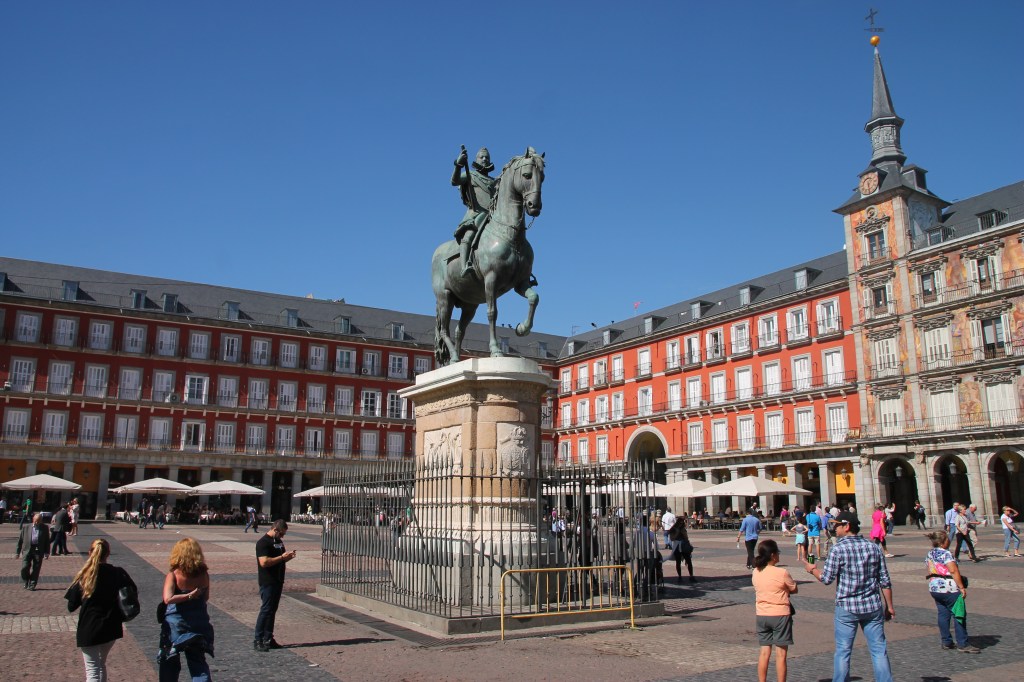
From Plaza de la Villa, we walk a short distance to Plaza Mayor (Main Square), one of Madrid’s most recognizable landmarks. Built in the early 17th century during the reign of Philip III, whose statue stands at the center, the plaza has hosted markets, festivals, and public events for centuries. Its uniform red façades and arcades create a sense of order and cohesion. Unlike the openness of Plaza de España, this square feels enclosed and communal. I include Plaza Mayor because it is a must-see location. Though touristy, it represents the social heart of Madrid, where everyday life and history continue to intersect. Expect higher prices and average food if you eat here.
Sobrino de Botín
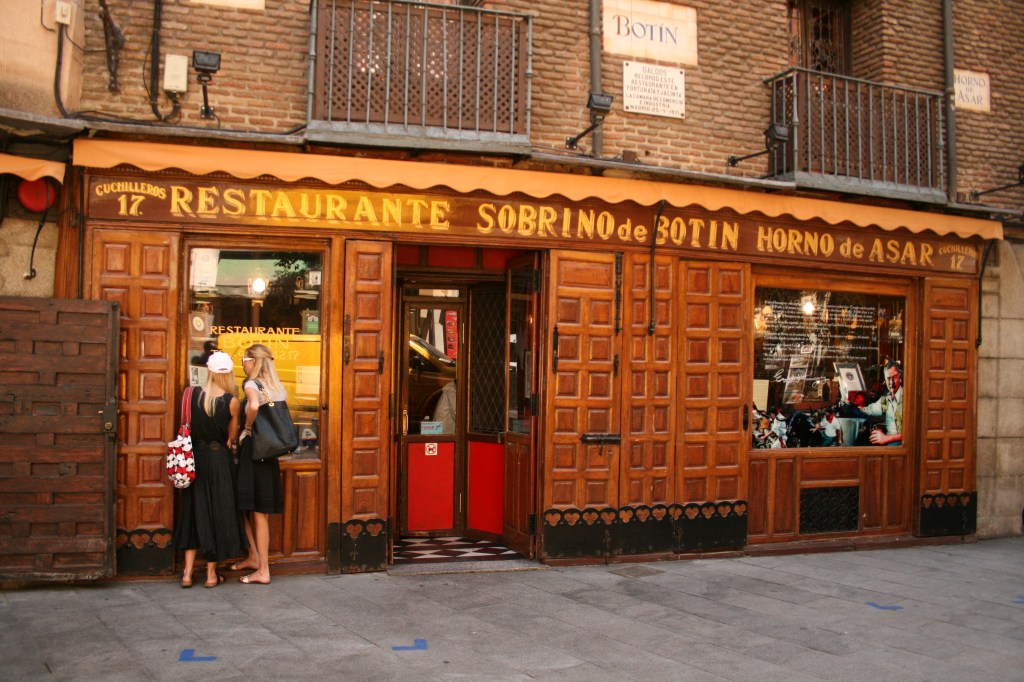
Next, we make our way to Sobrino de Botín, widely recognized as the oldest continuously operating restaurant in the world, dating back to 1725. Known for its traditional Castilian dishes, particularly roast suckling pig, it offers a direct link to Madrid’s culinary past. The restaurant has been referenced by Ernest Hemingway, adding to its cultural significance. We enjoyed it on our first of many trips to Madrid. If you’re looking for something more casual nearby, I highly recommend Taberna La Concha, a small tapas bar known for its well-prepared dishes and traditional Spanish vermouth. It is one of my favorite places in Madrid. If you have not yet tried it Spanish Vermouth, this is the place.
Plaza de Santa Ana
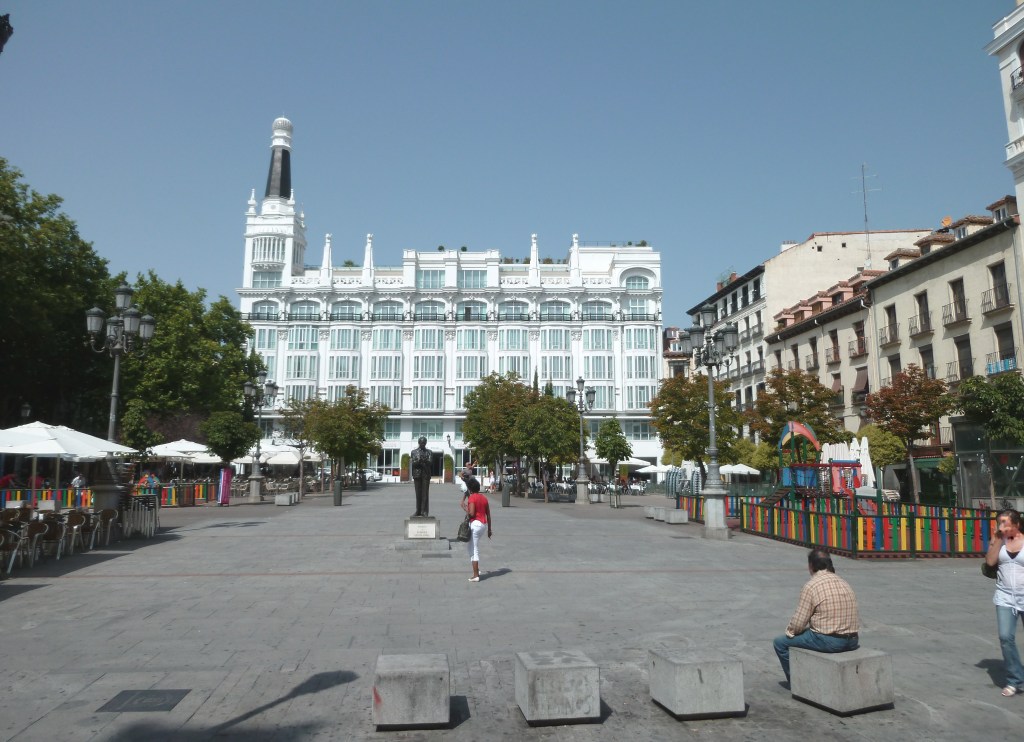
From here, you can return to Puerta del Sol or finish this walk in my favorite square, the Plaza de Santa Ana, located in the lively Barrio de las Letras (Literary Quarter). This neighborhood was once home to writers such as Lope de Vega and Miguel de Cervantes, and it remains closely tied to Spain’s literary history. It is one of my favorite places to stay, with many reasonably priced hotels. The plaza is also filled with cafés, restaurants, and bars, making it a natural and casual gathering place. Ending our walk here brings together the themes we’ve experienced along the way—culture, history, and everyday life—while offering a relaxed and social atmosphere to reflect on what we’ve seen.
Thanks for walking with me!
Thanks for joining me on this walk through Madrid’s plazas, streets, and historic landmarks. I hope it gave you a clearer sense of how the city fits together—from its royal center to its lively neighborhoods—and helped you notice some of the details along the way.
If you have any feedback, suggestions, or spots you think should be included, I’d appreciate hearing from you. These walks continue to evolve, and your input helps make them more useful for others.


Click here for more JCV Walks
Your journey doesn’t have to end here. Choose another walk and let’s keep exploring together—one step at a time.
JCV Walks in Madrid
Madrid’s Cultural Heart: Art, Gardens, and Quiet Beauty
JCV Walks in Cadiz
Cadiz – Land of Light and Joy
JCV Walks in Lisbon
A city of tiled streets, sweeping views, and timeless charm
Photo Credits
- Vista de Madrid by Guzmán Lozano, CC BY 2.0
- Puerta del Sol by Sjaak Kempe, CC BY 2.0
- Calle Preciados by Tiia Monto, CC BY-SA 3.0
- Plaza del Callao by Luis García, CC BY-SA 3.0
- Gran Via by Jordi Moncasi-unsplash
- Plaza de España, Madrid, Spain by Carlos Delgado CC by SA 3.0
- Royal Palace of Madrid by RoberRM, CC BY-SA 4.0
- Santa María Cathedral by JCV Walks
- San Nicolás de los Servitas by Barcex CC BY-SA 3.0
- Plaza de la Villa by Anagoria – Own work, CC BY 3.0
- Mercado de San Miguel by David Daguerro CC BY-SA 4.0
- Plaza Mayor by Draceane CC BY-SA 4.0
- Restaurante Casa Botín by Tamorlan CC BY 3.0
- Plaza de Santa Ana by Luis García CC BY-SA 3.0


